
How Accurate Are Digital Thermometers For Babies? Learn how reliable baby digital thermometers are, factors that affect accuracy, tips for correct temperature readings, and the best ways to check a baby’s fever safely. Digital baby thermometers are typically accurate within 0.2–0.5°F with proper technique.
Parents and caregivers ask How Accurate Are Digital Thermometers For Babies? because a small number can drive big decisions.
I’ve combined clinical guidance with real-world use to explain what accuracy means, which types perform best, how to get reliable readings, and when to worry. If you want clear, evidence-based advice you can use today, this guide was written for you.
:max_bytes(150000):strip_icc()/prt-munchkin-mini-thermometer-21-55beb9483ab84a5da7caafd27163f854.jpeg)
What “accuracy” really means in baby thermometers
Accuracy is how close a reading is to a baby’s true core temperature. Precision is how repeatable that reading is if you measure again. You want both: a thermometer that is close to the truth and gives steady results.
Core temperature is best reflected by rectal readings in babies. Other sites estimate core temperature and can run higher or lower. Standards for clinical thermometers allow a small error, often around ±0.2–0.4°F under controlled tests. In daily life, user technique and baby movement add more drift.
How Accurate Are Digital Thermometers For Babies? It depends on the site, model quality, and your method. With the right device and careful use, the error can be very small.

Types of baby thermometers and expected accuracy
Different sites trade speed and comfort for accuracy. Here is what to expect when used the right way.
Rectal digital thermometers
Rectal is the reference for infants under 3 months. It tracks core temperature well.
- Typical accuracy: ±0.2–0.4°F
- Best for: Newborns and young infants
- Notes: Use a flexible tip and a small amount of lubricant
Oral digital thermometers
Oral readings are less reliable in babies who mouth-breathe or cannot hold the probe.
- Typical accuracy: ±0.3–0.5°F
- Best for: Older children who can hold still and follow steps
- Notes: Wait 15 minutes after feeding
Axillary (underarm) thermometers
Easy and gentle, but tends to read lower than core.
- Typical accuracy: ±0.5–1.0°F vs core
- Best for: Quick screens
- Notes: Add 0.5–1.0°F when judging fever, as advised by many clinicians
Tympanic (ear) thermometers
Fast and convenient, but sensitive to ear canal shape and earwax.
- Typical accuracy: ±0.4–0.5°F when the canal is straightened and clean
- Best for: Babies over 6 months
- Notes: Pull the ear gently back and up to align the canal
Temporal artery (forehead/scan) thermometers
Non-contact or swipe models are popular for sleeping babies.
- Typical accuracy: ±0.5–1.0°F, affected by sweat and room drafts
- Best for: Quick checks without waking the baby
- Notes: Use on a dry forehead and follow the scan path
So, How Accurate Are Digital Thermometers For Babies? Rectal is the most accurate, tympanic and temporal are close with perfect technique, and axillary is a useful screen.

Factors that affect accuracy (and how to fix them)
Accuracy is not only about the device. Small steps make a big difference.
- Probe placement: Wrong angle or shallow insertion skews readings. Follow the device guide.
- Movement: Wriggles add error. Hold your baby gently and steadily.
- Environment: Drafts, car seats, or warm blankets shift forehead scans.
- Ear issues: Wax, tiny canals, or ear infections can confuse ear thermometers.
- Moisture: Sweat cools the skin and lowers temporal readings.
- Feeding: Hot or cold milk changes oral temperatures for about 15 minutes.
- Battery level: Low power slows sensors and delays stable readings.
- Mode mismatch: Some devices have adult, child, or object modes. Use baby mode when offered.
- Probe covers: Use approved covers. Thick wraps insulate and blunt readings.
If you still wonder, How Accurate Are Digital Thermometers For Babies?, start by mastering placement and controlling the setting. That alone often cuts errors in half.

Step-by-step: how to measure a baby’s temperature correctly
Follow these simple steps to improve accuracy today.
Rectal (preferred for infants)
- Clean the tip with alcohol. Rinse and dry.
- Apply a tiny amount of water-based lubricant.
- Place the baby on their back. Hold legs gently toward the belly.
- Insert the tip 0.5 inch for newborns, up to 1 inch for older infants.
- Hold steady until the beep. Read and record.
Axillary (underarm)
- Dry the armpit.
- Place the tip high in the center of the pit.
- Press the arm snugly against the body.
- Wait for the beep. Note that it reads lower than core.
Tympanic (ear)
- Check for visible wax. If present, clean the outer ear.
- Pull the ear gently back and up.
- Aim toward the opposite temple. Seal the canal and press.
- Take 2–3 readings and use the most consistent value.
Temporal artery (forehead)
- Make sure the forehead is dry and clean.
- Start at the center of the forehead. Slide to the hairline or follow the arc per device.
- Avoid drafts or direct sun. Repeat once to confirm.
Used this way, How Accurate Are Digital Thermometers For Babies? becomes a question with a reliable answer: very accurate, even outside clinics.

Interpreting readings: what counts as a fever
Numbers only help if you know what they mean. These are common clinical cutoffs.
- Fever in babies: Rectal temperature of 100.4°F (38°C) or higher
- Axillary: Often 0.5–1.0°F lower than core; account for the gap
- Tympanic and temporal: Treat consistent readings of 100.4°F or higher as fever
When to call a clinician:
- Under 3 months old with 100.4°F or higher, even once
- Any age with a persistent fever for more than 24–48 hours
- Fever with poor feeding, lethargy, rash, trouble breathing, or dehydration signs
If a reading seems off, repeat the measure after fixing placement and environment. How Accurate Are Digital Thermometers For Babies? improves a lot with a second, careful pass.

Calibration, maintenance, and when to replace a thermometer
Most modern digital thermometers self-check at startup. You can still keep them honest.
- Run a quick sanity check: A healthy, calm baby should read about 97–99°F rectal.
- Compare sites: Rectal versus axillary should differ by less than 1.0°F.
- Replace the battery if readings take longer than normal or the screen dims.
- Clean after every use with 70% isopropyl alcohol on the tip. Dry before storing.
- Use original probe covers for ear and temporal models.
If a thermometer is dropped, cracked, or gives erratic results, replace it. Many devices follow international standards for clinical accuracy. Still, wear and tear matter. How Accurate Are Digital Thermometers For Babies? The accuracy stays high when the device is clean, powered, and intact.
Safety, hygiene, and common mistakes
Safe use protects your baby and your readings.
- Never force insertion. If the baby resists or cries in pain, stop and try another site.
- Label rectal thermometers. Do not use them orally after rectal use.
- Disinfect the tip after each reading. Store in a clean, dry case.
- Avoid back-to-back measurements that irritate the skin or rectum.
- Do not take forehead temps right after a hot bath or car ride.
- Keep spare batteries on hand to avoid delays when your baby is ill.
Many errors look like “device failures” but trace back to small habits. The question How Accurate Are Digital Thermometers For Babies? often becomes “how consistent can I be?”
Field insights: what parents and nurses report
Practical patterns emerge across many households and clinics.
- Forehead scans are great for sleeping babies when the room is calm and dry.
- If a forehead or ear reading is borderline, a rectal check settles doubt fast.
- Two consistent readings beat one. Take the best of two within one minute.
- Fever meds can lower a reading, but not the cause. Track trends, not a single number.
These experiences line up with lab data. Devices are sound. Technique and context decide the rest. Keep that in mind whenever you ask, How Accurate Are Digital Thermometers For Babies?
Cost versus performance: choosing the right thermometer
Price does not always predict accuracy. Features can improve ease and reduce errors.
Look for:
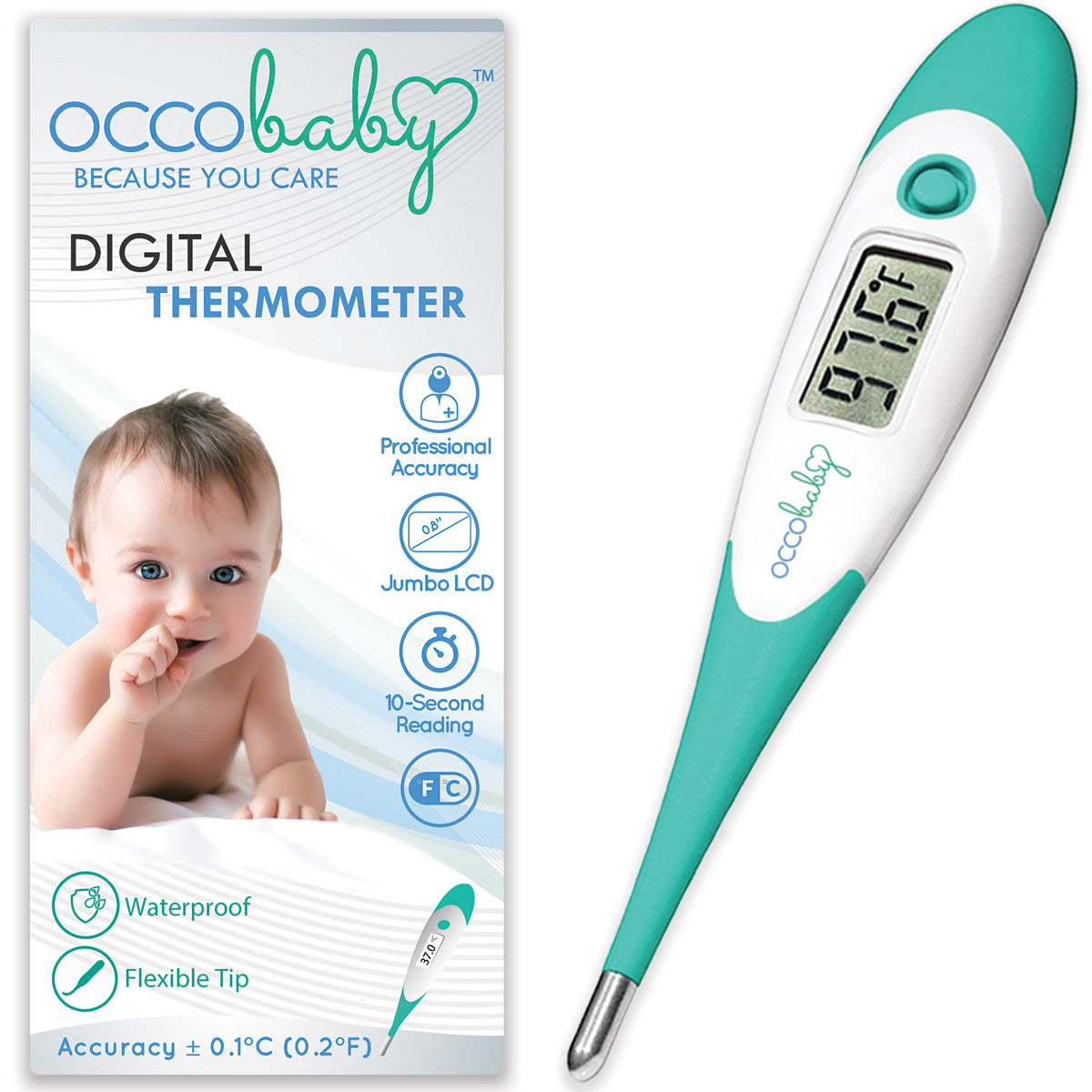
- Infant-safe flexible tip for rectal or axillary use
- Fast reading time under 10 seconds to limit movement
- Backlight for night checks
- Silent mode to avoid waking the baby
- Waterproof design for easy cleaning
- Memory for the last reading to track trends
- Age-based modes if the device supports pediatric algorithms
A solid mid-range digital rectal thermometer and a good forehead or ear scanner cover most needs. That mix answers How Accurate Are Digital Thermometers For Babies? in daily life: accurate enough to trust, fast enough to use.
Frequently Asked Questions: How Accurate Are Digital Thermometers For Babies?
How Accurate Are Digital Thermometers For Babies compared with mercury ones?
Modern digital thermometers match or beat old mercury models when used right. They are faster and safer, with similar error margins.
How Accurate Are Digital Thermometers For Babies when the baby is sweating?
Sweat cools the skin and lowers forehead readings. Dry the area and repeat, or use a rectal check for clarity.
How Accurate Are Digital Thermometers For Babies if I switch sites?
Each site has a known offset. Stick to one site for trends, and use rectal to confirm fever in young infants.
How Accurate Are Digital Thermometers For Babies after fever medicine?
Readings can drop 0.5–2.0°F after meds, but the illness may persist. Track how your baby feels and watch for warning signs.
How Accurate Are Digital Thermometers For Babies during teething?
Teething may raise temperature slightly, but a true fever still matters. Treat any 100.4°F or higher reading as a fever, not just teething.
Are no-contact forehead thermometers reliable for newborns?
They can work but are more sensitive to room air and sweat. For newborns, rectal remains the best choice for accuracy.
How often should I replace a baby thermometer?
Every 2–3 years is common, or sooner if dropped, slow, or erratic. Replace batteries yearly or at the first sign of lag.
Conclusion
Digital thermometers can be very accurate for babies, especially with the right site and steady technique. Rectal readings are the gold standard for infants, while ear and forehead models are excellent for quick checks when used well. Focus on one site, control the setting, and confirm borderline numbers.
Take one step today: practice a calm, repeatable method and log two readings per check. You will answer How Accurate Are Digital Thermometers For Babies? with confidence in your own home. Want more baby health guides? Subscribe for updates or leave a question, and I’ll help you find a clear path forward.