
When To Stop Using Baby Swing? Learn the safe age, weight, and developmental signs that signal it’s time to transition your baby to a safer sleep space. Stop using a baby swing when your baby tries to climb out, reaches its limits, or falls asleep in it. Knowing when to stop using a baby swing is an important part of keeping your baby safe.
The right time depends on your baby’s movement, development, size, and the swing manufacturer’s instructions—not only on age. This guide explains the safety signs to watch for, what to do when your baby falls asleep, and how to make the transition smooth.

Source: momcozy.com
When To Stop Using Baby Swing?
There is no single age that applies to every baby swing. Many babies outgrow swings between 4 and 9 months, but some reach the safety limit sooner. The most important rule is to follow the product manual and stop at the first safety limit your baby reaches.
When deciding when to stop using a baby swing, check these factors:
• Your baby reaches the maximum weight limit.
• Your baby reaches the maximum height limit.
• Your baby can sit upright without help.
• Your baby tries to roll, twist, pull up, or climb out.
• Your baby can push against the swing and change its position.
• The harness no longer fits snugly.
• The swing looks unstable when your baby moves.
A baby swing is designed for a young infant who has limited movement. As babies grow stronger, they can shift their weight, lean forward, and attempt to escape. A swing that was safe at two months may become unsafe at six months.
When asking, “When To Stop Using Baby Swing?” remember this simple principle: stop when the swing can no longer safely control your baby’s new movements.

Source: upsidedad.com
Signs Your Baby Has Outgrown the Swing
Physical development is often a better guide than age. Babies develop at different speeds, so one child may outgrow a swing weeks before another child of the same age.
Watch for these clear warning signs:
Your baby tries to climb out
Climbing is one of the strongest signs that it is time to stop using a baby swing. Your child may lift the chest, pull on the sides, or raise one leg over the edge. Even if the harness is fastened, these movements can create a fall or strangulation risk.
Do not wait for your baby to successfully climb out. The first repeated attempt is enough reason to stop using the swing.
Your baby sits up independently
Most infant swings are made for babies who cannot sit alone. Once your baby sits upright, the center of gravity changes. The swing may become easier to tip, and your baby may lean forward over the restraint.
Independent sitting does not always mean your baby is ready for every other type of baby gear. It does mean the infant swing may no longer be the right place for routine use.
Your baby rolls or twists strongly
Rolling can make a baby swing less stable. A baby who twists from side to side may loosen the harness or place pressure on the swing’s frame.
If your baby can roll but the swing has a tight, secure harness, check the manual carefully. Some manufacturers give specific limits. If the manual says to stop when rolling begins, follow that instruction.
Your baby reaches the product limit
Every swing has a weight limit. Some also list a height limit or a developmental limit, such as stopping when the baby can sit independently.
The product label and instruction manual are more reliable than general internet advice. If you no longer have the manual, look for the model number on the swing and contact the manufacturer.
The harness does not fit correctly
A safe harness should hold your baby securely without pressing painfully against the body. It should not be loose, twisted, damaged, or difficult to fasten.
Do not add cushions, blankets, aftermarket straps, or positioning devices to improve the fit. These items can change how the swing works and may increase the risk of suffocation or entrapment.
When considering when to stop using a baby swing, an unsafe harness fit is a strong reason to stop immediately.
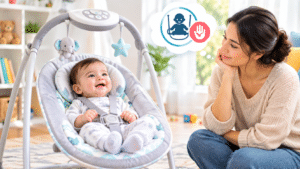
Why Age Alone Does Not Decide When To Stop Using Baby Swing
Parents often ask whether they should stop using a baby swing at 3 months, 6 months, or 9 months. Age can offer a rough guide, but it cannot replace the manufacturer’s limits or your baby’s development.
A small, calm 7-month-old may fit within the weight limit, while a strong 4-month-old may already be trying to sit and climb. These babies need different decisions even though both may use the same type of swing.
Development changes quickly during the first year. A baby can move from lying quietly to rolling, sitting, and pulling up within a short time. The safest approach is to check the swing each week as your baby gains new skills.
Use this short review:
- Read the swing’s weight, height, and age limits.
- Check the harness before every use.
- Watch how your baby moves in the swing.
- Stop at the first sign of climbing, sitting, or unsafe leaning.
- Inspect the swing for loose parts, cracks, recalls, or damage.
A common mistake is to focus only on the number printed on the product box. When parents ask when to stop using a baby swing, the better answer is based on both product limits and developmental signs.

Source: momcozy.com
Safe Sleep and Baby Swings
A baby swing is not a safe sleep surface. The American Academy of Pediatrics recommends that babies sleep on a firm, flat, separate surface, such as a crib, bassinet, or play yard that meets current safety standards.
If your baby falls asleep in the swing, move the baby to a safe sleep space as soon as practical. Place your baby on the back, with no pillows, blankets, bumper pads, or stuffed toys around the body.
The concern is not simply that a swing moves. Its inclined position can allow a baby’s head to fall forward. This can narrow the airway, especially in young infants who cannot move their head well.
Follow these safe-use habits:
• Use the swing only when an alert adult is watching.
• Keep the swing on the floor, not on a table, bed, sofa, counter, or other raised surface.
• Use the built-in restraint every time.
• Keep the swing away from stairs, cords, pets, heaters, and water.
• Do not cover the swing with a blanket.
• Do not leave your baby in the swing while you shower, sleep, or leave the room.
• Move a sleeping baby to a firm, flat sleep surface.
Understanding when to stop using a baby swing also means understanding when not to use it. A swing may calm a baby for a short period, but it should not replace a crib or bassinet for naps or nighttime sleep.

Source: abc7ny.com
How Long Can a Baby Use a Swing Each Day?
There is no universal daily time limit for every swing, but short, supervised periods are the safest approach. A swing should support brief calm time while you remain close, not serve as a regular place for your baby to spend most of the day.
Long periods in seats and swings can limit free movement. Babies need time on a safe floor to kick, reach, turn, and practice head and body control. Tummy time while awake and supervised helps build these skills.
Try to vary your baby’s position during the day:
• Hold your baby during calm periods.
• Use a firm play mat for supervised floor play.
• Offer tummy time when your baby is awake.
• Use a crib or bassinet for sleep.
• Use the swing only for brief, watched breaks.
This matters even before you need to know when to stop using a baby swing. A swing can be helpful, but it should be one small part of a baby’s day.
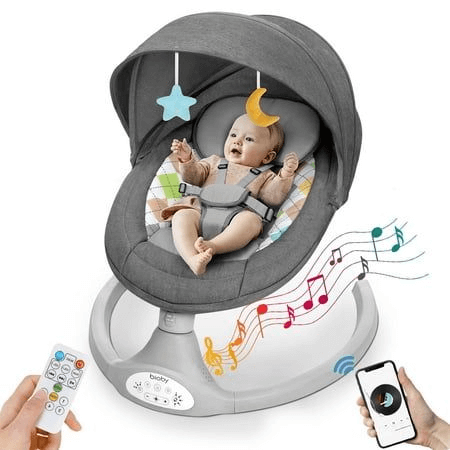
Source: craft-child.com
Benefits and Limits of Using a Baby Swing
Baby swings can be useful in daily family life. A gentle motion may calm a fussy baby while a parent eats, folds laundry, or takes a short break nearby. The restraint can also help keep a young baby in one place during brief supervised periods.
However, a swing has clear limits. It is not a substitute for holding, floor play, social interaction, or safe sleep. It also cannot prevent every risk, especially when a baby becomes more active.
Possible benefits include:
• Temporary calming for some babies.
• A short rest period for the caregiver.
• A convenient place for supervised awake time.
• Gentle movement that some infants find soothing.
Important limitations include:
• It is not safe for routine sleep.
• It may become unstable as a baby grows.
• It can restrict movement if used too often.
• It may create a false sense of safety when an adult is not watching.
• It may be recalled or damaged over time.
A baby swing is like a short-term parking spot, not a long-term home. It can help for a moment, but your baby still needs safe sleep, floor play, and close care.
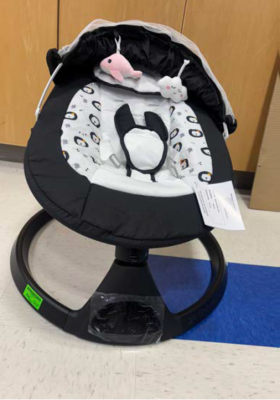
Source: cpsc.gov
What To Do When It Is Time To Stop Using the Swing
Stopping the swing may feel difficult if it is the only thing that calms your baby. A gradual change can help, but safety limits should never be delayed. If your baby is climbing out, the swing is damaged, or the harness no longer fits, stop using it at once.
Try these alternatives:
Use a safe floor space
Place a firm play mat on the floor and stay close while your baby plays. Add a few age-appropriate toys, but keep the area clear of small objects, cords, pillows, and loose blankets.
Offer movement in your arms
Rocking, walking, or holding your baby upright may provide comfort without placing the baby in an inclined device. Use steady support for the head and neck when needed.
Try a stationary seat only if appropriate
Some families use a stationary infant seat for short, supervised periods. Check its manual and stop using it when your baby reaches the listed developmental or size limit.
Create a calming routine
Soft talking, quiet singing, dim light, and consistent steps can help replace the motion of a swing. Babies often respond to rhythm and routine as much as to movement.
Use a crib for sleep
If your baby is tired, place the baby in a safe sleep space. Do not use the swing as a bridge between every fussy period and sleep.
The answer to when to stop using a baby swing should lead to a safer routine, not simply to another restrictive seat.

Source: momcozy.com
Common Baby Swing Safety Mistakes
Many swing-related problems happen because the product is used in a way the manufacturer did not intend. The following mistakes are common and easy to avoid.
Leaving the swing on a raised surface
A swing can move or tip when placed on a counter, table, bed, or sofa. Always use it on a level floor.
Using extra padding
Soft items can press against a baby’s face or change the angle of the body. Use only the padding supplied with the product unless the manufacturer specifically approves a replacement.
Ignoring a damaged frame
Stop using the swing if you notice cracks, loose screws, broken straps, exposed wires, or unusual movement. Contact the manufacturer before using it again.
Using a recalled product
Check the product model and recall notices, especially when using a secondhand swing. A used product may be missing instructions or may have damage that is not easy to see.
Leaving the baby unattended
A swing is not a substitute for supervision. Stay close enough to respond if your baby slips, vomits, becomes tangled, or changes position.
Continuing after climbing begins
This is one of the most serious mistakes. Once a baby tries to climb out, when to stop using a baby swing is no longer a matter of comfort or convenience. It becomes an immediate safety decision.
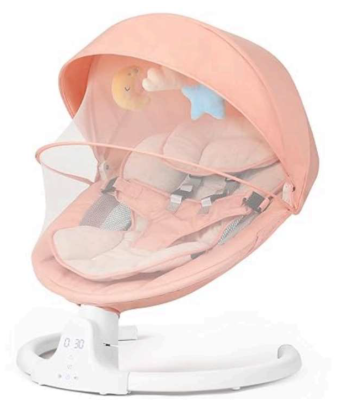
Source: cpsc.gov
A Practical Checklist for Parents
Use this checklist before each session:
• Is my baby awake?
• Am I close enough to watch continuously?
• Is the swing on the floor?
• Is the harness secure and undamaged?
• Is my baby below the weight and height limits?
• Has my baby started sitting, rolling, pulling up, or climbing?
• Is the swing free from loose blankets, toys, and added padding?
• Is the swing included in a safety recall?
If you answer “no” to any safety question, do not use the swing until the issue is corrected. If your baby has reached a developmental limit, choose another safe activity instead.
For families who keep asking when to stop using a baby swing, this checklist offers a simple answer: stop as soon as the swing no longer matches your baby’s size, movement, or supervision needs.
Personal Lessons From Real-World Baby Care
One lesson caregivers often learn is that babies can outgrow equipment suddenly. A swing may seem perfectly suitable one week, then become unsafe after a baby learns to sit, twist, or push with the feet.
Another common mistake is treating a quiet baby as a safe baby. A calm infant may still slide, slump, or fall asleep. Watching the baby’s position matters more than how peaceful the swing appears.
Parents also sometimes wait for a clear event, such as a baby falling out. That is too late. The first attempt to climb, the first poor harness fit, or the first sign of instability should prompt a careful review.
When I explain when to stop using a baby swing, I encourage families to make the decision before a crisis. Take a photo of the product label, save the manual, check recalls, and inspect the swing as your baby grows. Small checks can prevent stressful moments later.
What Experts and Safety Guidance Recommend
Pediatric safety guidance consistently supports three key points: follow the manufacturer’s instructions, supervise babies during use, and move sleeping infants to a firm, flat sleep surface.
The American Academy of Pediatrics advises against routine sleep in sitting devices, including swings. Federal safety rules for infant swings also address stability, restraints, structural strength, and warnings. These rules improve product safety, but correct use remains essential.
Safety guidance can change when new evidence or product problems appear. For that reason, check current recommendations from trusted pediatric and consumer safety organizations. A pediatrician can also help when your baby has special medical needs, poor muscle tone, reflux concerns, or unusual movement patterns.
No article can replace the instructions for your exact model. The product manual is the final reference for weight, height, age, and developmental limits.
When To Stop Using Baby Swing? Frequently Asked Questions
At what age should a baby stop using a swing?
There is no universal age. Stop when your baby reaches the swing’s weight or height limit, can sit independently, tries to climb out, or reaches another limit in the manual.
Can a baby sleep in a swing?
No. Swings are not intended for routine or unsupervised sleep. If your baby falls asleep, move the baby to a firm, flat, separate sleep surface as soon as practical.
Can I use a swing after my baby starts rolling?
Rolling may mean the swing is no longer appropriate, depending on the product instructions. Check the manual and stop immediately if rolling causes your baby to lean, slide, or loosen the harness.
Is it safe to use a baby swing while I leave the room?
No. A baby swing requires active supervision. Stay nearby and keep your baby within sight so you can respond quickly to a change in position or another problem.
What should I do if my baby tries to climb out?
Stop using the swing right away. Climbing shows that your baby’s movement and strength have exceeded the safe design of the product.
Can I use a secondhand baby swing?
You may use one only after checking its model, recall history, condition, safety labels, and instructions. Do not use it if parts are missing, the harness is damaged, or the product has an unknown history.
Is a swing better than a bouncer for an older baby?
Neither is automatically safer for an older baby. The correct choice depends on the product limits, your baby’s development, the fit of the restraint, and constant supervision.
What can I use instead of a baby swing?
For awake time, use a clear floor space, a firm play mat, or supervised holding. For sleep, use a crib, bassinet, or play yard with a firm, flat surface and no loose bedding.
Conclusion
The safest answer to when to stop using a baby swing is to stop at the first limit your baby reaches. That may be the weight or height limit, independent sitting, rolling, climbing, poor harness fit, or another warning in the product manual.
Use a swing only for brief, supervised awake time. Keep it on the floor, use the restraint correctly, and move sleeping babies to a firm, flat sleep surface. Check the swing often because development can change faster than expected.
Your careful attention is the best safety tool. Review your swing today, compare it with the manufacturer’s instructions, and choose a safer alternative when your baby has outgrown it. Share your experience or explore trusted pediatric safety resources to keep learning.