Are Baby Swings Safe For Newborns? Learn safe sleep guidance, key risks, and essential tips for using baby swings responsibly. Baby swings can be safe for newborns for short, supervised use when used exactly as the manufacturer directs.
Are baby swings safe for newborns? The answer depends on your baby’s age, head control, the swing’s design, and how it is used. This guide explains the benefits, risks, safety rules, sleep concerns, and signs that a swing is no longer suitable, using guidance from pediatric safety experts and consumer product regulators.
Are Baby Swings Safe for Newborns?
Are baby swings safe for newborns? In many cases, yes, but only for brief periods while an alert adult watches the baby closely. A swing must support the newborn’s head and neck and place the baby in the position recommended by its manufacturer.
Newborns have weak neck muscles. Their heads are heavy compared with their bodies, so they can slump forward or sideways in a swing. This may affect breathing, especially if the baby’s chin presses toward the chest.
A baby swing is a soothing tool, not a crib or bassinet. The American Academy of Pediatrics recommends moving a sleeping baby from a swing to a firm, flat sleep surface placed on the baby’s back.
The safest approach is simple:
• Use the swing only when your baby is awake and supervised.
• Check that the product is approved for newborns by its instructions and label.
• Use the built-in harness every time.
• Keep the swing on the floor.
• Stop use if your baby falls asleep, slides down, rolls, or reaches the product’s limits.
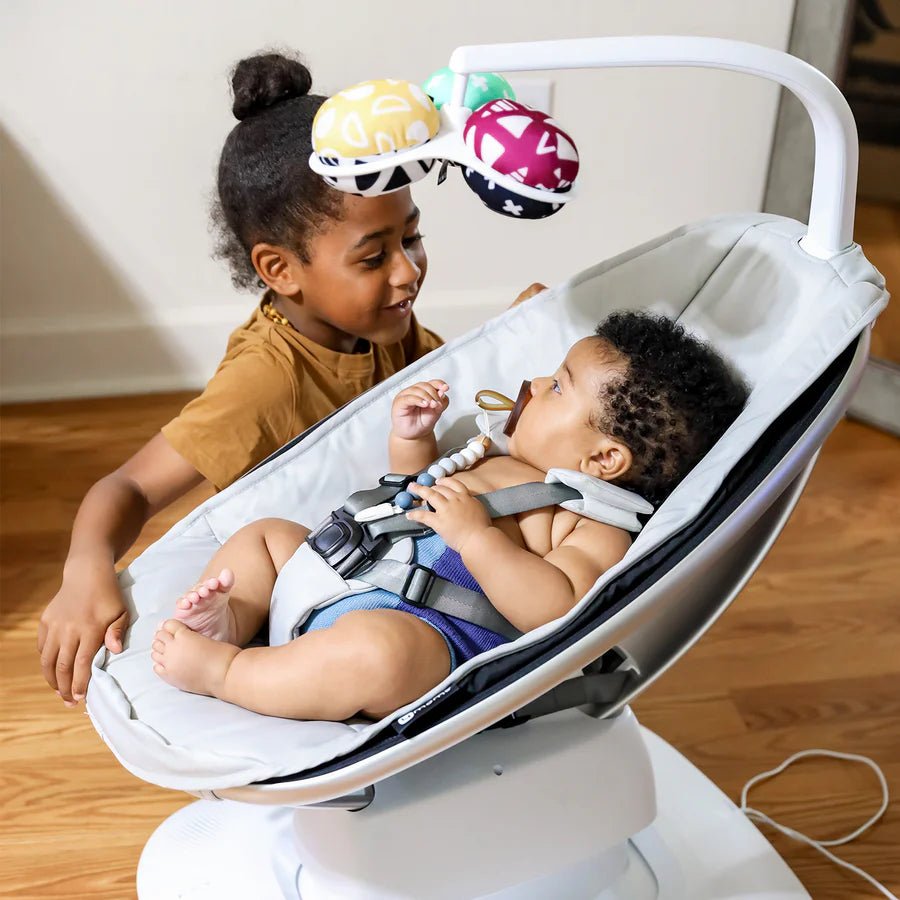
Source: cdi-ibense.com
When Can a Newborn Use a Baby Swing?
Many swings allow use from birth, but age alone does not make a swing safe. The product must provide enough support for a small baby, and the newborn must fit securely within the seat.
Read the product manual before placing your baby inside. Look for details about:
• The minimum weight and age
• Whether the swing is suitable from birth
• The correct recline setting
• Harness use
• Maximum weight and height
• When to stop using the swing
Some swings have deep, supportive seats made for small babies. Others are designed for older infants who can hold their heads steady. If your newborn’s head leans forward, the swing is not a safe fit, even if the label says it can be used from birth.
Premature babies, babies with low muscle tone, or babies with breathing problems may need different advice. Ask your pediatrician before using a swing if your baby has a medical condition or struggles to keep the head centered.

Source: momcozy.com
Why Do Parents Use Baby Swings?
A baby swing can offer a short break during a busy day. Gentle motion may calm some babies who are fussy, tired, or overstimulated. It can also give a parent time to drink water, prepare food, or comfort another child.
Common benefits include:
• Gentle movement that may help calm a crying baby
• A secure place for short, supervised awake time
• Hands-free support while a parent stays nearby
• A predictable routine before feeding or settling
Still, babies respond in different ways. Some enjoy swinging, while others become upset or appear uncomfortable. A swing should never replace feeding, holding, talking, floor play, or supervised tummy time.
Think of a swing as a short stop, not a destination. It may help for a few minutes, but newborns need plenty of time in a caregiver’s arms and on safe, flat surfaces.

Source: babyluv.in
The Main Safety Risks of Baby Swings
Are baby swings safe for newborns when an adult is nearby? Supervision lowers risk, but it does not remove every danger. The design, position, and condition of the swing also matter.
Airway blockage
The greatest concern is poor head position. If a newborn’s chin drops toward the chest, the airway may become narrow. A baby can have trouble breathing without making a loud sound.
Check your baby often. The face should remain visible, the nose and mouth should stay clear, and the head should remain in a neutral position.
Falling from the swing
A baby may slide, wiggle, or push against the sides. An unfastened harness can allow the baby to fall, even during gentle movement.
Use all straps described in the manual. Never rely on a blanket, pillow, or rolled towel to hold a baby in place.
Tipping or movement
A swing can tip if placed on a table, bed, couch, counter, or other raised surface. Vibrations from pets, older children, or nearby activity can also make the product unstable.
Place the swing directly on the floor. Keep it away from stairs, cords, windows, heaters, and other hazards.
Sleep-related danger
A swing is not designed for routine sleep. Its curved or inclined shape may allow a baby’s head to fall into an unsafe position.
If your baby falls asleep, move the baby to a crib, bassinet, or play yard with a firm, flat mattress and no loose bedding.
Product defects and recalls
Used swings may have missing parts, damaged straps, broken locks, or outdated safety features. Check the model number for recalls through the U.S. Consumer Product Safety Commission before use.
How to Use a Baby Swing Safely
Are baby swings safe for newborns when used correctly? They can be a reasonable option for short, awake periods if you follow every safety step.
- Read the full manual before the first use. Do not depend only on the product box or online pictures.
- Place the swing on a level floor. Never use it on a table, sofa, bed, countertop, or other raised area.
- Select the most reclined setting approved for your baby’s age and size.
- Fasten the harness snugly. Check that the straps are not twisted and that your baby cannot slide under them.
- Keep your baby’s face visible. Make sure the head stays centered, and the chin does not press against the chest.
- Stay within sight and hearing distance. Do not leave the room while your newborn is in the swing.
- Keep pets, toys, blankets, pillows, and cords away from the swing.
- Stop the motion if your baby seems pale, sweaty, distressed, or poorly positioned.
- Remove your baby as soon as the baby falls asleep.
- Inspect the swing often for loose screws, torn fabric, damaged straps, and broken parts.
A useful habit is to perform a quick “head, harness, floor” check. Make sure the head is supported, the harness is secure, and the swing is resting safely on the floor.

Source: babycenter.com
Can Newborns Sleep in Baby Swings?
No. Newborns should not routinely sleep in baby swings, even when the swing seems comfortable or the baby appears calm. A swing is not a safe sleep space because it is usually inclined and does not provide the firm, flat surface recommended for infant sleep.
If your newborn falls asleep in the swing:
• Stop the swing.
• Unfasten the harness carefully.
• Move the baby to a crib, bassinet, or play yard.
• Place the baby flat on the back.
• Remove loose blankets, pillows, toys, and positioners.
The same rule applies to bouncers, car seats, strollers, and other sitting devices. These products may be useful for supervised awake time, but they should not become a regular sleep location.
The safe sleep space should have only a firm, flat mattress with a fitted sheet. This advice is consistent with recommendations from the American Academy of Pediatrics and other child safety organizations.

Source: todaysparent.com
What If a Newborn Slumps in the Swing?
Slumping is a warning sign. It may mean the swing is too large, the recline is not suitable, the harness is loose, or the baby is not ready for that product.
Remove the baby and check the manual before trying again. Do not add cushions, towels, head supports, or aftermarket inserts unless they came with the product and are approved by the manufacturer.
Look for these signs of poor fit:
• The chin rests on the chest.
• The head falls sharply to one side.
• The shoulders slide below the harness.
• The hips move forward in the seat.
• The baby’s face touches the fabric.
• The baby cannot keep the airway clear.
If the problem continues, stop using the swing. Contact your pediatrician or the manufacturer for guidance. A different product, such as a flat bassinet, may be more appropriate.

Source: momcozy.com
Baby Swing Safety Mistakes to Avoid
Many swing-related problems come from small choices that seem harmless. Avoid these common mistakes:
• Letting a newborn sleep in the swing because the baby is calm
• Placing the swing on a couch, table, or kitchen island
• Using only the waist strap and ignoring the shoulder straps
• Adding a pillow, blanket, or rolled towel for comfort
• Leaving the baby alone while taking a shower or going outside
• Using a recalled or damaged swing
• Allowing an older child to push the swing
• Moving the swing while the baby is inside
• Using the swing near stairs, cords, heaters, or water
• Continuing use after the baby rolls, climbs, or exceeds the limits
One mistake deserves special attention: assuming that a sleeping baby is safe because an adult is watching. Supervision is important, but it does not turn an inclined seat into a safe sleep surface.
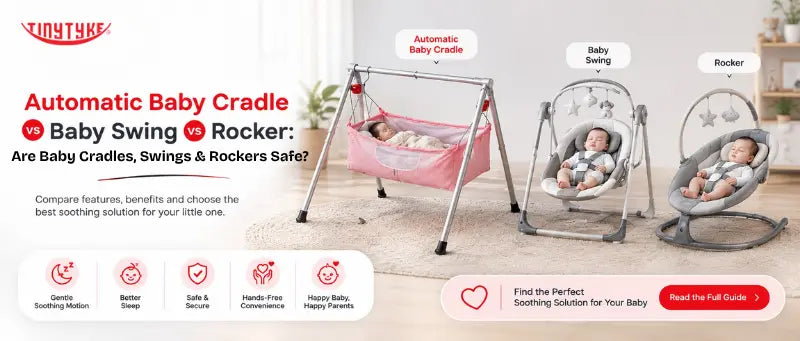
Source: tinytykebaby.com
How Long Can a Newborn Stay in a Baby Swing?
There is no universal number of minutes that applies to every baby swing. The safest rule is to use the swing for short periods and follow the manufacturer’s instructions.
Newborns need frequent changes in position. Long periods in a curved seat may limit movement and reduce opportunities for floor play. It is wise to take regular breaks for feeding, holding, diaper changes, and supervised tummy time.
Stop using the swing right away if your baby:
• Falls asleep
• Slumps forward or sideways
• Looks uncomfortable
• Becomes sweaty or unusually quiet
• Reaches for the sides
• Rolls or tries to climb out
• Exceeds the product’s weight or height limit
A swing should support family life, not control it. If your baby spends much of the day in a swing, consider speaking with a pediatrician about more suitable awake-time activities.

Source: todaysparent.com
How to Choose a Safe Baby Swing for a Newborn
When deciding whether baby swings are safe for newborns, product design matters. Choose a model that clearly states it is suitable for newborn use and provides strong support.
Look for:
• A stable, wide base
• A secure, adjustable harness
• A reclined position designed for young infants
• Clear weight and age limits
• A washable, firm seat
• A visible model and manufacturer label
• Instructions that explain safe use
• A current product registration option
Avoid products that resemble inclined sleepers or lack clear safety instructions. Do not buy a used swing if you cannot confirm its model, history, parts, and recall status.
Never modify a swing. Adding a head pillow or changing the seat angle may create a risk that was not tested by the manufacturer.
Baby Swings Compared With Other Infant Products
Are baby swings safe for newborns compared with bassinets? Each product has a different purpose, and using the wrong product for the wrong task can create risk.
Baby swings
Swings are made for brief, supervised awake time. They are not intended for sleep.
Bassinets and cribs
Bassinets and cribs are designed for infant sleep when they meet current safety standards and contain a firm, flat mattress with a fitted sheet.
Bouncers
Bouncers are also sitting devices. Use them only while the baby is awake and supervised, and never place them on raised surfaces.
Car seats
Car seats protect babies during travel. They should be used in the vehicle as directed, not as a routine sleep or resting space outside the vehicle.
Play yards
A compliant play yard may provide a safe sleep or play area when used according to its instructions. It should not contain extra mattresses, pillows, or loose items.
The key difference is position. Safe sleep products keep babies flat on a firm surface. Swings and other sitting devices hold babies at an angle, which can affect head and neck position.
Practical Advice for Parents and Caregivers
Are baby swings safe for newborns in a busy home? They can be, but every caregiver should follow the same rules. Share the instructions with grandparents, babysitters, older siblings, and anyone else who may use the swing.
A simple household plan helps:
• Keep the manual near the swing.
• Write down the model number and recall information.
• Show caregivers how to fasten the harness.
• Explain that the swing is not for sleep.
• Agree that the swing stays on the floor.
• Check the baby’s position each time.
• Keep the swing away from other children and pets.
A common real-life challenge is the “quiet baby” moment. A parent finally gets a shower or prepares dinner, and the baby falls asleep in the swing. The safest choice is still to move the baby to a flat sleep space, even if that interrupts the nap.
This may feel inconvenient, but safety often depends on repeating simple steps during tired moments. A written routine can help when everyone in the home is busy.
What Pediatric Safety Guidance Says
Are baby swings safe for newborns according to pediatric guidance? The general advice is consistent: use swings only for supervised awake time, follow the product instructions, and move sleeping babies to a firm, flat surface.
The American Academy of Pediatrics advises against routine infant sleep in sitting devices, including swings. The Consumer Product Safety Commission also provides safety rules and recall information for infant products.
These recommendations do not mean every swing is dangerous. They recognize that newborns have limited head control and may move into a position that blocks breathing. The risk depends on the product, the baby, and the way the swing is used.
Safety guidance can change as new products and injury data become available. Check current recommendations and the latest product recalls rather than relying on advice from an old manual or social media post.
Frequently Asked Questions About Are Baby Swings Safe for Newborns?
Are baby swings safe for newborns from birth?
Some baby swings are approved for use from birth, but not all are. Check the product’s minimum weight, age guidance, recline settings, and head support before use.
Can a newborn sleep in a baby swing?
No. If a newborn falls asleep in a swing, move the baby to a firm, flat sleep surface on the back as soon as practical.
How long can a newborn use a baby swing?
Use a swing for short, supervised periods and follow the manufacturer’s limits. Take regular breaks for feeding, holding, diaper changes, and supervised tummy time.
Should a newborn wear the swing harness?
Yes. Use every harness strap required by the manual and adjust it so the baby cannot slide down. Never use blankets or pillows instead of the harness.
Can I put a baby swing on a couch or table?
No. A swing should sit directly on the floor. Raised surfaces increase the risk of tipping and falling.
What should I do if my baby slumps in the swing?
Remove the baby and check the fit, recline, and harness settings. If the baby continues to slump, stop using the swing and ask a pediatrician or the manufacturer for advice.
When should I stop using a baby swing?
Stop when your baby reaches the product’s weight or height limit, rolls, tries to climb out, or no longer fits securely. Always follow the manufacturer’s stop-use instructions.
Conclusion
Are baby swings safe for newborns? They can be suitable for brief, supervised awake time when the swing is approved for newborns and used exactly as directed. Keep the baby’s airway clear, use the harness, place the swing on the floor, avoid added padding, and move any sleeping baby to a firm, flat sleep surface.
The safest swing is not the one with the most features. It is the one that fits your baby well and is used with care every time. Review your swing’s manual, check for recalls, and share these rules with every caregiver in your home.