
Can babies sleep in a swing supervised? Learn the safety risks, expert guidance, and safer sleep options for your baby. No, babies should not sleep in a swing, even when an alert adult is supervising them. Many babies relax quickly in a swing, especially after feeding or during a fussy evening.
However, a swing is made for short, awake periods, not sleep. Its curved, seated position can allow a baby’s head to fall forward and restrict breathing. This guide explains what makes swing sleep risky, what to do if your baby falls asleep, and which sleep spaces are safer.
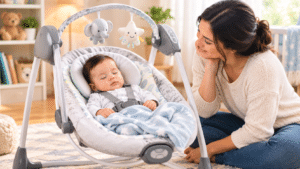
Can Babies Sleep In A Swing Supervised?
Can Babies Sleep In A Swing Supervised? The safest answer is no. Supervision may help you notice a problem, but it does not remove the risk caused by the swing’s angle, straps, or soft structure.
The American Academy of Pediatrics recommends that babies sleep on their backs on a firm, flat, noninclined surface. A safety-approved crib, bassinet, or portable play yard is designed for this purpose. Most infant swings are not.
A baby may look peaceful in a swing while still being in danger. Infants have weak neck muscles. If the head bends forward, the chin can press toward the chest. This may narrow the airway before the baby makes enough noise to alert an adult.
The Consumer Product Safety Commission also warns against using sitting devices, including swings, for routine infant sleep. If a baby falls asleep in a swing, move the baby to a firm, flat sleep surface as soon as possible.
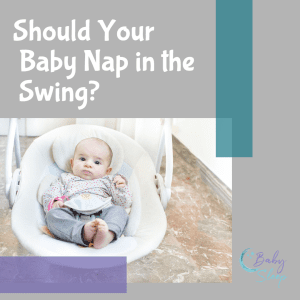
Source: babysleepsite.com
Why Swing Sleep Can Be Dangerous
A swing holds a baby in a semi-upright position. This position can be comfortable while the baby is awake, but it is not ideal for unsupervised or extended sleep.
Positional asphyxia
Positional asphyxia occurs when a baby’s body position blocks normal breathing. This can happen when:
• The chin drops toward the chest
• The head falls to one side
• The baby slides down in the seat
• The nose and mouth press against padding
• The body becomes folded at the waist
Young babies may not have the strength to lift or turn their heads. They may also remain quiet during breathing trouble. That is why a sleeping baby in a swing can face danger even when an adult is close by.
Falls and other injuries
A sleeping baby may move, twist, or push against the swing’s sides. Older infants may pull up or lean over the edge. A baby can fall if the swing tips, shifts, or is placed on a raised surface.
Never place a swing on a table, countertop, bed, couch, or other elevated area. Use it only on the floor and follow the manufacturer’s weight and age limits.
Straps do not make a swing a safe sleep space
The restraint keeps a baby from sliding out, but it cannot prevent every unsafe position. A harness may also become dangerous if it is loose, incorrectly fitted, or used with added pillows and blankets.
Do not add aftermarket head supports, rolled towels, cushions, or sleep positioners unless a qualified medical professional specifically advises you. Extra items can cover the face or restrict movement.
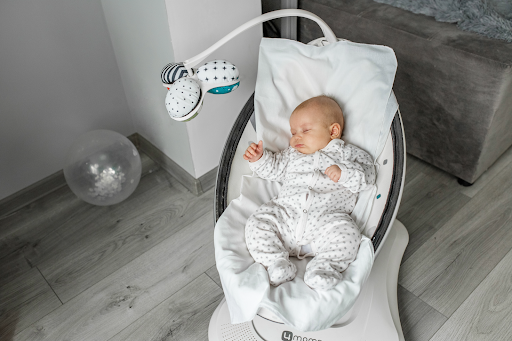
Source: pakpeds.com
Why Supervision Does Not Make Swing Sleep Safe
Parents often ask, Can Babies Sleep In A Swing Supervised? This question is understandable. A caregiver may sit nearby, watch the baby, and feel confident that any problem will be noticed quickly.
The problem is that breathing changes can be silent. A baby may not cry, cough, or struggle in an obvious way. A caregiver who looks away for a moment, answers a phone call, helps another child, or briefly falls asleep may miss a serious change.
Even constant supervision cannot change the swing’s design. It remains an inclined seat rather than a flat sleep surface. Supervision lowers the chance of some hazards, such as a fall, but it does not make the product appropriate for sleep.
Think of supervision as an extra layer of care, not a replacement for a safe sleep environment. The safest plan is to use the swing for awake time and move the baby when sleep begins.

Source: amazon.com
What To Do If Your Baby Falls Asleep In A Swing
Many babies doze off in a swing. This can happen after feeding, during a stressful evening, or while a caregiver prepares dinner. Do not panic or blame yourself. Respond calmly and move the baby safely.
Follow these steps:
- Stop the swing’s motion if you can do so safely.
- Unbuckle the baby carefully.
- Lift the baby without covering the face.
- Place the baby on the back in a crib, bassinet, or portable play yard.
- Use a firm, flat mattress with only a fitted sheet.
- Check that the baby’s face and head remain uncovered.
- Watch for unusual breathing, color changes, limpness, or difficulty waking.
If the baby appears blue, gray, limp, unresponsive, or unable to breathe normally, call 911 immediately. Follow infant CPR guidance if you are trained to do so.
Do not leave a sleeping baby in the swing while you finish a task. “Just five more minutes” can become much longer, especially during nighttime fatigue.

Source: todaysparent.com
Safer Alternatives To A Baby Swing
The best alternative depends on whether your baby is awake or asleep.
For awake time, you can use the swing for short periods while staying nearby. Keep the baby properly buckled, keep the swing on the floor, and stop using it when the baby reaches the product’s limits or begins climbing.
For sleep, choose a space that meets current safe sleep guidance:
• A safety-approved crib
• A bedside bassinet
• A portable play yard
• A properly assembled infant sleep space with a firm, flat mattress
Place the baby on the back for every sleep, including naps. Keep the sleep area free of pillows, quilts, loose blankets, stuffed toys, and bumper pads.
Room sharing without bed sharing is another useful safety practice. Keeping the baby’s sleep space near your bed can make feeding and comforting easier while preserving a separate surface.
White noise, dim lights, a clean diaper, and a simple calming routine may also help. These methods may take more time than placing a baby in a swing, but they support safer sleep habits.

Source: amazon.com
How To Use A Swing More Safely While Your Baby Is Awake
A swing can be useful when used as an awake-time tool. It may give a caregiver a short break or help calm a baby who enjoys gentle movement.
Use these habits:
• Keep the baby within sight and reach.
• Use the harness exactly as the manual explains.
• Keep the swing on a stable floor.
• Stop use if the baby falls asleep.
• Check the swing for recalls or damaged parts.
• Follow the age, weight, and developmental limits.
• Keep cords, pets, blankets, and other objects away.
• Never carry the swing while the baby is inside.
Do not use a swing as a substitute for holding, floor play, or supervised tummy time. Awake babies need opportunities to move freely and build strength.
If your baby regularly falls asleep in the swing, adjust the routine. Offer the swing after a nap rather than before one, and begin calming the baby in the crib when sleep signs appear.

Source: todaysparent.com
Common Mistakes Parents Should Avoid
Parents usually make swing-related mistakes because they are tired, busy, or trying to soothe a crying baby. These mistakes are common, but they are preventable.
Avoid these practices:
• Letting a baby sleep in a swing overnight
• Covering the swing with a blanket to block light
• Placing the swing on a couch or bed
• Adding a pillow or head support
• Leaving the baby strapped in while the caregiver sleeps
• Assuming a baby cannot slide because the harness is fastened
• Using a swing after the baby exceeds the weight limit
• Moving a sleeping baby from the swing to an adult bed
An adult bed, couch, recliner, or chair is not a safe backup. Babies can become trapped between cushions or beneath a sleeping adult. If you feel drowsy while holding your baby, place the baby in the crib before you rest.

Source: todaysparent.com
When To Speak With A Pediatrician
Talk with your pediatrician if your baby often appears to struggle while breathing, snores loudly, turns blue around the lips, arches during sleep, or has trouble staying comfortable when lying flat.
Some babies have reflux, congestion, or medical conditions that make parents worry about flat sleep. Even then, do not raise the mattress or use an inclined sleep device without medical advice. Most babies with reflux still need a flat sleep surface.
Ask the pediatrician to review your baby’s sleep setup. You can also bring the swing’s manual or a photo of the sleep area. Specific guidance is especially important for premature babies or babies with breathing, muscle, or heart conditions.
Medical advice may differ for a diagnosed condition, but it should come from the child’s clinician. Online suggestions should not replace an examination or personalized care plan.
Practical Tips For Tired Parents
The safest plan must also work during real family life. A simple setup can help you respond quickly when your baby falls asleep.
Try these ideas:
• Keep the crib or bassinet close to the main living area during the day.
• Place a portable play yard in a room where you spend time.
• Tell every caregiver the same swing and sleep rules.
• Save the product manual on your phone.
• Check for recalls before using a secondhand swing.
• Create a short transfer routine for sleepy moments.
• Ask another adult for help when you feel exhausted.
One useful routine is “feed, burp, cuddle, crib.” If the baby falls asleep during feeding or cuddling, gently transfer the baby to the safe sleep space instead of waiting for a deeper sleep in the swing.
A realistic safety plan is better than an ideal plan that no one can follow. Keep the safe sleep surface ready before you need it.
Frequently Asked Questions About Can Babies Sleep In A Swing Supervised?
Can babies sleep in a swing supervised for a short nap?
No. Can Babies Sleep In A Swing Supervised? Even a short nap is not recommended because unsafe head or body positions can develop quickly. Move the baby to a firm, flat, noninclined sleep surface as soon as sleep begins.
What should I do if my baby falls asleep in a swing?
Move the baby to a crib, bassinet, or portable play yard. Place the baby on the back, remove loose items, and check that the face is clear.
Is it safe for a baby to sleep in a swing overnight?
No. A swing is not designed for overnight sleep. Extended sleep increases the time a baby may remain in a harmful position, and supervision may not continue throughout the night.
Can a newborn sleep in a swing while I watch closely?
No. Newborns have especially limited neck control, which can increase the risk of airway obstruction. Close watching does not turn an inclined swing into a safe sleep surface.
Are baby swings safe when the harness is fastened?
A harness can reduce the risk of falling while the baby is awake, but it does not make the swing safe for sleep. The baby can still slump, slide, or place the head in a position that affects breathing.
Can a baby sleep in a swing because the baby has reflux?
Do not use a swing or inclined sleeper to treat reflux unless your pediatrician gives specific instructions. Babies with reflux generally still need to sleep flat on their backs on a firm surface.
How long can a baby use a swing while awake?
Follow the swing’s manual and your baby’s developmental stage. Stop use when the baby reaches the weight limit, tries to climb out, sits independently if the manual says to stop, or shows signs of unsafe movement.
Conclusion
Can Babies Sleep In A Swing Supervised? The safest answer remains no. A swing can be useful for brief, supervised awake time, but it is not a safe place for naps or overnight sleep.
If your baby falls asleep in the swing, transfer the baby to a firm, flat, noninclined sleep surface. Keep the baby on the back, remove loose items, follow the product instructions, and ask a pediatrician about any medical concern.
Small changes can make a major difference during tired days and long nights. Review your baby’s sleep space today, share these rules with caregivers, and explore trusted infant safe sleep resources for continued guidance.