
What Happened To Wind Up Baby Swings? Learn why these classic baby products disappeared, what replaced them, and where to find safe alternatives. Wind-up baby swings largely disappeared because battery-powered designs became safer, easier to control, and more practical for modern parents.
If you have seen an old wind-up baby swing, you may wonder why this simple product is no longer common in baby stores. These swings used a spring and mechanical timer to create a gentle rocking motion, much like a traditional clock. They did not need batteries or a power cord, yet most modern models now use batteries, adapters, or smart controls.
The story is not as simple as saying wind-up baby swings were banned. In most cases, changing safety standards, parent expectations, production costs, and new technology pushed them out of the mainstream market. This guide explains what happened to wind-up baby swings, how they worked, why they declined, and whether a vintage model is safe to use today.
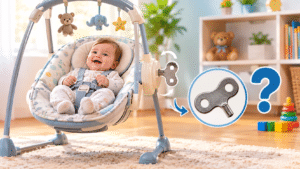
What Were Wind-Up Baby Swings?
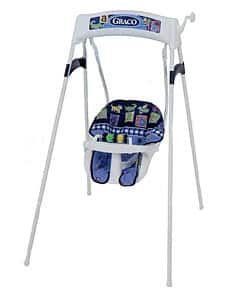
Wind-up baby swings were infant seats powered by a coiled spring. A parent turned a handle to store energy in the spring. When released, that energy moved the seat back and forth for a set time.
The design was similar to a wind-up clock or mechanical toy. It worked without electricity, batteries, or a motor. This made wind-up baby swings useful in homes where power outlets were limited or batteries were expensive.
Most models included several basic parts:
• A padded infant seat
• A metal or plastic frame
• A winding handle
• A spring-driven movement system
• A restraint belt
• A timer or stop mechanism
The swing speed was often linked to the spring’s tension. A fully wound spring could create a stronger motion at first, followed by a slower movement as the spring lost power.
This system was clever, but it had limits. Parents could not always choose an exact speed. The swing might also stop sooner than expected, especially if the spring was old or worn.
Source: bedbathandbeyond.com
Why Did Wind-Up Baby Swings Disappear?
Wind-up baby swings did not vanish for one single reason. Several changes worked together and made the old design less attractive.
Battery-powered swings became more convenient
Battery-operated swings gave parents more control. Many offered different speeds, music, timers, vibration, and automatic shutoff features.
A parent could place the swing in one room and let it run for a predictable period. With a wind-up model, the parent had to turn a handle again and again. That extra work mattered during feeding, cleaning, and late-night care.
Safety expectations became stricter
Modern infant products face more detailed safety requirements than many older products did. In the United States, infant swings are covered by federal rules and applicable safety standards. These rules address issues such as:
• Structural strength
• Stability
• Restraint systems
• Pinch points
• Sharp edges
• Product labeling
• Entrapment risks
• Safe use instructions
The Consumer Product Safety Commission has also reported many recalls involving infant swings and related products over the years. These recalls do not mean every older swing was dangerous, but they show why parents should treat vintage equipment with care.
Wind-up baby swings may have been made before current testing methods became common. Their age can also weaken plastic, fabric, screws, springs, and restraints.
Electric motors offer more consistent movement
A small motor can provide a steady rhythm. It can also work with sensors, timers, speed controls, and automatic shutoff systems.
A mechanical spring does not offer the same level of precision. Its movement may change as the spring unwinds. That difference became more important as parents began to expect adjustable and predictable baby gear.
Manufacturing became less efficient
Wind-up systems require carefully made springs, gears, shafts, and stop mechanisms. Those parts must work smoothly and safely over time.
As plastic parts and small electric motors became cheaper to produce, manufacturers had less reason to use a mechanical spring. A battery-powered swing could offer more features at a similar or lower price.
Parents wanted more features
Modern baby swings often include:
• Multiple motion settings
• Adjustable recline positions
• Removable seat covers
• Toy bars
• White noise
• Nature sounds
• Bluetooth controls
• Phone apps
• Rechargeable batteries
A wind-up system could provide motion, but it could not easily support these features. The market moved toward products that did more than rock a baby.

Source: ebay.com
Were Wind-Up Baby Swings Banned?
In general, wind-up baby swings were not banned simply because they used a winding mechanism. Their decline was mainly caused by market changes and safety concerns linked to older products.
A particular model could still be recalled if it had a defect. For example, a product might have a weak frame, a seat that tips, a faulty restraint, or a mechanism that creates a pinch hazard. A recall applies to the affected model, not automatically to every wind-up swing.
This distinction is important. Many people assume that an old product disappeared because the government outlawed it. Often, the real explanation is less dramatic: stores stopped stocking it because newer products sold better and were easier to certify, service, and update.
Anyone researching a specific swing should look for:
• The brand name
• The model number
• The manufacture date
• A permanent label
• The instruction manual
• Recall information
If the swing has no label or model information, its safety cannot be confirmed easily. That uncertainty is a serious concern when the product will support an infant.

Source: bedbathandbeyond.com
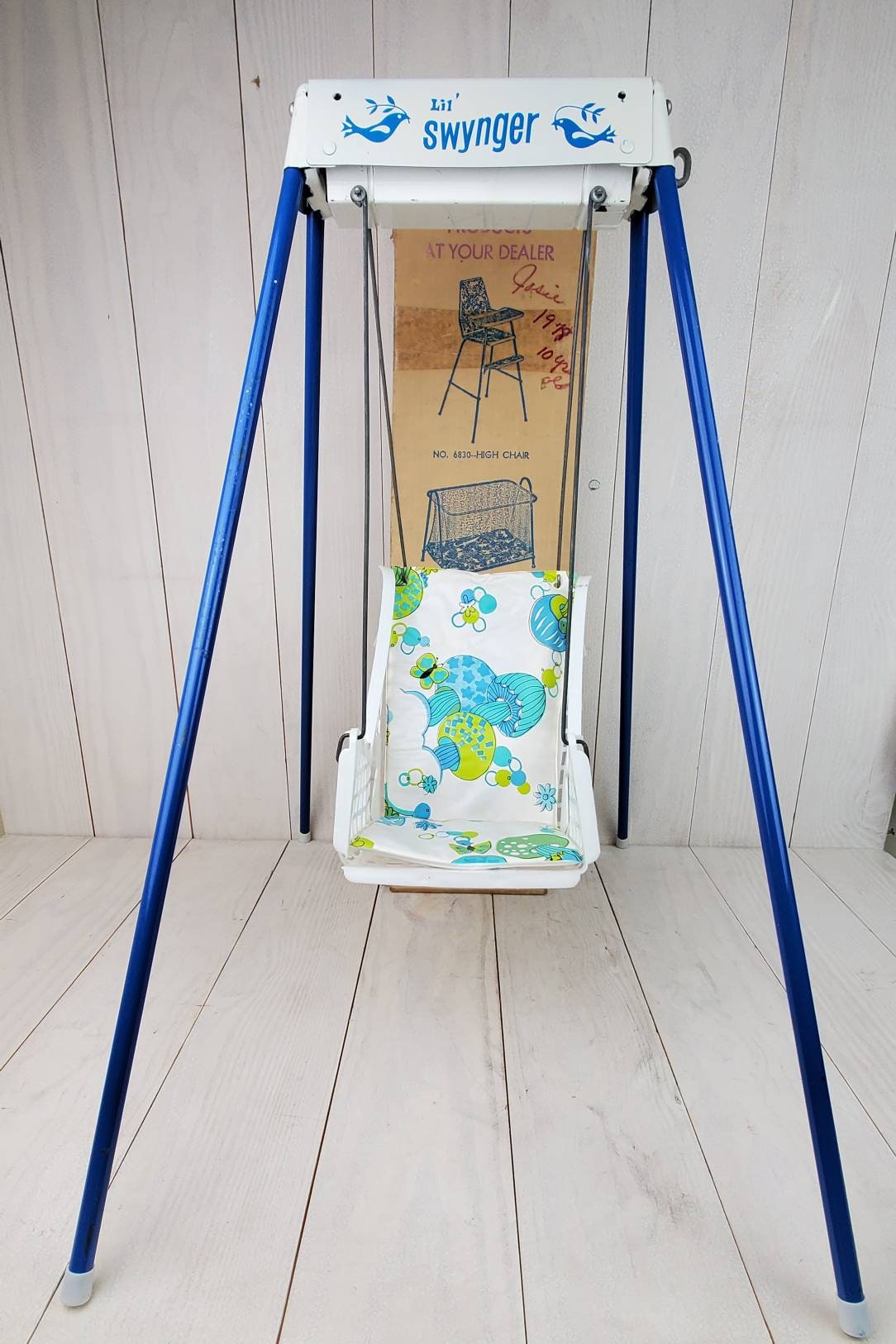
How Safe Are Vintage Wind-Up Baby Swings?
A vintage wind-up baby swing may look sturdy, but appearance is not enough to prove safety. Materials change with age, and hidden damage may not be visible during a quick inspection.
Plastic can become brittle. Metal can corrode. Fabric can weaken at the seams. A spring can lose tension or break. Old restraints may also lack the fit and strength expected in current products.
Before considering use, inspect the entire swing.
- Check the frame for cracks, bends, rust, or loose joints.
- Test every screw, hinge, and locking point.
- Examine the seat fabric and stitching.
- Confirm that the restraint closes securely.
- Look for sharp edges and exposed springs.
- Test the winding handle without placing a child in the seat.
- Watch for sudden stops, jerks, or uneven motion.
- Search the model for recall notices.
Do not use a vintage swing if the manufacturer cannot be identified. Do not replace a missing harness with a homemade strap. Do not assume that a replacement spring makes the product safe, because the frame and restraint may still be outdated.
The American Academy of Pediatrics advises parents to use baby swings only as directed and to move a sleeping baby to a firm, flat sleep surface. A swing is not a substitute for a crib, bassinet, or play yard designed for sleep.
Source: com.br
Wind-Up Baby Swings Compared With Modern Swings
The main difference is the power system, but the comparison also includes control, maintenance, and safety features.
| Feature | Wind-up baby swings | Modern baby swings |
|---|---|---|
| Power | Mechanical spring | Batteries, motor, or wall adapter |
| Speed control | Often limited | Usually adjustable |
| Motion | May slow as the spring unwinds | More consistent |
| Features | Basic rocking | Music, timers, vibration, and toys |
| Maintenance | Spring and gear wear | Motor, wiring, and battery care |
| Portability | Often independent of electricity | Battery models are portable |
| Safety information | May be difficult to find | Labels and manuals are usually clearer |
Wind-up baby swings have one clear advantage: they do not need batteries or a wall outlet. They also have a simple design that some parents may find appealing.
Modern swings offer more control and clearer product support. They are not automatically risk-free, however. A new swing still requires correct assembly, proper restraint use, supervision, and careful attention to weight limits.
The best choice is not always the swing with the most features. A simple, current product from a trusted manufacturer may be better than a complicated model that is difficult to inspect or clean.

Source: com.br
Why Some Parents Still Like the Old Design
The appeal of wind-up baby swings is easy to understand. They remind many families of a time when baby products were simple and did not need chargers, apps, or replacement batteries.
They can also be useful in stories about older homes and parenting traditions. A grandparent may remember winding a swing while preparing a bottle or folding laundry. That memory can make a vintage swing feel warm and familiar.
Still, nostalgia should not guide a safety decision. A product can be charming and well-made while still being unsuitable for a modern infant.
One practical lesson from reviewing older baby equipment is this: simple does not always mean safer. A mechanical design has fewer electronic parts, but it may have unknown wear, missing instructions, and outdated restraints.
If you like the look of a wind-up baby swing, consider a modern swing with a simple frame and neutral design. You can enjoy the classic style without depending on an old spring mechanism.

Source: com.br
Common Problems With Wind-Up Baby Swings
Wind-up baby swings can develop several problems after years of storage or use.
Weak or broken springs
A tired spring may not hold tension. A broken spring can also release energy suddenly and cause uneven movement.
Stiff gears
Dust, rust, or dried lubricant can make the gears drag. Adding oil without knowing the correct product may damage plastic parts or create a mess near the baby.
Unreliable stopping
An old timer may fail to stop the swing. Continuous movement can increase wear and may create a hazard if the swing becomes unstable.
Loose restraints
A lap belt that no longer fits tightly cannot protect a baby properly. Missing shoulder straps are also a major concern.
Unstable frames
Repeated folding, moving, or storage can loosen joints. A swing that rocks on the floor or shifts when touched should not be used.
Missing instructions
Without the original instructions, parents may not know the correct weight limit, angle, assembly method, or cleaning process.
These issues are not always obvious in photographs. Online listings often describe an old swing as “working,” but that usually means only that the mechanism moves. It does not prove that the swing meets current safety expectations.
What to Do If You Own a Vintage Wind-Up Swing
If you already own wind-up baby swings, do not place a baby in them until you complete a careful safety review.
Use this process:
- Record the brand, model, and date code.
- Search official recall databases.
- Find the original manual if possible.
- Inspect the frame, fabric, base, belt, and winding system.
- Confirm that all parts are original and secure.
- Compare the product with current infant swing safety guidance.
- Ask a qualified product safety professional for advice if anything is unclear.
If you cannot verify the swing’s history or condition, use it as a display piece instead. It can become part of a nursery theme, family photo, or collection without carrying an infant.
Never leave a baby unattended in any swing. Never use a swing near stairs, cords, heaters, pets, or other hazards. Always follow the manufacturer’s weight and age limits.
Safer Alternatives for Parents Today
Parents who want gentle motion have several current options. The right choice depends on the baby’s age, size, space, and the family’s budget.
Possible alternatives include:
• A current infant swing from a recognized manufacturer
• A stationary bouncer used under supervision
• A manual rocking seat approved for the baby’s size
• A bassinet or crib for sleep
• Gentle holding or rocking by an adult
• A baby carrier used according to its instructions
A swing should be used for short periods while the baby is awake and supervised. If the baby falls asleep, move the baby to a firm, flat sleep surface on the back.
It is also wise to register new baby products. Registration can help a manufacturer contact you if a recall occurs. Keep the manual, receipt, and model number in a safe place.
Frequently Asked Questions About What Happened To Wind-Up Baby Swings?
Are wind-up baby swings still made?
A few niche or vintage-style products may appear in specialty markets, but traditional wind-up baby swings are no longer common in the United States. Most manufacturers now use electric motors, batteries, or rechargeable systems.
Why did wind-up baby swings stop being popular?
Wind-up baby swings became less popular because they offered limited control and fewer features than motorized models. Battery-powered designs also became easier and cheaper to manufacture.
Were all wind-up baby swings recalled?
No. Some individual models may have been recalled, but there was not one universal recall covering every wind-up swing. Owners should check the exact brand and model before considering use.
Can I use a vintage wind-up baby swing?
Using one is risky if its age, condition, restraint system, or recall history is unknown. A current product with clear instructions and intact safety features is usually the safer choice.
Do wind-up baby swings need batteries?
No. Their spring mechanism stores energy when the handle is turned. That is one reason some families liked them, although the movement was usually less adjustable than that of modern swings.
Are baby swings safe for sleeping?
Baby swings are not designed to replace a crib, bassinet, or play yard for routine sleep. If a baby falls asleep in a swing, follow safe-sleep guidance and move the baby to a firm, flat sleep surface.
What should I check before buying an old baby swing?
Check the model number, recall history, frame, restraint, seat fabric, hinges, and winding mechanism. Avoid any swing with missing labels, broken parts, homemade repairs, or an unknown safety history.
Conclusion
Wind-up baby swings faded from everyday use because modern electric and battery-powered swings offered better control, more features, easier production, and clearer safety support. They were not all banned, but many became outdated as standards and parent needs changed.
A vintage swing may hold family memories, yet age creates real risks. If you own one, inspect it carefully and verify its model before making any decision. For everyday use, choose a current product, follow the manual, supervise your baby, and use a proper sleep surface.
If this guide helped, explore current infant swing safety resources and share your experience with vintage baby gear in the comments.