
When Can Baby Go In Bouncer Walker? Learn the safest age, readiness signs, and expert tips for using bouncer walkers with confidence. Most babies can use a bouncer from birth, but a sit-in walker requires independent sitting and strict safety checks.
When can a baby use a bouncer walker? The answer depends on what the product actually is. A baby bouncer supports a young infant in a reclined position, while a baby walker usually holds an older baby upright on wheels.
These products have very different age limits, risks, and readiness signs. This guide explains safe timing, correct use, expert advice, and common mistakes so you can choose with confidence.
What Does “Bouncer Walker” Mean?
The phrase “bouncer walker” can describe two very different products. Some stores use it for a soft, reclining bouncer. Others use it for a sit-in activity center or wheeled baby walker. Always check the product label and instruction manual before placing your baby inside.
A bouncer usually has a fabric seat, a low frame, and a gentle reclined angle. A walker often has a seat suspended in a plastic frame, a wide base, and wheels. A doorway jumper is another product that parents may confuse with both.
When can baby go in bouncer walker? First, identify the product type:
• Bouncer seat: Often suitable from birth if the manual allows it and the baby meets the weight range.
• Sit-in activity center: Usually intended for babies who can sit upright without help.
• Traditional wheeled walker: Not recommended by major pediatric safety groups because it can increase injury risk.
• Jumper or doorway bouncer: Appropriate only when the baby meets the maker’s size and development rules.

When Can a Baby Use a Bouncer?
Many newborns can use a properly designed bouncer from birth. The baby should fit securely, and the harness should sit correctly across the body. The product must also support the baby’s head and neck without forcing the chin toward the chest.
When can baby go in bouncer walker? If you mean a standard infant bouncer, the answer may be “from birth,” but only for supervised, short periods. The exact answer depends on the product’s minimum weight, maximum weight, recline setting, and safety instructions.
Follow these basic rules:
• Place the bouncer on the floor, never on a bed, table, sofa, counter, or other raised surface.
• Use the safety harness every time.
• Keep the bouncer away from stairs, pets, cords, heaters, and curtains.
• Stop use when the baby reaches the weight limit or can sit up, roll strongly, or climb out, if the manual says to stop then.
• Never use a bouncer as a sleep space.
A bouncer is like a parking spot, not a bedroom. If your baby falls asleep, move the baby to a firm, flat sleep surface on the back as soon as practical.

Source: co.uk
When Can a Baby Use a Sit-In Activity Center?
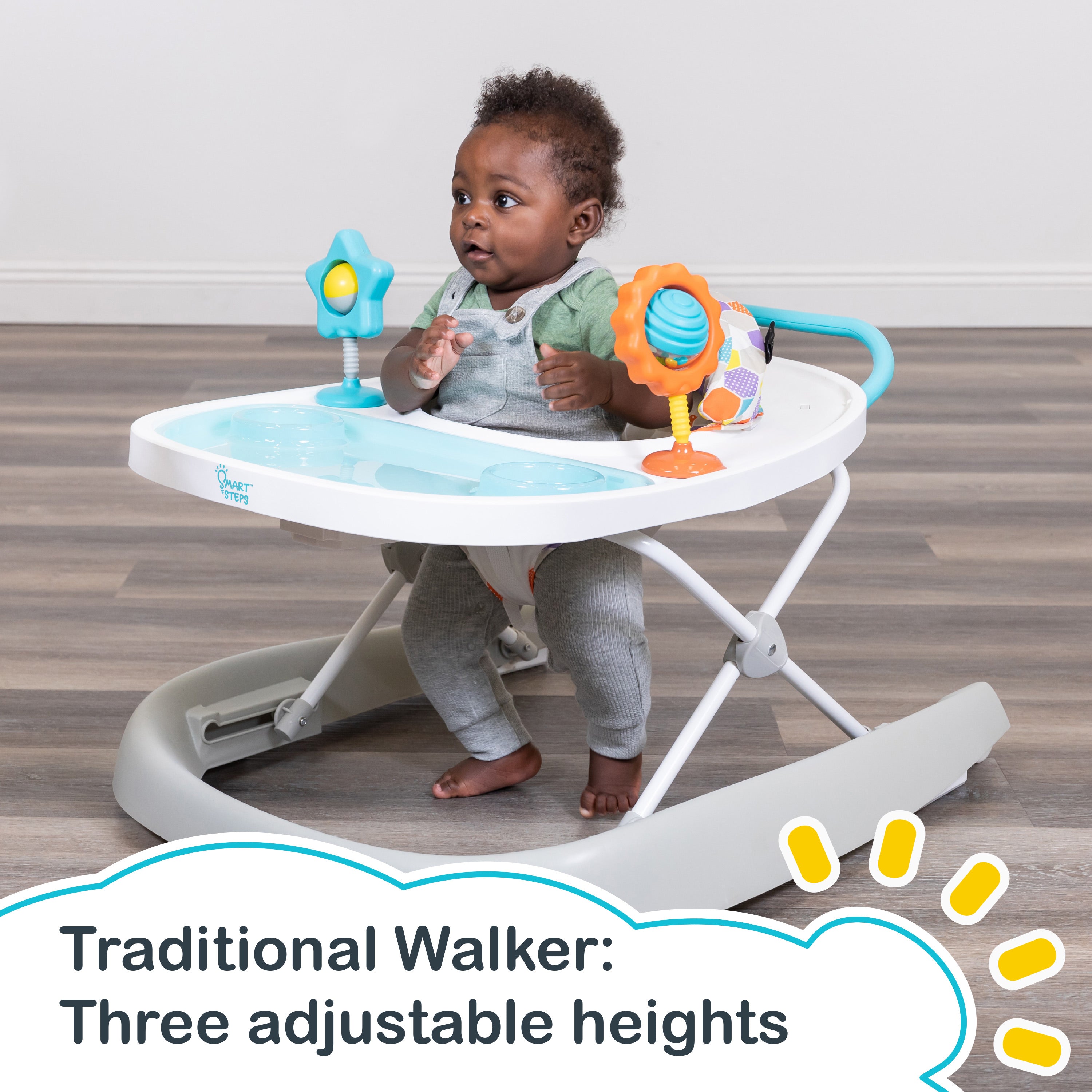
A sit-in activity center is not the same as a newborn bouncer. Most babies need good head control and the ability to sit upright with little or no support before using one. This often happens around six months, but age alone does not prove readiness.
When can baby go in bouncer walker? For a sit-in model, look for these signs instead of relying only on a birthday:
• The baby holds the head steady.
• The baby sits upright without collapsing to one side.
• The baby’s feet can touch the floor or the product’s foot platform as intended.
• The baby stays within the product’s height and weight limits.
• The baby cannot easily lean over or climb out.
A baby who still folds forward, slips sideways, or needs constant support is not ready. Waiting a few weeks is safer than trying to rush a new skill.
Source: globalgoodbakery.com
Are Wheeled Baby Walkers Safe?
Traditional wheeled baby walkers carry important risks. They can move quickly, tip near steps, reach hot objects, and allow a baby to access items that were previously out of reach. Babies can also fall down stairs before an adult has time to react.
The American Academy of Pediatrics has advised against the use of traditional baby walkers. Canada banned the sale, advertising, and importation of baby walkers. These safety concerns remain relevant even when a product has a wide base or meets a local manufacturing standard.
When can baby go in bouncer walker? If “walker” means a wheeled, sit-in device, the safest answer is to avoid it rather than search for the perfect age. A stationary activity center, push toy, or supervised floor play can support movement with fewer hazards.
A walker also does not teach a baby to walk sooner. Walking develops through balance, muscle control, practice, and exploration. A wheeled walker may place the baby on the toes and allow movement without the normal balance work needed for independent walking.

Source: co.uk
Signs Your Baby Is Ready
Developmental readiness matters more than a single number on a calendar. Two babies of the same age may have very different levels of head, trunk, and leg control.
When can baby go in bouncer walker? Use the product category and your baby’s skills together. A baby may be ready for a reclined bouncer at birth but not ready for an upright activity center months later.
Check for the following signs:
• Stable head control during daily activities.
• A straight or well-supported back while seated.
• No repeated slumping, sliding, or folding forward.
• Calm behavior while placed in the product.
• Feet positioned as the manual shows.
• No attempt to climb out.
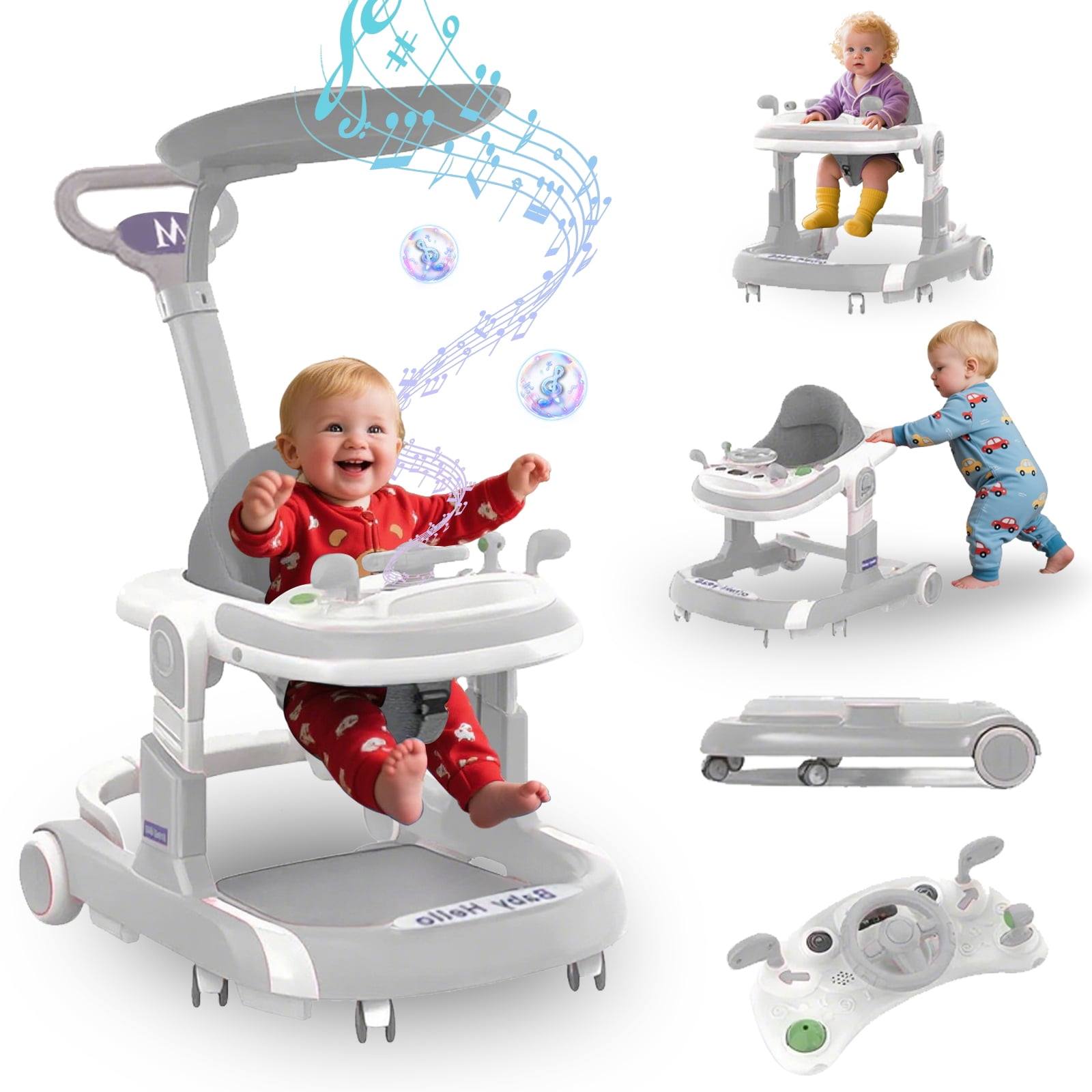
Do not use a product to “train” a baby who lacks the strength to sit. Babies build strength best through safe floor time, tummy time, reaching, rolling, and free movement.
Source: globalgoodbakery.com
How Long Can Baby Stay in a Bouncer?
Even when a bouncer is age-appropriate, use should be limited. Long periods in a reclined or supported seat can reduce opportunities for movement. Babies need time on a firm floor to roll, stretch, reach, and learn body control.
A practical routine is to use the bouncer for brief, supervised periods while you are nearby. For example, you might place a young baby in it while preparing a meal, then move the baby to a safe floor area when the task is done.
Keep these habits in mind:
• Stay close enough to see and respond to the baby.
• Stop if the baby slumps, struggles, sweats, or becomes upset.
• Alternate bouncer time with floor play and holding.
• Never leave the home or rely on a monitor as a substitute for supervision.
• Do not place blankets, pillows, toys, or extra padding beneath the baby.
The Centers for Disease Control and Prevention encourages daily movement and active play for infants. A bouncer can be useful for short breaks, but it should not become the main place where a baby spends awake time.
Safe Setup and Supervision Tips
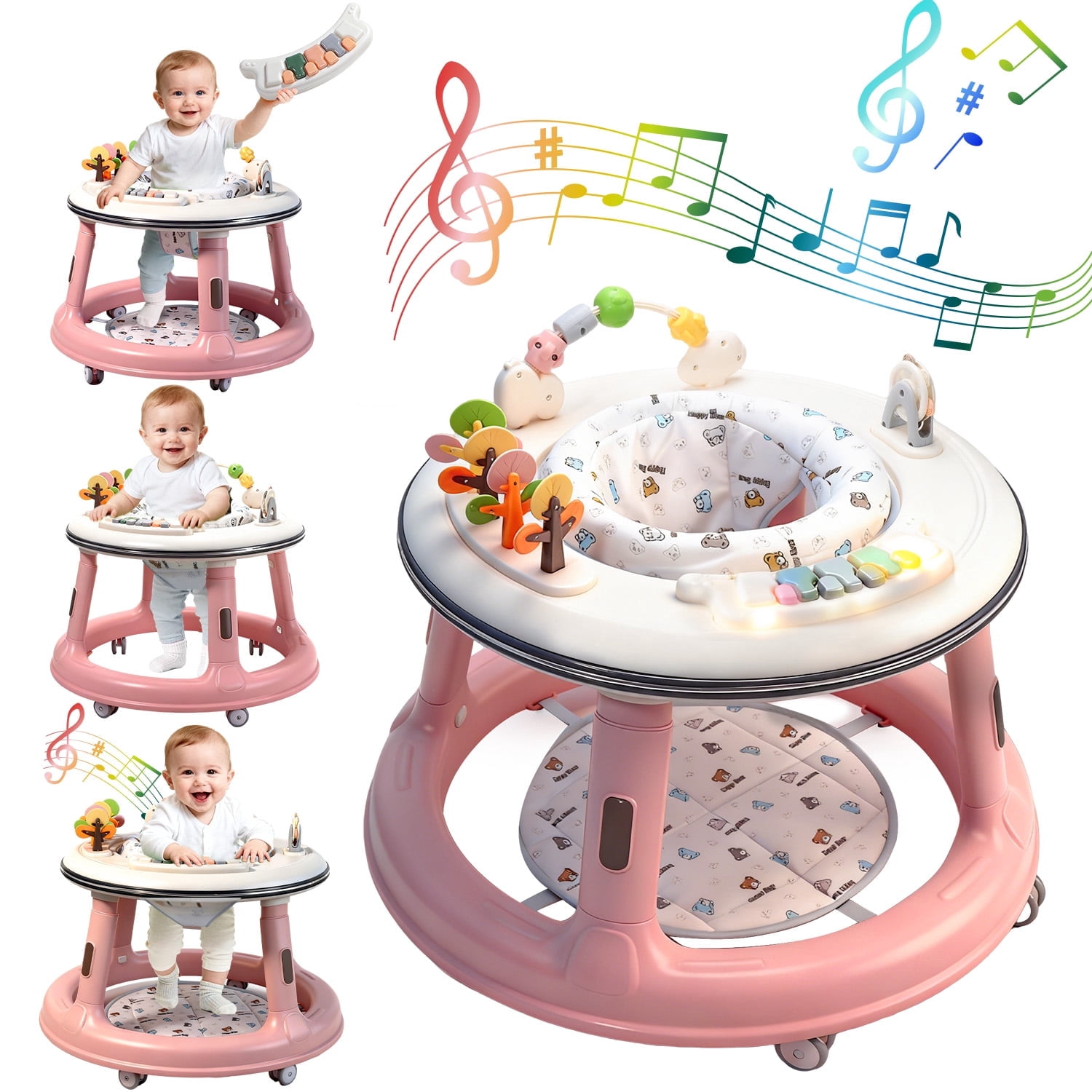
When can baby go in bouncer walker? Safe use depends not only on age but also on setup. A correctly used product can still become dangerous if it sits near a stairway, hot drink, pool, or tablecloth.
Before each use, complete this quick check:
- Read the product label and manual.
- Inspect straps, buckles, seams, frame parts, and locking points.
- Confirm that the bouncer sits flat and does not rock unexpectedly.
- Place it on the floor in a clear area.
- Fasten the harness snugly but comfortably.
- Keep cords, pets, siblings, and hot items away.
- Watch the baby throughout use.
For a secondhand product, check the model for recalls and confirm that all parts are present. Avoid items with broken frames, missing straps, deep stains, strong odors, or unclear instructions. A low price is not worth a preventable injury.
Source: walmart.com
Bouncer, Activity Center, or Floor Play?
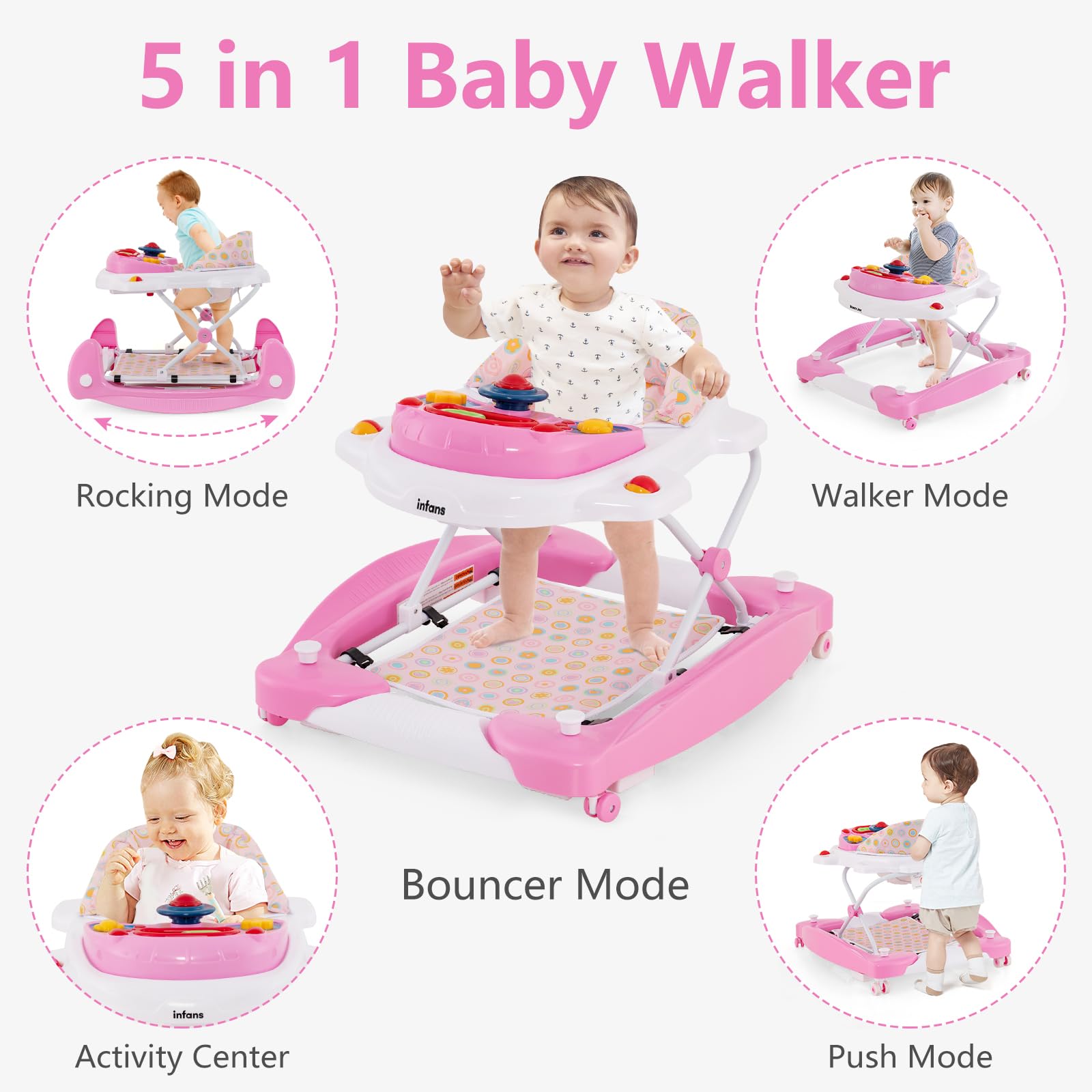
Each option serves a different purpose. A bouncer offers short-term support for a young infant. A stationary activity center may entertain a baby who can sit well. Floor play gives the broadest chance to build natural movement skills.
When can baby go in bouncer walker? Consider what your baby needs at that moment:
• For a newborn: Choose a firm, reclined bouncer with strong head support.
• For a baby learning to sit: Choose supervised floor play rather than an upright container.
• For a steady sitter: Consider a stationary activity center within the maker’s limits.
• For a baby beginning to stand: Offer stable furniture, a secure play yard, or a push toy used under close supervision.
• For a mobile crawler: Focus on childproofing rather than containing the baby for long periods.
A stationary center is safer than a wheeled walker because it does not carry the baby across the room. Still, it can create fall or climbing risks if placed near stairs, windows, hot surfaces, or furniture.
Source: infansbaby.com
Common Mistakes Parents Should Avoid
Many safety problems happen during busy moments. A parent may place a bouncer on a sofa for convenience or leave a walker near the kitchen for “just one minute.” Babies can move and change position faster than expected.
When can baby go in bouncer walker? Avoid these common errors:
• Treating the manufacturer’s maximum age as a guaranteed readiness date.
• Using a bouncer for sleep.
• Adding extra padding that changes the baby’s position.
• Carrying the bouncer while the baby is inside.
• Letting a baby use a wheeled walker near stairs or doors.
• Assuming a harness makes a product safe on a raised surface.
• Using a damaged or recalled item.
• Leaving a baby alone with a pet, sibling, or young child nearby.
One practical lesson many caregivers learn is that convenience products need the most careful boundaries. The product should support your routine, not replace active supervision or safe sleep practices.

Source: consumerreports.org
What Pediatric Experts Recommend
Pediatric guidance generally supports supervised floor play and discourages traditional wheeled walkers. Safe sleep guidance also recommends a firm, flat, separate sleep surface with the baby placed on the back. These recommendations apply even when a baby appears comfortable in a bouncer.
When can baby go in bouncer walker? A pediatrician or child health nurse can give advice for babies born early, babies with low muscle tone, or babies with developmental concerns. Corrected age may matter for premature babies, so a standard age chart may not tell the whole story.
Product rules can vary by country and brand. This article gives general safety education, not a personal medical assessment. If your baby repeatedly slumps, has trouble breathing, shows poor head control, or seems painful in a seat, remove the baby and seek professional advice.
Frequently Asked Questions About When Can Baby Go In Bouncer Walker?
Can a newborn go in a baby bouncer?
Many newborns can use a suitable bouncer from birth if the manual allows it and the baby fits the weight range. Use the harness, keep the bouncer on the floor, and supervise closely.
When can baby go in bouncer walker if it has wheels?
A traditional wheeled baby walker is not recommended by major pediatric safety organizations because it can increase access to stairs, hot objects, and other hazards. A stationary activity center is a safer alternative when the baby can sit upright and meets the product requirements.
How long can a baby stay in a bouncer?
Use a bouncer for short, supervised periods and provide plenty of floor time each day. Move a sleeping baby to a firm, flat sleep surface on the back.
Can a baby sleep in a bouncer walker?
No. Bouncers, activity centers, and walkers are not safe sleep spaces. If your baby falls asleep, move the baby to an approved crib, bassinet, or play yard as soon as possible.
What age can a baby use a sit-in activity center?
Many babies use one around six months, but readiness matters more than age. The baby should have steady head control, sit upright, fit the product correctly, and avoid slumping or climbing out.
Do baby walkers help babies learn to walk?
Traditional wheeled walkers do not teach the balance needed for independent walking. Floor play, pulling up on stable furniture, cruising, and supervised practice better support natural walking skills.
What should I do if my baby slumps in the bouncer?
Remove the baby and check the recline, harness, size limits, and product instructions. If the baby cannot maintain a safe position, stop using that product and ask a pediatric professional for guidance.
Conclusion
When can baby go in bouncer walker? A newborn may use a suitable reclined bouncer from birth, while an upright activity center usually requires strong head control and independent sitting. Traditional wheeled walkers are best avoided because they can increase injury risks and do not help babies learn to walk.
Choose the product by type, follow its manual, use it only on the floor, keep sessions brief, and supervise every time. Give your baby plenty of safe floor play, and ask a pediatric professional when development or positioning raises concern.
Explore trusted child-safety guidance and share your own safety tips with other caregivers.