
How Long Can A Baby Sleep In A Bouncer? Learn safe sleep limits, key risks, and what to do instead for healthier, safer naps. A baby should not sleep in a bouncer; move a sleeping baby to a firm, flat sleep surface right away.
Parents often ask, “How long can a baby sleep in a bouncer?” because babies may drift off during gentle rocking. The safest answer is clear: a bouncer is designed for supervised awake time, not routine or unsupervised sleep. This guide explains the safety risks, what to do when your baby falls asleep, and how to create a safer sleep routine based on pediatric guidance.

Can a Baby Sleep in a Bouncer?
No. Babies should not sleep in a bouncer, even for a short planned nap. A bouncer holds a baby in a curved or seated position, which can allow the head to fall forward and partly block the airway.
The American Academy of Pediatrics recommends that babies sleep on their backs on a firm, flat, noninclined surface. This means a safety-approved crib, bassinet, or play yard with a fitted sheet and no loose items.
A bouncer may be useful while your baby is awake and watched closely. It is not a safe replacement for a crib, bassinet, or bedside sleeper.

Source: co.uk
How Long Can a Baby Sleep in a Bouncer?
The safest sleep duration is zero. If your baby falls asleep in a bouncer, move the baby to a firm, flat sleep surface as soon as you notice it.
This advice applies to newborns, young infants, and older babies who still cannot safely sit up and reposition themselves. A baby may look peaceful in a bouncer, but quiet breathing can be difficult to notice when the chin rests against the chest.
The question “How long can a baby sleep in a bouncer?” often comes from a real-life situation, such as a baby falling asleep while a parent cooks or folds laundry. Do not panic or blame yourself. Gently transfer the baby to a safe sleep space as soon as possible.
Why There Is No Safe Time Limit
There is no proven number of minutes that makes bouncer sleep safe. Risk depends on many factors, including:
• The baby’s age and development
• The angle and design of the bouncer
• The baby’s head position
• Whether the baby is premature or has breathing problems
• Whether an adult is watching closely
• Whether straps, blankets, or toys affect the baby’s position
Active supervision may help you notice a problem, but it does not make a bouncer a safe sleep surface. A supervising adult can miss subtle breathing trouble, especially during a short nap.

Source: angelbliss.us
Why Is Bouncer Sleep Dangerous?
Bouncers and similar seats are inclined products. They can place a baby’s body in a curved position, with the head leaning forward. This can cause positional asphyxia, which occurs when a baby’s position limits oxygen or prevents normal breathing.
Young babies have weak neck muscles. They may not be able to lift or turn their heads if the chin drops toward the chest. Unlike an older child, an infant may not have the strength to correct the position.
Other risks include:
• The baby sliding down and becoming wedged
• The baby rolling onto the side or stomach
• Straps pressing against the chest or neck
• Falls if the bouncer is placed on a bed, couch, table, or counter
• Overheating from blankets or extra clothing
• A false sense of security during unattended sleep
A bouncer can also move when placed on a soft surface. The safest location for an awake baby in a bouncer is usually the floor, away from stairs, pets, cords, and other hazards. Always follow the product manual.

Source: aseertime.com
What Should You Do If Your Baby Falls Asleep?
If your baby falls asleep in a bouncer, respond calmly and promptly. You do not need to wake the baby fully before moving them.
Follow these steps:
- Check that the baby is breathing normally and that the face is visible.
- Release the bouncer straps according to the product instructions.
- Lift the baby with support under the head and neck.
- Place the baby on their back in a crib, bassinet, or play yard.
- Use only a firm, flat mattress with a fitted sheet.
- Remove blankets, pillows, positioners, toys, and stuffed animals.
- Check the baby again after the transfer.
If the baby looks blue, struggles to breathe, becomes limp, or does not respond normally, call emergency services immediately. Trust your instincts when something seems wrong.
One practical lesson is worth repeating: do not wait for a “deep sleep” before moving the baby. A small transfer may cause a brief stir, but waking for a moment is safer than remaining asleep in an inclined seat.

Source: newtonbaby.com
How to Use a Bouncer More Safely
A bouncer can be helpful during supervised awake time. It may give you a few hands-free minutes while you stay close and watch your baby.
Use these safety habits:
• Place the bouncer on the floor, never on a table, bed, sofa, or countertop.
• Keep the harness fastened as directed by the manufacturer.
• Keep your baby’s face uncovered and visible.
• Stay close enough to respond quickly.
• Use the bouncer only within the stated weight and age limits.
• Stop use when your baby reaches the product’s movement or developmental limit.
• Check for recalls, damaged parts, loose fabric, and broken straps.
• Keep the bouncer away from stairs, heaters, pets, cords, and water.
• Move your baby to a crib if drowsiness begins.
Do not use blankets, pillows, rolled towels, or head supports to hold your baby in place. These items may increase the risk of suffocation or overheating.
A bouncer is best viewed as a supervised activity seat, not as a small bed. That simple distinction can prevent many unsafe sleep situations.
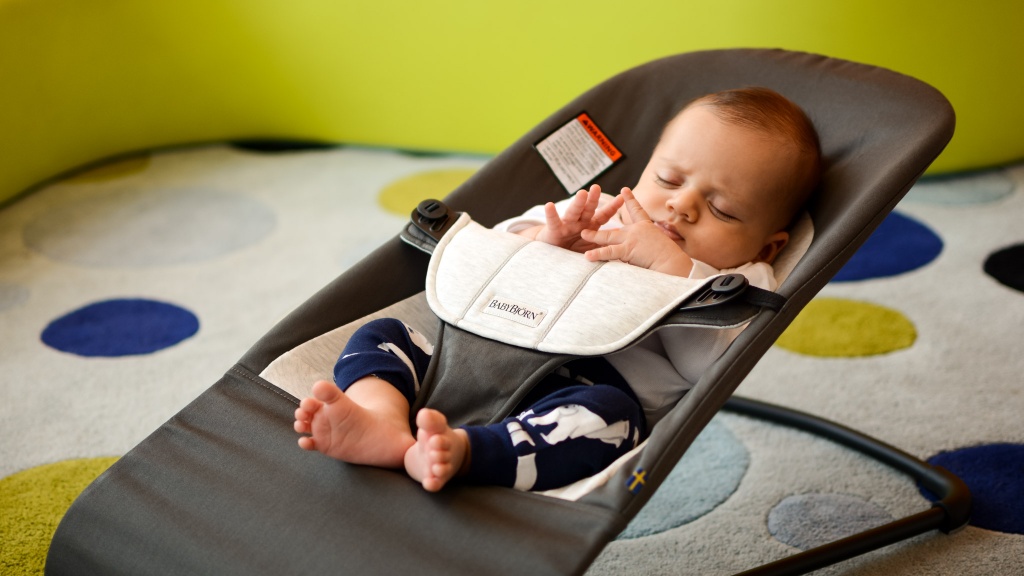
Source: kamikadze.sk
What Is a Safe Sleep Environment?
A safe sleep space should be simple. Think of it as a clear, firm island for your baby.
The space should include:
• A crib, bassinet, or portable play yard that meets current safety standards
• A firm, flat mattress
• A fitted sheet made for that mattress
• A baby placed on their back for every sleep
The space should not include:
• Quilts or loose blankets
• Pillows
• Bumper pads
• Stuffed animals
• Sleep positioners
• Wedges or inclined inserts
• Adult beds, couches, or recliners
Room sharing is recommended over bed sharing during early infancy. Keeping the baby’s sleep space near your bed can make feeding and checking easier while reducing the hazards of sleeping on the same surface.
If your baby rolls from back to stomach and can roll both ways, continue placing the baby on the back at the start of sleep. You do not need to keep turning the baby back unless a medical professional gives different advice.

Source: parents.com
How Long Can a Baby Stay Awake in a Bouncer?
There is no universal safe time limit for awake use because babies and products vary. The product manual may give limits, but it should never be treated as permission for sleep.
Watch your baby rather than focusing only on the clock. Move the baby out of the bouncer if they slump, seem tired, become upset, sweat, or show signs that they need a change of position.
Offer regular floor time, holding time, and supervised tummy time when your baby is awake. Long periods in seated devices can limit free movement. Babies need chances to stretch, kick, look around, and build neck and body strength.
If you are asking how long a baby can sleep in a bouncer because your baby naps there every day, make a gradual change. Start the nap in a crib or bassinet, and use the bouncer only for brief, supervised awake periods.
Bouncer Sleep, Car Seats, and Other Sitting Devices
A bouncer is not the only product that should not be used for routine sleep. Similar concerns apply to swings, inclined sleepers, rocking seats, and other sitting devices.
Car seats are essential for travel, but they should not become a regular sleep space outside the vehicle. When you arrive, move the baby to a firm, flat surface as soon as practical.
Strollers also require care. Some strollers lie fully flat and are approved for newborn sleep, while others are not. Check the exact model instructions instead of assuming that every stroller seat is safe for sleep.
The same rule helps across products: if the baby is sitting or leaning at an angle, check whether the product is specifically approved for sleep. When in doubt, use a crib, bassinet, or play yard.
Common Reasons Babies Fall Asleep in Bouncers
Babies often fall asleep in bouncers because the motion feels soothing. The steady rocking can remind them of movement before birth. Soft sounds, dim light, and close contact may also make them drowsy.
Common situations include:
• A baby settling after a feed
• A parent using gentle movement to calm fussiness
• A baby becoming tired during supervised play
• A caregiver needing a safe place for a brief awake period
• A family using the bouncer because the baby resists the crib
These situations are normal and understandable. The important step is to separate calming from sleeping. You can soothe your baby in your arms or with gentle movement, then place the baby in the safe sleep space before sleep begins.
If your baby only sleeps in a bouncer, speak with a pediatrician. Reflux symptoms, congestion, feeding problems, or discomfort may be affecting sleep. Do not incline the crib or use sleep positioners unless a qualified medical professional specifically directs you.
Mistakes to Avoid
Even careful parents can make mistakes when a baby falls asleep quickly. Knowing the common errors makes safe choices easier.
Avoid these habits:
• Leaving the baby in the bouncer while you shower or leave the room
• Placing the bouncer on a couch or adult bed
• Covering the bouncer with a blanket
• Adding a pillow, cushion, or rolled towel
• Assuming a sleeping baby is safe because the harness is fastened
• Letting the baby sleep there for “only five more minutes”
• Using a secondhand product without checking recalls and missing parts
• Moving a sleeping baby into an adult recliner or sofa
A harness prevents falls. It does not prevent airway blockage. This is one of the most important points for any parent wondering how long can a baby sleep in a bouncer.
When to Call a Pediatrician
Talk with your baby’s health care professional if your baby frequently falls asleep in a bouncer or refuses every flat sleep surface. The clinician can help identify feeding, breathing, developmental, or comfort concerns.
Seek urgent medical help if your baby has:
• Blue, gray, or pale skin
• Trouble breathing
• Long pauses in breathing
• Severe weakness or limpness
• Unusual difficulty waking
• Repeated choking or coughing during sleep
Premature babies and babies with heart, lung, muscle, or neurologic conditions may need individualized advice. General safety guidance is important, but your child’s medical team can explain any special needs.
This article provides general education. It does not replace care from a pediatrician or emergency professional.
How Long Can a Baby Sleep in a Bouncer? Safety Checklist
Use this short checklist whenever your baby is in a bouncer:
• Is the baby awake and alert?
• Is the bouncer on the floor?
• Is the harness used correctly?
• Is the baby’s face fully visible?
• Is the chin lifted away from the chest?
• Are you close enough to watch continuously?
• Is the product within its age, weight, and development limits?
• Will you move the baby immediately if sleep begins?
If the answer to the last question is no, choose a crib, bassinet, or play yard instead.
Frequently Asked Questions About How Long Can a Baby Sleep in a Bouncer?
Can a newborn nap in a bouncer?
No. A newborn should not nap in a bouncer because the curved, inclined position may affect breathing. Move the baby to a firm, flat bassinet, crib, or play yard when sleep begins.
What should I do if my baby falls asleep in a bouncer?
Check the baby’s breathing, then transfer them to a firm, flat sleep surface on their back. Remove loose blankets, pillows, toys, and other items from the sleep area.
Is a bouncer safe if I watch my baby the whole time?
Close supervision is important, but it does not make a bouncer safe for sleep. A baby can develop an unsafe head or neck position quickly, so the bouncer should be used only for supervised awake time.
Can a baby sleep in a bouncer for five minutes?
There is no proven safe sleep period in a bouncer, including five minutes. If sleep starts, move the baby to a crib, bassinet, or play yard as soon as possible.
Can a baby sleep in a bouncer overnight?
No. Overnight sleep should take place on a firm, flat surface designed for infant sleep. A bouncer should never replace a crib, bassinet, or approved play yard.
Is it safe for a baby to sleep in a bouncer after feeding?
Even after feeding, a bouncer is not a safe sleep space. Hold the baby upright as advised by your pediatrician, then place the baby on their back in a safe sleep area when they become drowsy.
When should a baby stop using a bouncer?
Follow the manufacturer’s age, weight, and developmental limits. Stop sooner if the baby tries to sit up, roll, climb, or pull forward, because these actions can increase the risk of tipping or falling.
Conclusion
A baby should not sleep in a bouncer, even for a short planned nap. Bouncers are for supervised awake time, while a crib, bassinet, or play yard with a firm, flat surface is the safer choice for sleep.
If your baby dozes off, stay calm and move them as soon as possible. Keep the sleep space clear, place your baby on their back, and ask a pediatrician for help if sleep problems continue. Share this guide with other caregivers and review your baby’s product instructions to build safer daily habits.