
When Can Baby Use Activity Center? Learn the safest age, readiness signs, benefits, and tips for introducing an activity center with confidence. Most babies can use a suitable activity center around six months, once they show steady head and trunk control.
Knowing when a baby can use activity center products safely helps parents support play without rushing development. Age alone is not enough. A baby’s posture, strength, balance, and the design of the activity center all matter. This guide explains readiness signs, safe use, common risks, and practical tips based on pediatric safety guidance.
What Is a Baby Activity Center?
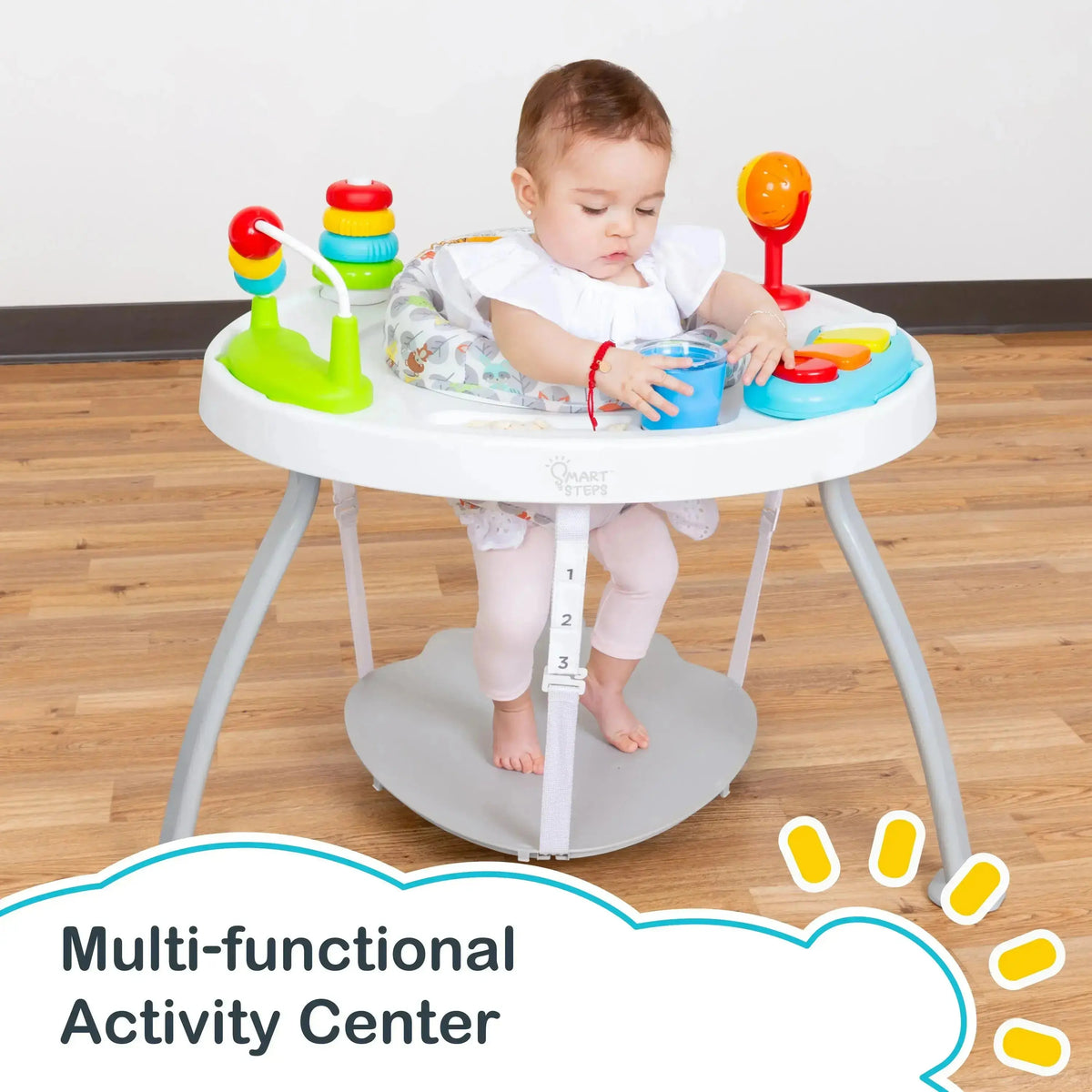
A baby activity center is a play station with toys, sounds, textures, and other features that encourage babies to explore. Some models have a padded seat that lets the baby turn and reach. Others are stationary tables that a baby uses while standing.
The term “activity center” can describe several different products:
• Seated activity centers have a fabric seat and a toy tray.
• Stationary activity tables do not have wheels and are used when a baby can stand with support.
• Jumper activity centers include springs or elastic parts that let a baby bounce.
• Baby walkers have wheels and allow a child to move across the floor. They are different from stationary activity centers and carry greater safety concerns.
When parents ask, “When can baby use activity center products?” they often mean a seated model. Always check the product manual because weight limits, height rules, and readiness guidance vary by brand.

Source: inspirationlaboratories.com
When Can Baby Use an Activity Center?
Most babies are ready for a seated activity center at about 6 months. However, some babies may be ready slightly earlier or later. The safest answer to when can baby use activity center products is based on developmental signs, not only the number of months.
A baby may be ready when they can:
• Hold their head upright without wobbling.
• Keep their upper body fairly steady while sitting with support.
• Sit with little help for short periods.
• Reach for toys without falling forward.
• Keep their hips centered in the seat.
• Place both feet comfortably on the floor or foot platform.
• Stay awake and alert during play.
A baby who still folds at the waist, leans sharply to one side, or struggles to keep their head up may need more time. In that case, floor play is usually a better choice.
The answer to when a baby can use an activity center should also include the manufacturer’s instructions. Some products are made for babies who can sit alone. Others allow use before independent sitting but require strong head control. Read the label and manual before placing your baby inside.

Developmental Signs Matter More Than Age
Babies develop at different speeds. One 6-month-old may sit well, while another may still need support. Neither pattern is automatically a concern.
An activity center should support natural movement, not force a baby into a position. Think of it as a short play stop, not a training device. Babies still need plenty of time on the floor to roll, reach, crawl, and build muscle.
When considering when can baby use activity center equipment, watch how your baby moves during normal play. A baby who can push up, turn toward a toy, and recover from a small lean may be closer to readiness than a baby who simply meets a certain age.
Talk with your pediatrician if your baby:
• Cannot hold their head steady by the age suggested in your care plan.
• Always leans to one side.
• Seems very stiff or unusually floppy.
• Has trouble using one side of the body.
• Loses a skill they had already gained.
These signs do not always mean there is a serious problem. They do mean that professional advice can help you choose the safest next step.

Source: tinylove.com
How to Introduce an Activity Center Safely
Once you know when can baby use activity center products, begin with short and calm sessions. Place the center on a flat floor, away from stairs, cords, heaters, windows, and other hazards.
Follow these steps:
- Inspect the activity center before each use. Look for loose screws, cracked plastic, torn fabric, and damaged toys.
- Set the seat or platform to the correct height. Your baby’s feet should rest flat or make gentle contact with the support surface.
- Stay close and watch your baby. Never leave a baby unattended in an activity center.
- Start with 5 to 10 minutes. Increase time only if your baby remains comfortable and well positioned.
- Stop when your baby slumps, cries, looks tired, or tries to climb out.
- Clean the seat and toys as directed. Babies often touch the tray and then put their hands in their mouths.
A common mistake is to place a baby in the center while doing chores in another room. Even a stable product can tip, break, or allow a baby to reach an unsafe object. Supervision should be close enough for you to respond at once.
Source: babytrend.com
How Long Can a Baby Stay in an Activity Center?
An activity center should be used for short periods. Many pediatric and child development experts recommend limiting time in containers, including seated devices, bouncers, and swings. Too much time in one position can reduce opportunities for free movement.
There is no single universal time limit for every product. A practical approach is to use the activity center for about 10 to 15 minutes at a time, then offer floor play or a change of position.
Keep total daily use modest. Your baby needs time to:
• Practice tummy time.
• Roll from side to side.
• Sit on the floor with support.
• Reach for toys in different directions.
• Move freely without straps or a fixed seat.
If you are still wondering when can baby use activity center during the day, use it when your baby is rested and supervised. Do not use it as a place for sleep, meals, or long periods of quiet containment.

Source: kids2.com
Benefits of Using an Activity Center
A well-designed activity center can offer useful play opportunities. It can give babies a safe place to look, reach, grasp, and explore different textures.
Possible benefits include:
• Encouraging hand-eye coordination through reaching and grabbing.
• Supporting sensory exploration with sounds, colors, and textures.
• Giving caregivers a short period to prepare a meal or fold laundry while staying nearby.
• Helping babies practice turning their upper body.
• Introducing simple cause-and-effect play, such as pressing a button to make a sound.
These benefits depend on proper use. An activity center does not teach a baby to walk, and it should not replace floor play. Babies learn movement best through varied, active exploration.
When can baby use activity center play for development? The best time is when the baby is alert, comfortable, and ready to engage. A tired or hungry baby may gain little from the experience.
Source: babytrend.com
Risks and Limitations Parents Should Know
Activity centers are not risk-free. A baby may lean over the edge, pinch fingers, reach a hot drink, or attempt to climb out. Small toys can also become choking hazards if they detach.
Potential concerns include:
• Poor posture when the seat is too large or too low.
• Pressure on the toes when the platform is too high.
• Falls if the product is placed near steps or an uneven surface.
• Tipping if an older child pulls on the center.
• Reduced floor movement when used for long periods.
• Skin irritation from heat, sweat, or a poorly fitting seat.
A seated activity center may also give parents a false sense of security. The center can keep a baby in one place, but it cannot replace an attentive adult.
Wheeled baby walkers deserve special caution. They can move quickly and allow babies to reach stairs, hot surfaces, cords, and other dangers. The American Academy of Pediatrics has warned about walker injuries and supports removing wheeled walkers from homes. A stationary activity center is a safer alternative, but it still requires supervision.

Source: thebump.com
Choosing the Right Activity Center
The best activity center is stable, easy to clean, and suited to your baby’s current skills. Do not buy a product only because it has many lights, sounds, or toys.
Look for:
• A broad, stable base.
• Strong, secure construction.
• A seat that supports the baby without pressing the hips into an awkward position.
• A height adjustment feature.
• Non-slip feet.
• No small parts that can detach.
• Clear age, weight, and height instructions.
• A design that lets the baby leave the center as they grow.
Before buying, search for current product recalls through the U.S. Consumer Product Safety Commission. Secondhand products need extra care because they may be missing instructions or parts. Avoid any center with damage, an unknown recall history, or missing safety labels.
When can baby use activity center models from a particular brand? The brand’s instructions provide the starting point, but your baby’s readiness remains important. If the manual says the child must sit independently, follow that rule even if your baby seems eager.

Source: tinylove.com
Activity Center Versus Floor Play
Floor play remains the foundation of early movement. On the floor, a baby can shift weight, roll, stretch, and discover how their body works. These movements help build strength for sitting, crawling, pulling up, and walking.
An activity center offers a different type of play. It gives the baby access to toys while providing support. Both can fit into a balanced routine, but the activity center should be the smaller part.
A simple daily pattern may look like this:
• Morning: supervised tummy time and reaching games on the floor.
• Midday: a short activity center session while a caregiver stays nearby.
• Afternoon: free movement, reading, and supported sitting.
• Evening: calm floor play before the bedtime routine.
When can baby use activity center time without losing movement practice? Use it after active floor play, keep it brief, and return your baby to the floor before they become tired.
Practical Lessons Parents Often Learn
One frequent mistake is judging readiness by interest alone. A baby may reach eagerly for the toy tray but still lack the trunk strength to sit safely. Excitement shows curiosity; it does not always show physical readiness.
Another mistake is leaving the center seat too high. If a baby’s feet dangle, they may push against the seat or rest on their toes. Adjust the height so the legs are supported, and the baby is not forced into a standing position.
A useful real-life test is to watch your baby for one minute after placement. If the baby stays centered, reaches with both hands, and keeps the head upright, the setup may be working. If the baby slumps, twists, or fusses, take them out and try again later.
Parents also sometimes assume a baby must use an activity center because other families do. That is not true. If your baby dislikes it, floor play, a play mat, or supervised sitting may be just as valuable.
When to Stop Using an Activity Center
Stop using a seated activity center when your baby can climb out, reaches the product’s weight limit, or no longer fits comfortably. You should also stop if the baby repeatedly leans over the edge or tries to stand on the seat.
For a stationary activity table, follow the product’s height and weight rules. Some tables are designed for standing toddlers, while others convert into a regular play table.
When can baby use activity center products safely over time? The answer changes as your baby grows. A product that was suitable at 6 months may become unsafe once the baby is mobile, stronger, or able to pull up.
Never use an activity center for sleep. If your baby falls asleep, move them to a firm, flat sleep surface placed on their back, following safe sleep guidance.
Frequently Asked Questions About When Can Baby Use Activity Center?
When can baby use activity center products for the first time?
Many babies can begin around 6 months when they have steady head control and can sit with little support. Always follow the product manual and look for readiness signs rather than relying on age alone.
Can a 4-month-old use an activity center?
Some products allow use at 4 months, but only if the baby meets the stated safety requirements. A 4-month-old who cannot hold their head and trunk steady should not use a seated activity center.
Should a baby be able to sit independently before using an activity center?
Not always. Some centers allow supported sitting, while others require independent sitting, so the manufacturer’s instructions matter. If your baby slumps or leans, wait and ask a pediatrician for guidance.
How long should a baby stay in an activity center?
Start with about 5 to 10 minutes and keep sessions short. Stop sooner if your baby becomes tired, uncomfortable, or poorly positioned.
Are activity centers safe for babies?
They can be safe when used as directed on a flat surface with constant supervision. They are not safe for sleep, climbing, use near stairs, or use with damaged or recalled parts.
Are baby walkers and activity centers the same?
No. A stationary activity center stays in one place, while a wheeled walker lets a baby move around. Wheeled walkers have a higher injury risk because babies can reach hazards and fall down stairs.
Can an activity center help a baby learn to walk?
An activity center does not teach walking. Babies develop walking skills through floor movement, pulling up, cruising, balance practice, and other natural activities.
Conclusion
The answer to when can baby use activity center depends on readiness, product design, and safe supervision. Many babies are ready near 6 months when they have strong head control, steady posture, and enough body support to sit safely.
Choose a stable product, follow the manual, keep sessions brief, and give your baby plenty of free floor play. Avoid wheeled walkers, never use an activity center for sleep, and stop when your baby outgrows the design.
Use these tips to create safer play, and explore trusted pediatric safety resources or share your experience with other parents.