
When do babies learn to walk and crawl? Learn typical milestones, signs of readiness, and ways to support your baby’s development safely. Most babies crawl between 6 and 10 months and take their first steps between 9 and 18 months.
When do babies learn to walk and crawl? The answer varies because motor skills develop at different speeds. Some babies crawl early, some use other ways to move, and some walk without ever crawling. This guide explains normal milestones, helpful activities, safety tips, and signs that may need medical advice.
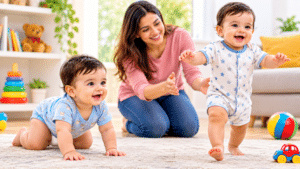
When Do Babies Learn to Crawl?
When do babies learn to walk and crawl? Crawling usually comes before walking, but it is not a required step. Many babies start moving on the floor between 6 and 10 months. Some begin earlier, while others crawl closer to their first birthday.
Crawling shows that a baby is building strength, balance, and body control. It also helps babies learn how to move one side of the body at a time. This skill supports coordination between the arms, legs, eyes, and brain.
Babies may use several crawling styles, including:
• Classic hands-and-knees crawling
• Belly crawling, also called army crawling
• Bottom shuffling while sitting
• Rolling across the floor
• Moving backward before learning to move forward
• Pulling forward with the arms
These methods can all be normal. A baby who bottom-shuffles or rolls may still develop strong walking skills. Crawling style alone does not predict future athletic ability or intelligence.

Source: thehamptonsplaza.com
When Do Babies Learn to Walk?
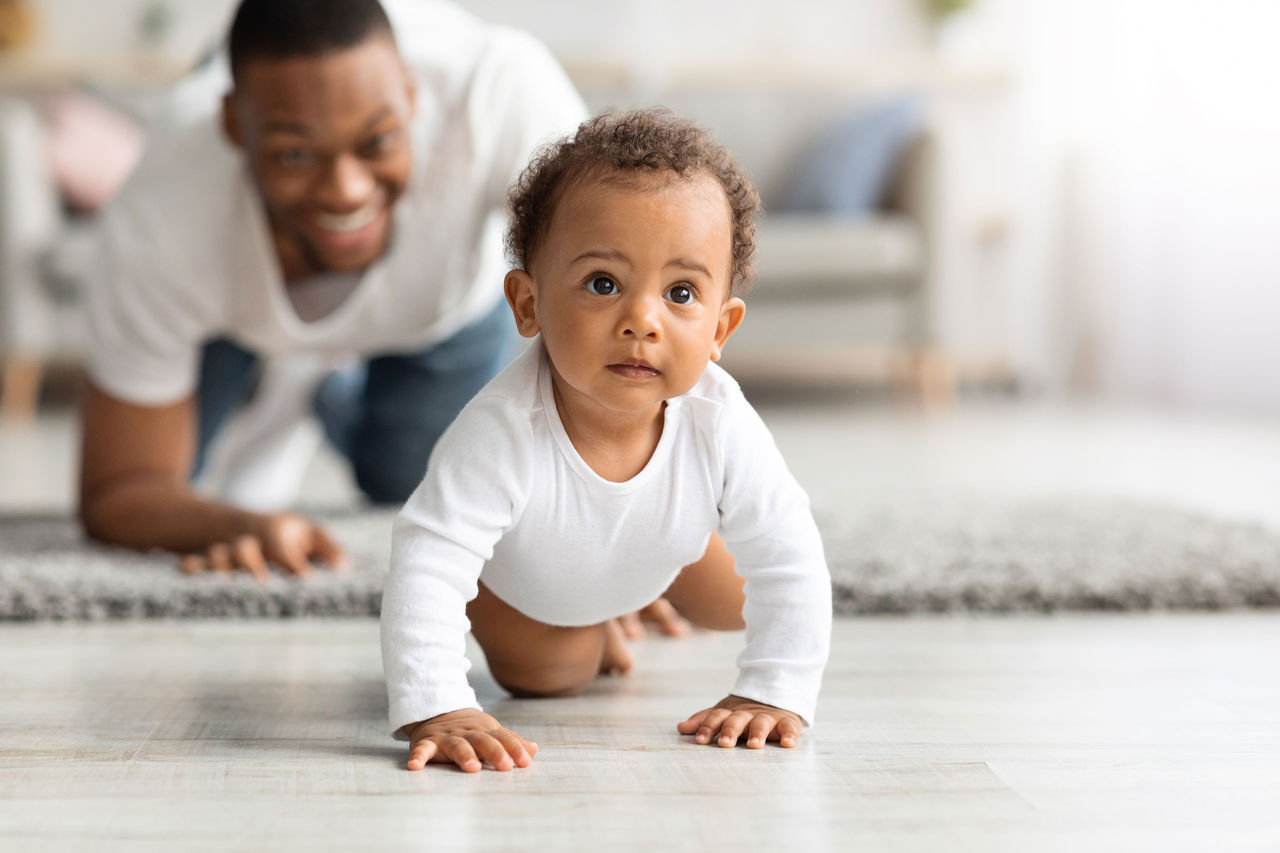
When do babies learn to walk and crawl? Most babies take their first independent steps between 9 and 18 months. Many begin by standing while holding furniture, then cruising along the edge of a couch or table.
Walking often develops in small stages:
- A baby sits without support.
- The baby moves from sitting to the floor.
- The baby pulls up on furniture.
- The baby stands while holding on.
- The baby cruises along furniture.
- The baby stands alone for a few seconds.
- The baby takes one or two steps.
- The baby slowly builds confidence and balance.
Early steps may look unsteady. A wide stance, raised arms, and frequent falls are common at first. With practice, babies usually gain better balance and learn to bend their knees when they fall.
The American Academy of Pediatrics and the Centers for Disease Control and Prevention describe walking as a broad developmental milestone rather than a fixed deadline. Every child follows an individual pattern.
Source: gov.zm
A Simple Baby Crawling and Walking Milestone Timeline
When do babies learn to walk and crawl? A timeline can help parents understand typical progress, but it should not become a strict test. Developmental ranges are more useful than exact dates.
Around 3 to 4 months
Many babies begin to:
• Hold their head steady
• Push up during tummy time
• Move their arms and legs with more control
• Bring hands to the mouth
• Reach for nearby toys
Around 5 to 6 months
Many babies may:
• Roll from front to back and back to front
• Sit with support
• Push up on straight arms
• Reach for objects while lying or sitting
• Begin rocking on hands and knees
Around 6 to 10 months
Many babies may:
• Sit independently
• Crawl or find another way to move
• Move from sitting to the floor
• Pull up on furniture
• Reach for toys while balancing
Around 9 to 12 months
Many babies may:
• Cruise along furniture
• Stand briefly without support
• Bend down while holding furniture
• Walk while holding an adult’s hands
• Take a few independent steps
Around 12 to 18 months
Many babies may:
• Walk independently
• Stop and start more easily
• Carry toys while walking
• Climb onto low furniture
• Walk backward or sideways
The timing can differ for babies born early. Pediatric professionals often use corrected age for premature infants during the first two years. Corrected age accounts for how many weeks early a baby was born.

Source: aseertime.com
Why Do Some Babies Crawl Early and Walk Later?
When do babies learn to walk and crawl? Family history, muscle strength, personality, practice, and opportunity can all influence timing. A careful baby may wait until walking feels safe, while a bold baby may take risks sooner.
Some babies spend more time sitting and observing. Others are eager to move toward people, pets, or toys. A baby who crawls late may still walk within the usual range.
Common reasons for different timing include:
• Natural differences in temperament
• Premature birth
• Limited floor time
• Low muscle tone
• Tight muscles or stiff movement
• Vision or balance concerns
• A strong preference for sitting
• Time spent in restrictive equipment
Walkers, activity centers, and infant seats can limit free movement when used for long periods. The American Academy of Pediatrics does not recommend wheeled baby walkers because they can increase injury risk, especially near stairs and hot objects.
A delayed milestone does not always mean a serious problem. Still, parents should share concerns with a pediatrician instead of trying to diagnose the cause alone.

Source: brooksidechurchtulsa.com
How to Help a Baby Learn to Crawl
When do babies learn to walk and crawl? Babies learn through safe movement and repeated practice, not through force. Adults can create a setting that invites movement without pushing a baby beyond comfort.
Try these simple activities:
• Offer daily tummy time while the baby is awake and watched.
• Place a favorite toy just beyond reach.
• Lie on the floor and encourage the baby to move toward you.
• Let the baby play on a firm, open surface.
• Place a rolled towel under the chest if the baby needs gentle support.
• Give plenty of time to play without restrictive seats.
• Change positions during play, such as tummy, side, and sitting.
Tummy time strengthens the neck, shoulders, arms, back, and trunk. These muscles help prepare a baby for rolling, crawling, sitting, and walking.
Avoid pulling a baby by the arms or placing the baby into a crawling position for long periods. Gentle encouragement works better than pressure. Babies learn best when movement feels like play.
How to Help a Baby Learn to Walk
When do babies learn to walk and crawl? Walking improves when babies have safe chances to stand, cruise, squat, and move between stable surfaces. They do not need special shoes or expensive training devices.
Helpful ideas include:
• Place sturdy furniture close enough for safe cruising.
• Offer both hands for balance during short walks.
• Put toys on a low, stable surface.
• Encourage squatting to pick up toys.
• Let the baby practice barefoot indoors when the floor is safe.
• Use lightweight, flexible shoes outdoors.
• Celebrate effort instead of counting steps.
Bare feet allow babies to feel the floor and adjust their balance. Shoes become useful for warmth and protection outside, but stiff shoes may make early movement harder.
Falls are part of learning. Use calm support and keep the home safe rather than trying to prevent every small tumble. A soft rug, blocked stairs, covered outlets, and secured furniture can reduce common risks.
One practical lesson for caregivers is to focus on progress, not comparison. Comparing siblings, cousins, or children in online videos often creates stress without offering useful information.
Crawling and Walking Safety at Home
When do babies learn to walk and crawl? Once a baby becomes mobile, safety checks should happen before the first crawl or step. Babies can move faster than adults expect.
Use this safety checklist:
• Install safety gates at the top and bottom of stairs.
• Anchor dressers, televisions, and tall furniture to the wall.
• Keep cords, small objects, medicines, and cleaning products out of reach.
• Cover electrical outlets.
• Lock windows and keep furniture away from them.
• Keep hot drinks and pans away from table edges.
• Use a properly installed car seat for every trip.
• Keep pets and babies supervised together.
• Check floors for coins, batteries, food, and choking hazards.
A crawling baby may enter areas that were previously ignored. Get down at floor level and look for hazards from the baby’s viewpoint. This simple step often reveals loose cords, small objects, and sharp corners.
Do not use a wheeled infant walker. It can roll into unsafe areas and may allow a baby to reach hazards sooner.
Signs of Healthy Motor Development
When do babies learn to walk and crawl? Healthy development includes more than reaching a certain age. Doctors also look at how a baby moves, uses both sides of the body, gains strength, and responds to opportunities for play.
Positive signs may include:
• Gradual improvement in head and trunk control
• Use of both arms and both legs
• Interest in reaching for people or toys
• Ability to change positions over time
• Increasing strength while sitting or standing
• Progress toward movement, even if the style is unusual
Development is rarely perfectly smooth. A baby may learn to sit, then appear less interested in crawling. Another baby may take several steps and return to crawling for a few weeks. Temporary changes can happen during illness, travel, growth, or a new skill.
The most important pattern is forward progress over time. Parents should discuss any concern during regular well-child visits.
When to Call a Pediatrician
When do babies learn to walk and crawl? Normal timing has a wide range, but some signs deserve prompt attention. Early evaluation can provide reassurance or connect a child with helpful services.
Contact a pediatrician if a baby:
• Seems unusually stiff or floppy
• Uses one side much more than the other
• Cannot hold the head steady by about 4 months
• Is not sitting independently by about 9 months
• Shows no effort to move by around 12 months
• Does not bear weight through the legs when supported
• Is not walking independently by 18 months
• Loses a skill the baby previously had
A missed milestone does not automatically mean a disorder. It may point to a need for physical therapy, a vision check, or a closer developmental review.
Parents should not wait if a child loses movement, strength, speech, or social skills. Regression needs medical assessment.
Common Mistakes Parents Should Avoid
When do babies learn to walk and crawl? Parents often feel pressure to speed up development. However, most training tricks do not make a baby ready before the brain, muscles, joints, and balance systems are prepared.
Try to avoid these common mistakes:
• Comparing a baby with children of the same age
• Forcing standing or walking practice
• Using wheeled walkers
• Keeping a baby in seats for most of the day
• Buying rigid shoes for early walking
• Ignoring a clear loss of skills
• Assuming crawling is required for every baby
• Treating online milestone charts as medical diagnoses
The goal is not to produce an early walker. The goal is to support safe, steady development. A relaxed caregiver and a safe play space often provide more value than a specialized product.
What Research and Pediatric Guidance Say
When do babies learn to walk and crawl? Medical guidance supports a range rather than one exact age. Developmental screening considers several areas, including movement, language, social skills, and problem-solving.
The Centers for Disease Control and Prevention provides milestone checklists based on skills that most children can do by certain ages. The American Academy of Pediatrics recommends routine developmental screening and encourages parents to raise concerns during health visits.
Research also shows that crawling is not a universal requirement for normal development. Some children skip hands-and-knees crawling and move from sitting to standing. Walking age alone does not measure intelligence, strength, or long-term success.
Milestone charts have limits. They describe population patterns, not individual predictions. A pediatrician can interpret a child’s skills in the context of birth history, health, family history, and overall development.
Frequently Asked Questions About When Do Babies Learn To Walk And Crawl?
When do babies usually start crawling?
Many babies start crawling between 6 and 10 months. Some crawl earlier or later, while others use rolling, bottom shuffling, or another movement style instead.
When do babies usually start walking?
Most babies take independent steps between 9 and 18 months. Pulling up and cruising often happen before walking without support.
Can a baby walk without crawling first?
Yes. Some babies skip traditional hands-and-knees crawling and move through rolling, scooting, or walking with support. Skipping crawling is not automatically a concern if other motor skills are progressing.
Should I worry if my baby is not crawling at 10 months?
Not always. A baby may use a different way to move or may focus on standing and cruising instead. Discuss your child’s movement with a pediatrician if there is no progress, the baby seems weak or stiff, or one side is used much more than the other.
Are baby walkers safe for learning to walk?
Wheeled baby walkers are not considered safe because they can increase access to stairs, hot items, and other hazards. Stable push toys may be safer when an adult closely supervises the baby and the floor is clear.
Do premature babies walk later?
Some premature babies reach milestones later when measured by their birth date. Healthcare professionals may use corrected age during the first two years to provide a more accurate view of development.
Should babies wear shoes when learning to walk?
Babies often do well barefoot indoors because they can feel the floor and adjust their balance. Use flexible, well-fitting shoes outdoors for warmth and protection.
Conclusion
When do babies learn to walk and crawl? Crawling often begins between 6 and 10 months, while first steps commonly appear between 9 and 18 months. These ranges are broad, and some babies crawl in a unique way or skip crawling altogether.
Support development with tummy time, free floor play, stable furniture, close supervision, and a safe home. Watch for steady progress rather than a perfect schedule, and contact a pediatrician about regression, unusual stiffness, weakness, or delayed movement.
Every baby follows a personal path. Keep offering safe chances to move, celebrate small gains, and use regular checkups to guide your next steps. Share this guide with another caregiver or explore trusted pediatric resources for more support.