
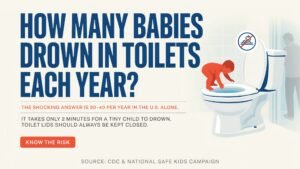
How many babies drown in toilets each year? Learn what the data shows and get practical toilet safety tips to help protect infants and toddlers. No reliable U.S. data show how many babies drown in toilets each year; reported cases appear rare but are preventable.
The question “How many babies drown in toilets each year?” often leads to alarming claims and unsupported numbers. In reality, major public health agencies do not publish a separate annual count for toilet drownings among babies.
This article explains what the available evidence can and cannot tell us, why toilet drowning is possible, and how parents and caregivers can reduce the risk at home.
How Many Babies Drown in Toilets Each Year?
There is no verified national figure for how many babies drown in toilets each year in the United States. Death records usually classify these incidents under broader categories, such as drowning in a bathtub, swimming pool, or other specified place. A toilet may be recorded only in a case report or in a medical examiner’s narrative.
This creates an important data limit. Public databases can show the total number of child drowning deaths, but they usually cannot isolate toilet-related incidents with enough detail to provide a reliable annual count.
Toilet drownings among babies and toddlers are considered rare. However, “rare” does not mean impossible. A young child can lose balance, fall headfirst into a toilet, and become unable to lift the head without help.
The risk is greatest for babies who can crawl, pull up, or sit but cannot yet climb out of a confined space. A child does not need a large body of water to drown. The nose and mouth only need to remain underwater for a short time.
Why There Is No Exact Annual Number
The main reason researchers cannot answer exactly how many babies drown in toilets each year is that death data are not collected in a single, toilet-specific category.
The Centers for Disease Control and Prevention tracks fatal drowning through death certificates and injury surveillance systems. These systems are valuable, but the location of a drowning may be recorded broadly as:
• A bathtub
• A swimming pool
• Natural water
• A residential setting
• Another specified or unspecified place
Toilet drowning cases may therefore be grouped with other household drowning events. Some records may say “bathroom,” while others may not identify the exact fixture.
Several factors also affect the count:
• A small number of cases makes yearly totals unstable. One case can change the percentage significantly.
• Nonfatal incidents may never appear in death records.
• Some reports use “child” or “toddler” without identifying the child’s exact age.
• Different countries define and report drowning events in different ways.
• News reports may repeat an estimate without showing a reliable source.
For these reasons, any website that gives a precise national number for how many babies drown in toilets each year should be viewed carefully. Unless the figure comes from a clearly defined study or official database, it may be an estimate, a case count from one area, or an unsupported claim.

Source: babyproofme.com
How Toilet Drowning Can Happen
A toilet may seem too shallow to be dangerous. For a baby, however, the danger comes from body position rather than water depth.
A baby who falls headfirst may have the face covered by water. The child may not have the strength, balance, or coordination to push up. The narrow bowl can also make it hard to turn the body or reach a safe position.
A typical risk pattern may look like this:
- A caregiver leaves the bathroom door open.
- A mobile baby crawls into the room.
- The child pulls up on the toilet or reaches toward the bowl.
- The child loses balance and falls forward.
- The child cannot lift the head or call for help.
The event can happen quietly. Drowning does not always involve loud splashing or crying. This is why active supervision matters more than simply being nearby.
Toilet drowning is more likely when:
• The toilet lid is open.
• The bathroom door is easy for a child to open.
• A step stool or nearby object helps the child climb.
• The child is left alone for even a short task.
• An older toilet has a wider or more accessible bowl.
• The caregiver assumes the child is safe because the water is shallow.
The key lesson is simple: any container or fixture that can cover a child’s nose and mouth deserves attention.

Source: fox35orlando.com
Which Children Face the Greatest Risk?
Babies and young toddlers face the greatest risk because their heads are heavy compared with their bodies. They also have limited balance and may not know how to turn around after falling.
A crawling baby may explore without understanding danger. A toddler may climb onto a toilet to reach a sink, mirror, toy, or bathroom item. Children with movement problems or developmental delays may need even closer supervision.
Age alone does not determine risk. A child who can walk may still be unable to recover from a headfirst fall. A child who can open doors may also reach places that seemed safe a few weeks earlier.
Parents should pay close attention during developmental changes. When a baby begins crawling, pulling up, or climbing, the home may need a new safety check.

Source: babyproofme.com
How Common Are Child Drowning Deaths Overall?
Although toilet drowning is not measured well, drowning among young children remains a serious public health concern.
In the United States, drowning is one of the leading causes of unintentional injury death for young children. Swimming pools, bathtubs, natural water, and buckets are more commonly discussed in official prevention guidance than toilets.
Nonfatal drowning is also important. A child may survive but suffer breathing problems, brain injury, or long-term disability. Hospital records can provide information about some events, but they still may not identify toilets as a separate category.
This broader context helps answer how many babies drown in toilets each year. The number is likely far lower than the total number of child drownings, but the exact figure is not known. More importantly, a low count should not reduce attention to prevention.

Source: fox35orlando.com
Toilet Safety Tips for Babies and Toddlers
The best way to prevent toilet drowning is to block access and provide direct supervision.
Use these practical steps:
• Keep the bathroom door closed when it is not in use.
• Install a child-resistant toilet lid lock if a baby can reach the toilet.
• Keep step stools away from the toilet unless an adult is using them.
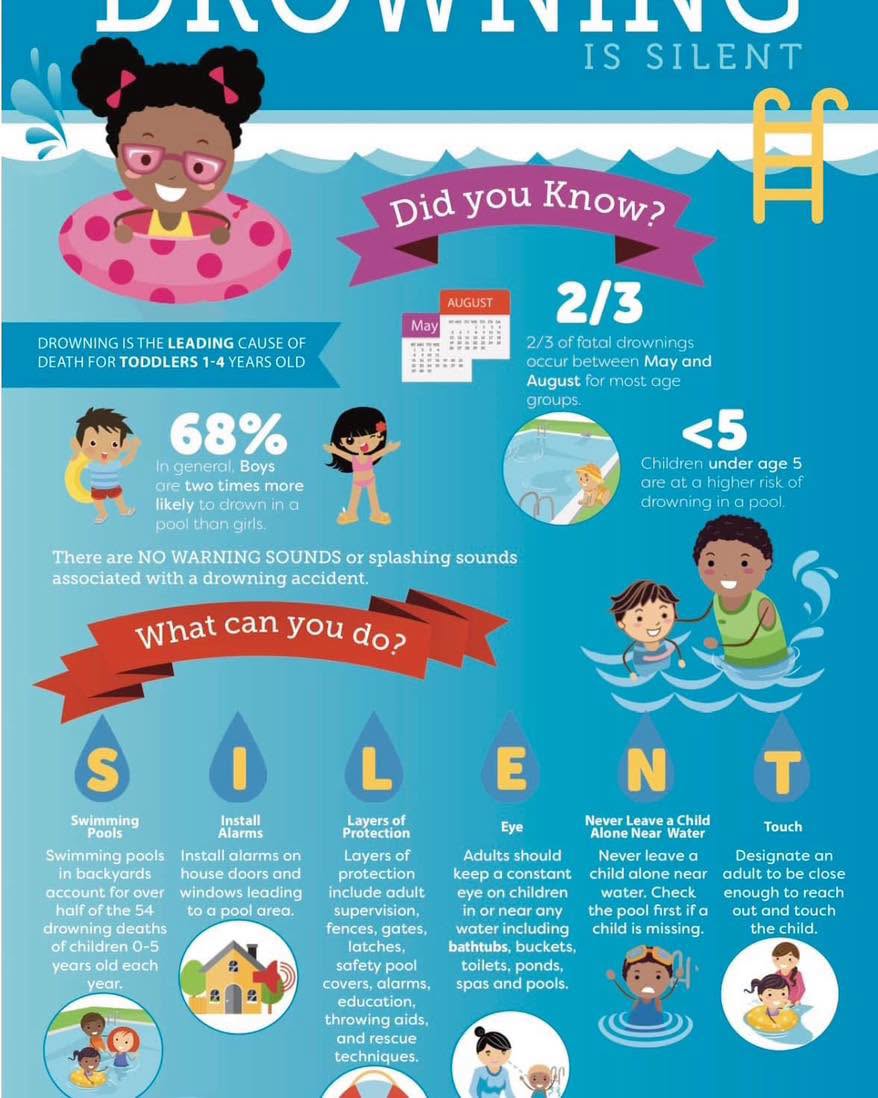
• Never leave a baby or toddler alone in a bathroom.
• Keep bath toys and attractive objects out of the toilet area.
• Make sure older siblings know not to leave the bathroom door open.
• Check that door locks can be opened quickly from outside during an emergency.
• Include toilets when checking the home for water hazards.
A toilet lid lock can add protection, but it should not replace supervision. No safety device is perfect, and some children may eventually learn how to defeat it.
It is also wise to secure other household water sources. Buckets, pet bowls, coolers, toilets, bathtubs, and decorative containers can all create risks for a young child.
A helpful rule is to treat a mobile baby like a small explorer. If the child can reach it, climb it, or open it, assume the child will investigate it.
Source: sacramentohelp.info
What to Do If a Child Falls Into a Toilet
If a child falls into a toilet, remove the child from the water at once and check for normal breathing.
Call 911 immediately if the child:
• Is not breathing normally
• Is unconscious or difficult to wake
• Has blue, gray, or pale skin
• Is coughing severely or struggling to breathe
• Has a seizure
• Appears confused or unusually weak
If the child is not breathing normally, begin CPR if you know how and follow the emergency dispatcher’s instructions. If the child is breathing but has inhaled water, seek urgent medical advice. Breathing problems can worsen after a drowning event, even when the child first appears well.
Do not force the child to vomit. Do not delay emergency care to search for advice online. Keep the child warm while waiting for help, but avoid shaking the child or placing the child face down to “drain” water.
A child who seems fine after a brief submersion may still need medical evaluation. The correct response depends on the child’s breathing, alertness, and symptoms.
Source: etsy.com
Common Myths About Toilet Drowning
Several myths can make toilet drowning seem less serious than it is.
Myth: Toilet water is too shallow to cause drowning
Water depth is not the only factor. If a baby’s nose and mouth are covered, shallow water can still block breathing.
Myth: A baby will always cry or splash
Drowning may be silent. A child who cannot breathe may not have enough air to cry.
Myth: A quick trip to another room is harmless
A few seconds can matter during a fall. Supervision means staying close enough to respond immediately, not simply being somewhere in the home.
Myth: A toilet lid lock makes supervision unnecessary
A lock reduces access but does not remove every hazard. Children can find other water sources, and devices can be left unlocked or fail.
Myth: Only very young babies are at risk
Mobile toddlers also face danger. Climbing, reaching, and curiosity can place a child in a hazardous position.

Source: babyproofme.com
What the Evidence Can and Cannot Tell Us
Available evidence supports strong prevention advice, but it does not provide a dependable answer to how many babies drown in toilets each year.
Case reports can show that toilet drowning has happened. They can describe age, circumstances, medical care, and outcomes. However, case reports do not capture every incident and cannot establish a national rate.
Death certificates and injury databases offer broader coverage. Yet they may lack the detail needed to identify a toilet as the exact drowning location. This is a common limitation in injury surveillance: the data can show the type of injury without fully showing the setting.
A careful article should therefore avoid inventing a number. The most accurate statement is that toilet drowning among babies is rare, undercounted, and not reported as a distinct annual category in standard U.S. statistics.
Researchers could improve understanding by recording:
• The exact water source
• The child’s age and developmental stage
• Whether the incident was fatal or nonfatal
• The level of supervision
• The presence of safety devices
• The medical outcome
Until reporting becomes more specific, the question of how many babies drown in toilets each year will remain unanswered with precision.
How Families Can Build a Safer Bathroom
Bathroom safety works best as a routine, not as a one-time project.
Walk through the room from a baby’s point of view. Look for anything the child can pull up on, climb, open, or place into the mouth. Check the toilet, bathtub, sink, cabinets, cords, medicines, cleaners, and small objects.
A simple safety plan may include:
- Close and lock the bathroom door after each use.
- Add a toilet lid lock if needed.
- Move stools and climbable items out of reach.
- Store medicines and cleaners in locked cabinets.
- Keep a phone nearby during bathing and bathroom care.
- Teach every caregiver the same safety rules.
- Review the plan when the child begins crawling or walking.
From a practical safety perspective, consistency matters more than expensive equipment. The safest home is one where every adult follows the same basic habits.
Parents may also benefit from infant and child CPR training. Training cannot prevent every accident, but it can help a caregiver act quickly during a life-threatening emergency.
Frequently Asked Questions About How Many Babies Drown in Toilets Each Year?
Is there an official number for how many babies drown in toilets each year?
No. U.S. public health data do not usually publish toilet drowning as a separate category for babies. Reported incidents may be grouped under broader household or unspecified drowning categories.
Are toilet drownings common?
No, toilet drownings appear to be rare compared with drownings in pools, bathtubs, and natural water. Even so, the risk is real because babies may be unable to lift their heads after a headfirst fall.
Can a baby drown in a small amount of toilet water?
Yes. A baby can drown if the nose and mouth remain underwater, even when the water is shallow. Body position and the child’s inability to escape are key factors.
What age is most at risk for toilet drowning?
Crawling babies and young toddlers face the greatest risk because they explore, pull up, and climb but may lack the strength and coordination to recover from a fall. Risk varies by development, not just by age.
Does a toilet lid lock prevent drowning?
A toilet lid lock can reduce access and is a useful safety layer. It does not replace supervision or other precautions, because children may reach other water sources or the lock may be left open.
What should I do if my baby falls into a toilet?
Remove the baby immediately and check breathing. Call 911 if the child is not breathing normally, is unconscious, has severe coughing, or shows any sign of distress, and follow the dispatcher’s instructions.
Conclusion
There is no trustworthy national answer to how many babies drown in toilets each year. The best evidence indicates that these events are rare, but official data do not track them clearly enough to provide a precise annual total.
The safety lesson is clear: keep toilet lids closed, use a child-resistant lock when appropriate, close bathroom doors, remove climbable objects, and supervise mobile babies closely. If a child is submerged, treat the event seriously and seek emergency help when breathing or alertness is affected.
A few simple habits can prevent a life-changing emergency. Review your bathroom today, share these steps with every caregiver, and consider taking an infant CPR course for added preparedness.