Are bouncers safe for newborns? Learn essential safety tips, age guidelines, risks, and safer ways to use baby bouncers with confidence. Bouncers can be safe for newborns only for short, supervised, awake periods when used exactly as directed.
Are bouncers safe for newborns? The answer depends on the product, the baby’s age and size, and how the bouncer is used. A baby bouncer can offer a helpful place to keep your infant nearby while you take a short break, but it is not a safe sleep space. Understanding proper positioning, supervision, restraints, and safe sleep rules can help you use one with greater confidence.
Are Bouncers Safe for Newborns?
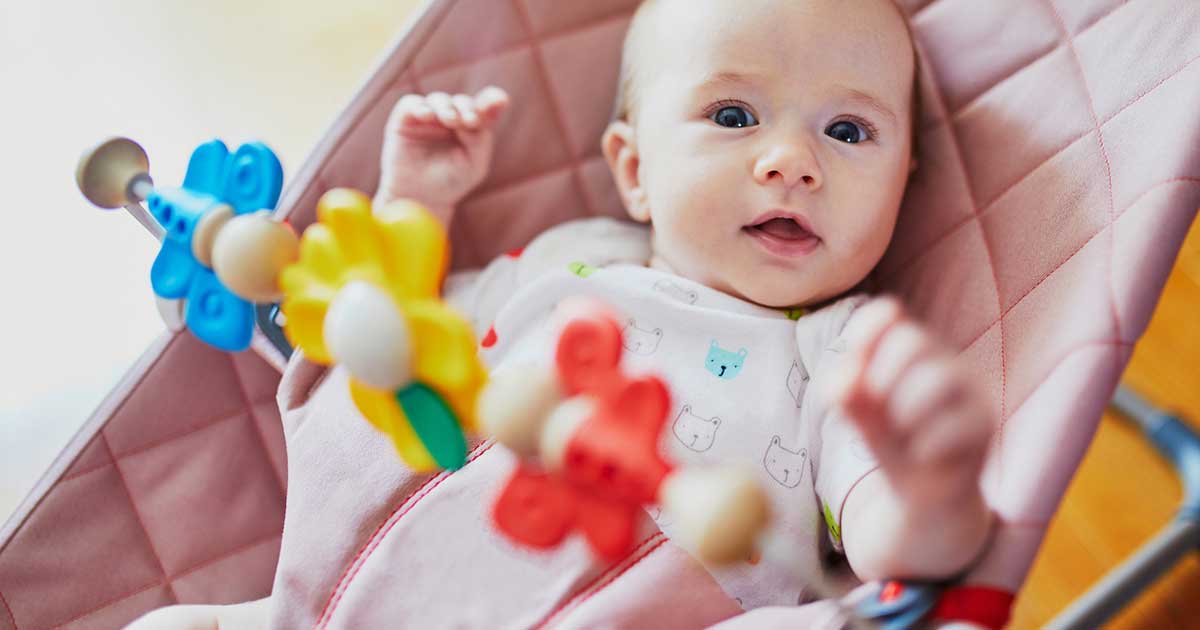
Yes, a bouncer may be safe for a newborn during brief, awake, and closely supervised use. However, newborns have weak neck muscles and limited head control. Their heads can fall forward, which may narrow the airway and make breathing difficult.
A bouncer should never replace a crib, bassinet, or play yard. The American Academy of Pediatrics recommends that babies sleep on a firm, flat, non-inclined surface with no loose blankets, pillows, or soft items. Most bouncers do not meet these safe sleep requirements.
The safest approach is simple:
• Use the bouncer only when your baby is awake.
• Stay close enough to watch and respond.
• Keep the bouncer on the floor.
• Use the built-in harness every time.
• Follow the maker’s age, weight, and development limits.
• Move a sleeping baby to a firm, flat sleep surface.
Many parents ask, “Are bouncers safe for newborns if the baby falls asleep?” They are not safe for routine or unsupervised sleep. If your newborn dozes off, gently move the baby to a crib, bassinet, or play yard as soon as practical.
Source: hss.edu
Why Newborns Need Extra Care in a Bouncer
Newborns are not small versions of older babies. Their bodies need more support. They often cannot lift their heads, shift their weight, or move away from a poor position.
The curved shape of some bouncers may allow a baby’s chin to drop toward the chest. This position is called chin-to-chest flexion. It can reduce airflow, especially in a very young infant.
A newborn may also slide down if the harness is loose or if the seat angle is too steep. This can place pressure on the chest or cause the head to tilt to one side.
Key risks include:
• Airway blockage from the head falling forward
• Suffocation if the baby’s face presses against padding
• Falls if the bouncer is placed on a table, bed, sofa, or counter
• Injury if the bouncer tips or is carried with the baby inside
• Overheating from heavy blankets or warm clothing
• Strangulation from damaged straps, cords, or loose parts
This does not mean every bouncer is dangerous. It means that a bouncer is a short-term baby seat, not a sleep product or a hands-free substitute for supervision.
When Can a Newborn Use a Bouncer?
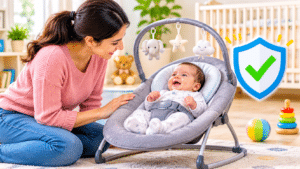
Many bouncers are designed for use from birth. Still, “from birth” does not mean every newborn will fit well. A small or premature baby may need more support than the bouncer provides.
Before using a bouncer, check these points:
• Your baby meets the product’s minimum weight and age requirements.
• The baby’s head stays centered and supported.
• The chin does not rest on the chest.
• The shoulders remain inside the harness.
• The baby’s hips and back stay in the intended position.
• The bouncer does not tilt, fold, or move when the baby shifts.
For a newborn, begin with only a few minutes. Watch the baby’s breathing, skin color, head position, and comfort. Stop using the bouncer if your baby slumps, slides, cries often, or seems unable to keep the head in a neutral position.
Premature babies, babies with low muscle tone, and infants with breathing or heart problems may need special guidance. Ask your pediatrician before using a bouncer if your baby has a medical condition or has spent time in a neonatal intensive care unit.

Source: nytimes.com
How to Use a Baby Bouncer Safely
Safe bouncer use starts before you place your baby in the seat. Read the instructions and inspect the product. A bouncer that looks clean and strong may still have a worn buckle, missing part, or safety recall.
Follow these steps:
- Place the bouncer on a clear, level floor.
- Check that the frame is fully open and stable.
- Fasten the manufacturer’s harness snugly.
- Keep the baby’s face and airway visible.
- Make sure the head is supported in a neutral position.
- Stay within arm’s reach or close visual range.
- Keep pets, siblings, cords, and hot drinks away.
- Remove thick blankets, toys, and loose cushions.
- Stop use when the baby reaches the product’s limit.
- Move the baby to a crib if sleep begins.
The harness should be snug but not tight. You should be able to place a finger between the strap and your baby’s body. Never add a homemade insert, pillow, head support, or rolled towel unless the manufacturer specifically approves it.
Do not place a bouncer on a table, kitchen island, bed, sofa, or changing table. Falls from raised surfaces can cause serious injury, even when the product seems stable.

Source: amazon.com
Can a Baby Sleep in a Bouncer?
No. A bouncer is not a safe sleep space. Its curved, soft, or inclined design can allow the baby’s head to move into a position that affects breathing.
This rule applies even if:
• The baby appears comfortable
• The baby is strapped in
• The bouncer is marketed for naps
• You are sitting nearby
• The baby has slept in it before without a problem
A sleeping baby should be placed on their back in a crib, bassinet, or play yard with a firm, flat mattress and a fitted sheet. The sleep area should be free of pillows, bumper pads, stuffed toys, and loose bedding.
If your baby falls asleep in a bouncer, do not panic. Keep the airway clear while you prepare to move the baby. Then transfer the infant to a safe sleep surface. This is especially important during nighttime use, when an adult may also fall asleep.
Source: hr-manager.pl
Bouncer Safety Compared With Other Baby Seats
Parents often use the words bouncer, rocker, swing, and lounger as if they mean the same thing. They do not always describe the same product. Their designs and risks can differ.
Bouncer
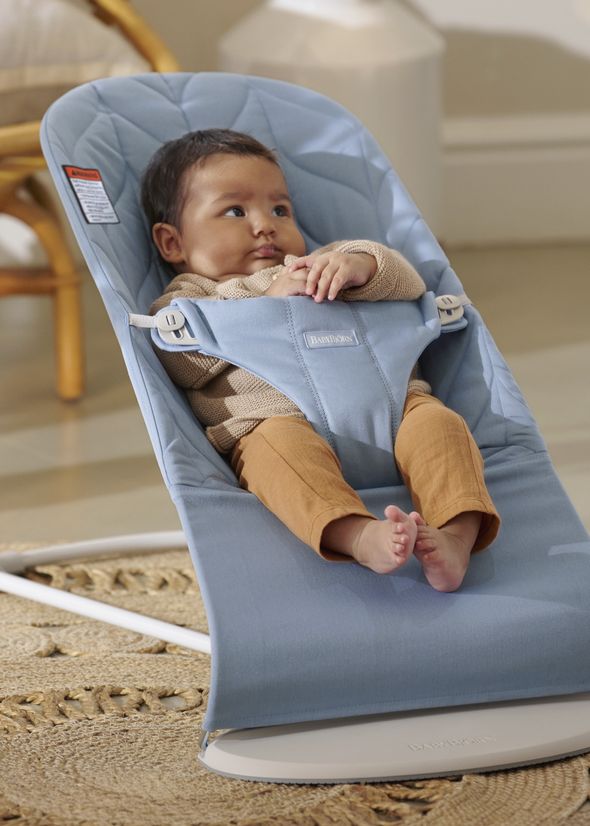
A bouncer is usually a small, low seat that moves when the baby kicks or when an adult gently touches it. It may be useful for short, supervised periods while the baby is awake.
Infant swing
A swing uses a motor or mechanical movement. It may have a deeper seat and a restraint system. Like a bouncer, it is not intended for routine sleep unless it meets specific safe sleep standards, which most swings do not.
Rocker
A rocker may move back and forth by hand or by the baby’s movement. Its safety depends on the angle, harness, stability, and instructions. A rocker should not be used as a sleep space unless it is specifically designed and approved for sleep.
Infant lounger
A lounger often has soft, cushioned sides. These products can create suffocation risks if a baby’s face turns into the fabric or if the baby rolls. They should be used only as directed and never for unsupervised sleep.
Car seat
A rear-facing car seat is designed for travel, not routine sleep outside the vehicle. Once you arrive, move the baby to a firm, flat sleep surface.
The main lesson is that movement does not equal safety. When asking, “Are bouncers safe for newborns?” also ask whether the product provides a flat sleep surface, stable support, and a clear airway. Most do not provide all three.

Source: reussprivate.li
Common Bouncer Safety Mistakes
Even careful parents can make small mistakes during a busy day. Newborn care often involves feeding, laundry, phone calls, and very little sleep. A clear routine can prevent many problems.
Common mistakes include:
• Letting the baby nap in the bouncer
• Leaving the baby unattended “for just a minute”
• Placing the bouncer on a counter or sofa
• Using a loose or twisted harness
• Adding blankets to improve comfort
• Covering the bouncer with a blanket to block light
• Using a secondhand product without checking recalls
• Continuing use after the baby outgrows the weight limit
• Using the bouncer near stairs, heaters, cords, or pets
• Carrying the bouncer with the baby inside
A useful habit is to treat the bouncer like a temporary parking spot, not a crib. Use it while you are awake and nearby. When you need to leave the room, take the baby with you or use a safe, flat sleep or play area.

Source: ig-moba-neckarelz.de
How to Choose a Safe Bouncer for a Newborn
Product choice matters, but correct use matters just as much. Look for a bouncer with clear instructions, a stable base, and a secure restraint system.
Useful features include:
• A three-point or five-point harness that fits securely
• A wide, stable base
• Smooth, strong seams and intact fabric
• Clear newborn weight and age guidance
• A design that keeps the baby’s head from dropping forward
• No small detachable parts within reach
• No loose cords, broken buckles, or sharp edges
• A washable cover that fits correctly
Avoid products with confusing instructions or unclear safety claims. Be cautious with heavily padded designs, especially if the padding can touch the baby’s face.
Before buying a used bouncer, check:
- The model name and product number
- The original safety instructions
- The recall history
- The condition of the frame and harness
- Whether any parts are missing
- Whether the product has been modified
A product recall can affect a specific model or production date. Check the U.S. Consumer Product Safety Commission database and the manufacturer’s website. Do not use a recalled product until the maker provides a verified repair or replacement.
What Experts Say About Bouncer and Safe Sleep Use
Pediatric safety guidance is consistent on one key point: sitting devices are not substitutes for safe sleep spaces. Babies should sleep on their backs on a firm, flat, separate surface.
The AAP also advises parents to move infants who fall asleep in sitting devices, including swings, strollers, and bouncers. The concern is not only comfort. It is the possibility of airway blockage, poor oxygen flow, or suffocation.
Research and safety reports have linked inclined sleep products and sitting devices with infant deaths and injuries. These reports do not mean that every brief, supervised use causes harm. They show why careful limits are important.
Professional guidance can change as new evidence appears. Always read current product instructions and discuss special concerns with your child’s pediatrician. No online article can assess your baby’s muscle tone, airway, or medical history.
Practical Tips for Daily Bouncer Use
A bouncer can be useful during short parts of the day. For example, you might place your awake baby in it while you fold laundry in the same room or eat a quick meal nearby.
Try these practical habits:
• Set a timer for short use periods.
• Check the baby’s head and chin every few minutes.
• Keep the bouncer within your direct line of sight.
• Use a flat crib or bassinet for every nap and nighttime sleep.
• Keep the floor around the bouncer clear.
• Clean the fabric according to the product instructions.
• Stop use when your baby can roll, sit, or push up if the instructions require it.
• Trust your instincts if the baby seems poorly positioned.
One simple test is the “face and chest check.” You should be able to see the baby’s face clearly, and the chest should rise freely with each breath. If the head drops forward or the baby slides down, remove the baby and adjust the position or stop using the bouncer.
Are Bouncers Safe for Newborns With Reflux?
Some parents use bouncers because an upright position seems to reduce spit-up. However, a bouncer should not be used as a treatment for reflux, and it is not a safe sleep solution for babies with reflux.
The safest sleep position remains flat on the back unless a medical professional gives different instructions. Sitting devices may increase pressure on the stomach or allow the baby to slump.
If your newborn has frequent vomiting, poor weight gain, choking, breathing trouble, blood in the vomit, or unusual distress, contact a pediatrician. Do not raise the crib mattress or use sleep positioners without medical advice.
Are Bouncers Safe for Newborns During Supervised Play?
They may be safe for short periods when the baby is awake, correctly positioned, and watched closely. Supervision means more than being in the same building. You should be able to see the baby and respond at once.
A bouncer should not be used when an adult is cooking, showering, driving, working outside, or becoming drowsy. A young baby can change position quickly, even when the parent looks away only briefly.
Use a play mat on the floor when your baby needs longer awake time. Tummy time, while supervised and awake, helps build strength and supports motor development. A bouncer is only one small tool in a newborn’s day.
Frequently Asked Questions About Bouncers: Are Bouncers Safe for Newborns?
Are bouncers safe for newborns to use every day?
A newborn may use a bouncer every day for short, supervised, awake periods if the product fits properly. It should not replace floor play, caregiver interaction, or safe sleep in a crib or bassinet.
How long can a newborn stay in a bouncer?
There is no single time limit for every baby or product. Keep sessions brief, check your baby’s position often, and follow the manufacturer’s instructions; move the baby immediately if sleep begins or the head slumps.
Can a newborn sleep in a bouncer if strapped in?
No. A harness can prevent some movement, but it cannot make an inclined or curved seat safe for sleep. Move a sleeping newborn to a firm, flat, empty sleep surface.
Is a bouncer safe for a premature baby?
A premature baby may need extra head, neck, and body support. Ask the baby’s pediatrician before use, and stop if the infant cannot maintain a clear airway or stable position.
Can I put a bouncer on the couch?
No. Use the bouncer on the floor, away from edges and hazards. A bouncer can tip or fall from a couch, bed, table, counter, or other raised surface.
What should I do if my baby falls asleep in a bouncer?
Watch the baby’s airway as you prepare to move them. Transfer the baby to a crib, bassinet, or play yard with a firm, flat mattress as soon as possible.
When should I stop using a newborn bouncer?
Stop when your baby reaches the stated weight or age limit or shows signs of rolling, sitting, pushing up, or sliding out. Always follow the product’s specific instructions, which may require earlier discontinuation.
Conclusion
So, are bouncers safe for newborns? They can be safe for short, awake, supervised use when the baby fits well, the harness is secure, and the bouncer rests on the floor. They are not safe for sleep, extended unsupervised use, or placement on raised surfaces.
Choose a well-made product, check for recalls, watch your newborn’s head and airway, and move the baby to a firm, flat sleep surface whenever sleep begins. Use these steps every time, and explore guidance from your pediatrician and trusted child-safety resources before making your final choice.