
Can newborn sleep in bouncer? Learn the safety risks, expert guidance, and safer sleep alternatives every new parent should know. No, newborns should not sleep in a bouncer because its curved, soft seat can restrict breathing. Parents often use a bouncer for short, supervised awake time, but sleep safety requires a different setup.
This guide explains why a bouncer is unsafe for newborn sleep, what to do if your baby falls asleep, and which sleep spaces are safer according to pediatric safety guidance.
Can Newborn Sleep In Bouncer? The Short Answer
Can newborn sleep in bouncer? No. A bouncer is designed for brief, supervised use while your baby is awake. It is not designed to provide a safe sleep surface for naps or nighttime sleep.
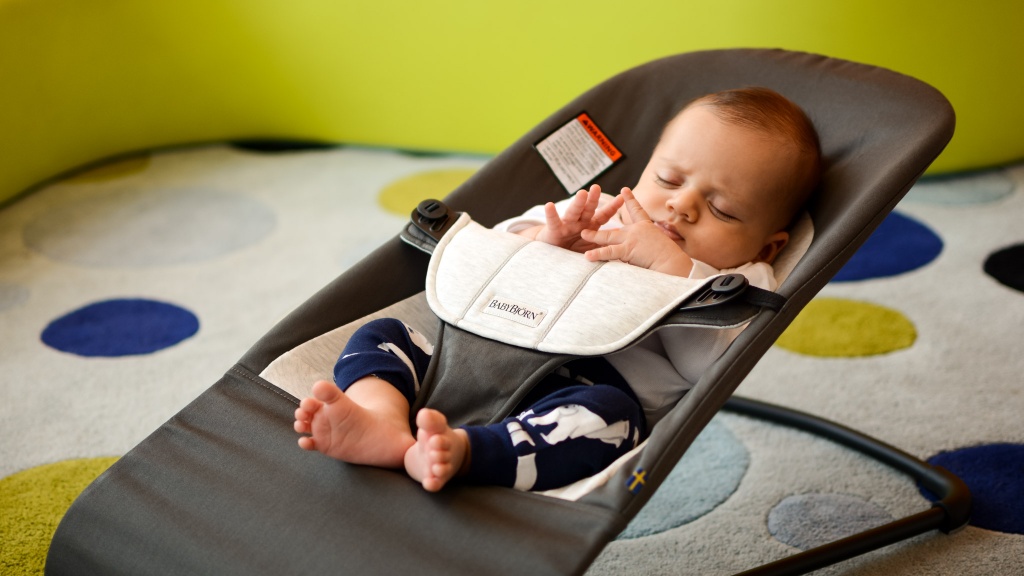
Newborns have limited head and neck control. Their heads can fall forward or to the side in a bouncer. This position may press the chin toward the chest and narrow the airway. A young baby may not have the strength to move into a safer position.
The American Academy of Pediatrics recommends that infants sleep on their backs on a firm, flat, noninclined surface. The sleep area should have only a fitted sheet. It should not contain loose blankets, pillows, toys, or padded supports.
A bouncer may look cozy, but comfort is not the same as safety. Think of it as a baby seat, not a baby bed.

Why Is a Bouncer Unsafe for Newborn Sleep?
Bouncers often have a curved or angled design. This design helps support a baby during awake time, but it does not meet the basic requirements for safe infant sleep.
The position can block the airway
A newborn’s airway is small and delicate. When the head bends forward, the airway may become compressed. This is sometimes called positional asphyxia.
A baby may also slump sideways or slide down in the seat. Even if the baby appears calm, quiet, or deeply asleep, the position can still be dangerous.
The surface is not firm and flat
Safe sleep guidance calls for a firm, flat, level surface. Most bouncers have soft padding and an incline. These features may allow the baby’s body to curl or sink.
A soft surface can also press against the face. This increases the risk of breathing problems, especially when the baby cannot turn away.
Newborns cannot correct their position
Older babies may have more strength and control. Newborns usually cannot lift their heads well or move away from pressure.
This is why a sleeping newborn needs a clear sleep space. Adults can notice an awkward position, but a newborn may not be able to fix it.
Straps do not make the bouncer a safe bed
Some parents believe that a harness makes a bouncer safe for sleep. The straps can help hold the baby in place during awake use, but they do not prevent airway blockage.
In some cases, straps may keep a baby in a slumped position. Never use extra pillows, rolled towels, blankets, or aftermarket inserts to change the baby’s position.

Source: todaysparent.com
What Should You Do If Your Newborn Falls Asleep in a Bouncer?
Newborns often fall asleep during gentle bouncing. This is common and does not mean you have done something wrong. The important step is to move the baby as soon as you notice the sleep.
Follow these steps:
- Stop the bouncer’s motion.
- Unbuckle your baby carefully.
- Keep the head and neck supported during the transfer.
- Place your baby on their back in a crib, bassinet, or play yard.
- Check that the sleep space is firm, flat, level, and empty except for a fitted sheet.
Do not wait for a certain amount of time. Do not assume that a short nap is harmless. The safest response is prompt movement to an approved sleep space.
If your baby sleeps in a bouncer while you are nearby, move the baby even if the nap seems peaceful. Supervision is helpful, but it does not remove the risk of an unsafe position.
Is Supervised Sleep in a Bouncer Safe?
Can newborn sleep in bouncer while an adult watches? It is still not recommended. Supervision may help an adult notice a problem, but breathing trouble can develop quickly and silently.
The U.S. Consumer Product Safety Commission warns against allowing babies to sleep in products that are not intended for infant sleep. This includes many bouncers, swings, rockers, and inclined products.
A caregiver may also become distracted, fall asleep, answer a phone call, or leave the room. Safe sleep guidance should not depend on constant attention. The sleep surface itself should be safe.
Supervised use is appropriate when your baby is awake and you are close enough to watch. Once your baby shows signs of sleep, move them to a safe sleep space.
What counts as supervised awake time?
Supervised awake time means:
• Your baby is alert or lightly resting but not asleep.
• An adult remains close and watches the baby.
• The bouncer is placed on the floor, not on a table, bed, sofa, or counter.
• The harness is used according to the product instructions.
• The baby is removed when they become sleepy or fall asleep.
Source: kamikadze.sk
How Long Can a Newborn Use a Bouncer?
A bouncer can be useful for short periods when your newborn is awake. There is no universal safe number of minutes for every baby or product. Always follow the manufacturer’s age, weight, and use instructions.
Short, varied periods are better than keeping a baby in one position for a long time. Newborns also need time for feeding, holding, floor play, and movement.
Stop using the bouncer if your baby:
• Slumps forward or sideways.
• Slides down in the seat.
• Has difficulty keeping the head in a neutral position.
• Looks uncomfortable or has noisy breathing.
• Falls asleep.
• Reaches the product’s age, weight, or developmental limit.
A bouncer should never replace a crib, bassinet, or play yard. It is a temporary activity seat, not a regular sleeping place.

Source: angelbliss.us
What Is the Safest Sleep Setup for a Newborn?
The safest sleep setup is simple. Place your baby:
• On their back for every nap and nighttime sleep.
• On a firm, flat, level mattress.
• In a crib, bassinet, or play yard that meets current safety standards.
• With only a fitted sheet made for that mattress.
• In the same room as you, but not in the same bed.
Avoid loose bedding, pillows, bumper pads, stuffed toys, sleep positioners, and weighted sleep products. These items can cover the face or make it harder for a baby to breathe.
A wearable blanket can help keep your baby warm without loose fabric in the sleep area. Dress the baby for the room temperature, and avoid overheating.
Many caregivers use a bassinet beside the bed during the first months. This can make nighttime feeding easier while keeping the baby in a separate sleep space.

Source: aab-64.fr
Bouncer vs. Bassinet: What Is the Difference?
A bouncer supports a baby during awake activities. A bassinet is a sleep product designed to provide a firm, flat, level surface with appropriate sides.
The key difference is not simply comfort. It is the design and intended use. A bouncer usually has an incline and a curved seat. A bassinet should provide a stable sleep surface that follows infant sleep safety standards.
Before buying or using a product, check:
• The product’s intended purpose.
• The safety instructions and warnings.
• The age, weight, and developmental limits.
• Whether the product has been recalled.
• Whether the mattress fits correctly.
• Whether the product meets current federal safety requirements.
Do not rely on a product’s marketing phrase alone. Words such as “napper,” “lounger,” or “cozy sleeper” do not automatically mean that a product is safe for unsupervised sleep.

Source: aseertime.com
Can a Newborn Sleep in a Bouncer During the Night?
Can newborn sleep in bouncer during the night? No. Overnight sleep in a bouncer is especially risky because it lasts longer and caregivers may not notice changes in the baby’s position.
Nighttime sleep should take place in a crib, bassinet, or play yard. The baby should lie on their back with no loose items nearby.
Never place a bouncer inside a crib or on an adult bed for overnight use. Do not cover the bouncer with a blanket. Covering the seat can increase heat and may block air around the baby’s face.
If your newborn settles only in the bouncer, try a calm transfer. Hold your baby close, use a quiet voice, and place them in the bassinet when they are drowsy or asleep. It may take practice, but the safer habit is worth building.
Common Mistakes Parents Make With Bouncers
Many unsafe situations happen because a bouncer feels familiar and convenient. Understanding common mistakes can help you avoid them.
Leaving the bouncer on a raised surface
A bouncer can move or tip when placed on a sofa, table, counter, or bed. Use it only on the floor, away from stairs, pets, cords, and other hazards.
Adding blankets or pillows
Parents may add padding to make the seat softer. This can change the baby’s position and create loose material near the face. Use only parts approved by the manufacturer.
Carrying the bouncer with the baby inside
Unless the product is specifically designed and approved for carrying in that way, do not lift or move a bouncer with your baby inside. The seat may tip, or the baby may shift.
Ignoring the product limits
Stop using a bouncer when your baby can roll, sit up, pull up, or reach the product’s developmental limit. Follow the instructions even if the baby still appears comfortable.
Using a recalled product
Check recall information before using a secondhand bouncer. A product may look clean and intact but still have a safety issue or missing parts.
Treating quietness as proof of safety
A quiet baby is not always a safe baby. Breathing problems may not cause loud sounds or obvious movement. Check the sleep space rather than judging safety by appearance.

Source: aseertime.com
What Does Personal Experience Teach About Bouncer Safety?
One practical lesson caregivers often learn is that babies can fall asleep in a bouncer faster than expected. A parent may sit beside the baby for “just one minute,” then notice that the baby has slipped into a deeper sleep.
The safest habit is to make the transfer routine automatic. Keep the bassinet ready, remove extra items from it, and move the baby as soon as sleep begins.
Another useful lesson is to place the bouncer on the floor before putting the baby in it. This simple step prevents many falls. It also makes it easier to stay close during awake time.
Parents do not need to feel guilty when a baby nods off. The goal is not perfection. The goal is to recognize the risk and move the baby to a safe surface promptly.
If your baby often sleeps only in a bouncer, discuss the pattern with your pediatrician. Feeding problems, reflux symptoms, congestion, or other concerns may affect sleep, and a clinician can offer advice suited to your baby.
When Should You Call a Doctor?
A brief sleep in a bouncer usually does not require medical care if your baby is breathing normally and returns to their usual behavior. Move the baby to a safe sleep surface and continue to observe them.
Seek urgent help if your baby:
• Has trouble breathing.
• Turns blue, gray, or unusually pale.
• Is limp or difficult to wake.
• Makes repeated choking or gasping sounds.
• Has a long pause in breathing.
• Does not respond normally after being repositioned.
Call emergency services for serious breathing problems or unresponsiveness. Do not shake the baby or place anything in the baby’s mouth.
For ongoing concerns about sleep position, noisy breathing, reflux, or frequent choking, contact your pediatrician. Online guidance cannot replace an examination.
Frequently Asked Questions About Can Newborn Sleep In Bouncer?
Can newborn sleep in bouncer for a short nap?
No. Even a short nap is not considered safe because a newborn may slump and have restricted breathing. Move your baby to a firm, flat, approved sleep surface when sleep begins.
What should I do if my newborn falls asleep in a bouncer?
Stop the motion and transfer your baby to a crib, bassinet, or play yard. Place the baby on their back and remove loose items from the sleep area.
Can a newborn sleep in a vibrating bouncer?
No. Vibration does not make a bouncer safe for sleep. The curved or inclined position can still create a risk of airway blockage.
Can my baby sleep in a bouncer if I am watching?
Supervision does not change the design of the product or remove the risk of positional asphyxia. Use the bouncer only for supervised awake time and move your baby when they become sleepy.
Is a bassinet safer than a bouncer for newborn sleep?
Yes, when the bassinet meets current safety standards and has a firm, flat, level surface. Use only a fitted sheet and keep the bassinet free of pillows, blankets, toys, and positioners.
Can I put a bouncer in the crib?
No. A bouncer should never be placed inside a crib or used as a crib. Use the crib, bassinet, or play yard by itself as the baby’s sleep space.
Can newborn sleep in bouncer if the baby has reflux?
Do not use a bouncer as a sleep solution for reflux. Ask your pediatrician about feeding and sleep concerns, but continue to place the baby flat on their back for sleep.
Conclusion
Can newborn sleep in bouncer? No. A bouncer is useful for supervised awake time, but its curved, soft, and often inclined design does not provide a safe sleep surface for a newborn.
Move your baby to a firm, flat, level sleep space whenever sleep begins. Check the product instructions, watch for recalls, and ask your pediatrician about any breathing or sleep concerns. Share this guide with other caregivers so everyone follows the same safe routine.