
When can you put a baby in a bouncer? Learn safe age guidelines, developmental tips, and important precautions for comfortable use. You can put a newborn in a bouncer from birth if the product allows it and you follow every safety rule. Knowing when you can put a baby in a bouncer helps you use this handy seat without adding avoidable risk.
Age matters, but so do head control, body position, product limits, supervision, and safe sleep habits. This guide explains how to use a baby bouncer safely, when to stop, and what mistakes caregivers should avoid.
When Can You Put a Baby in a Bouncer?
Most baby bouncers are made for use from birth. However, the exact age depends on the product. Some models support newborns, while others require a minimum weight or better head control.
When can you put a baby in a bouncer? You can usually use one when:
• The manufacturer states that it is safe from birth.
• Your baby meets the listed weight range.
• Your baby fits securely in the harness.
• Your baby’s head stays supported.
• The bouncer rests on the floor.
• An awake adult watches the baby at all times.
A bouncer is designed for short periods of supervised awake time. It is not a crib, bassinet, or safe sleep space. If your baby falls asleep, move the baby to a firm, flat sleep surface on the back as soon as practical.

Source: newtonbaby.com
Why Age Is Only One Safety Factor
Parents often search, “When can you put a baby in a bouncer?” because they want one clear age. In practice, age is only part of the answer. Babies grow at different rates, and products have different designs.
A young baby may use a bouncer safely if the seat keeps the head and neck in a neutral position. The chin should not press down toward the chest. This position can make breathing harder, especially in a deeply reclined or poorly fitted seat.
Check these factors before each use:
• Your baby’s head should not flop forward or sideways.
• The harness should fit snugly without pressing into the skin.
• Your baby’s shoulders should stay within the seat.
• The bouncer should not look too small or unstable.
• The frame, straps, and cover should be clean and intact.
When can you put a baby in a bouncer safely? The answer changes if your baby has breathing problems, poor muscle tone, reflux concerns, or another medical need. Ask your pediatrician for individual advice in these cases.
Source: itektr.com
What a Baby Bouncer Is Designed For
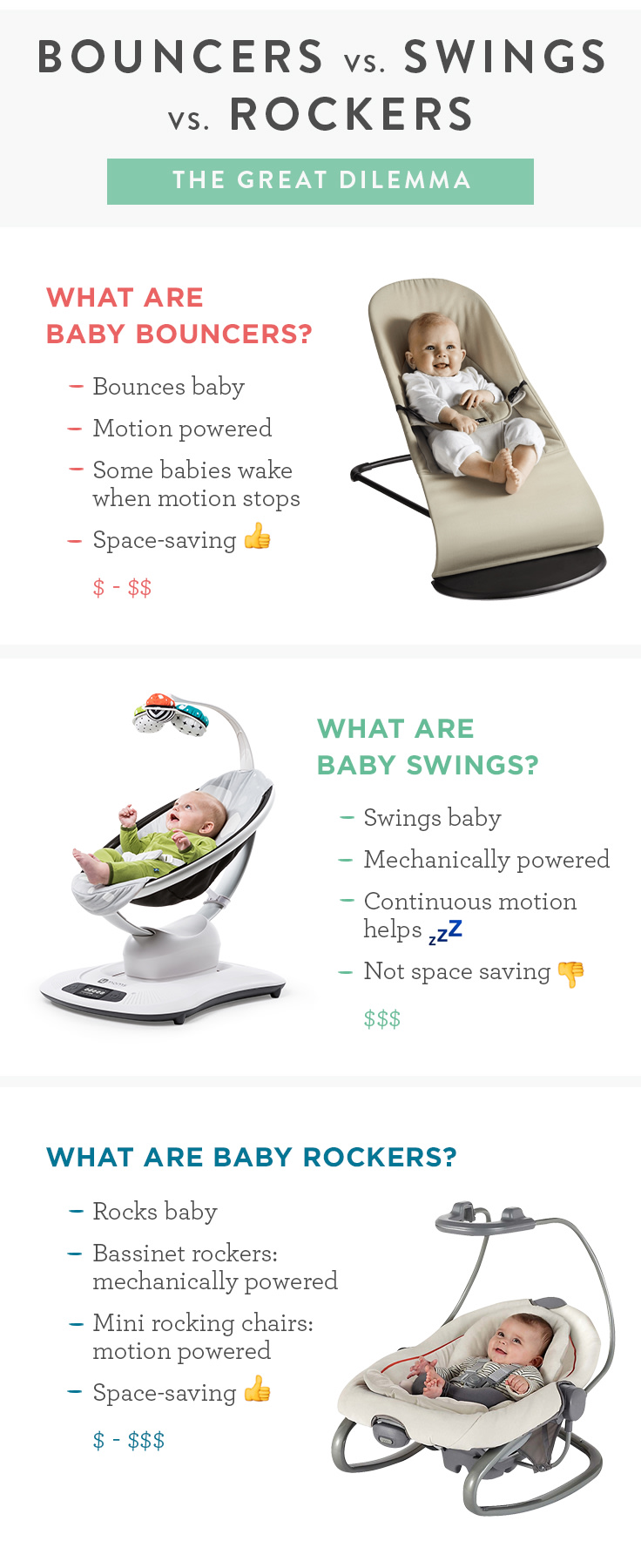
A baby bouncer is a soft, angled seat that may move when your baby kicks or when an adult gently rocks it. Some models vibrate or play sounds. These features can help while you take a short break, prepare a bottle, or fold laundry nearby.
A bouncer does not replace floor play, holding, feeding, or face-to-face time. Babies need free movement to build strength. Too much time in a curved seat may limit opportunities to move the head, arms, and legs.
Use a bouncer as a short-term tool, not as your baby’s main place to spend the day. Place it near you on the floor, and talk or sing to your baby while you work.
When can you put a baby in a bouncer for the first time? You can often begin during the newborn stage, but start with a few minutes. Watch how your baby responds, and stop if the baby seems uncomfortable, tired, pale, flushed, or distressed.

How to Use a Baby Bouncer Safely
Safe use depends on both the product and the caregiver. Before placing your baby in the seat, read the manual from start to finish. The manual gives the approved age, weight, harness method, cleaning rules, and stopping point.
Follow these steps:
- Place the bouncer on a clear, level floor.
- Check that the frame is fully open and locked.
- Place your baby’s bottom deep in the seat.
- Fasten the harness according to the instructions.
- Check that the head and neck have support.
- Stay close enough to see and reach your baby.
- Use the bouncer only while your baby is awake.
- Remove your baby when the session ends or your attention must move elsewhere.
Never place a bouncer on a bed, sofa, table, counter, or other raised surface. A baby’s movements can shift the seat. A fall from even a short height can cause serious injury.
Do not carry the bouncer with your baby inside unless the product specifically allows it and the design is made for carrying. Most bouncers should remain still on the floor.
When can you put a baby in a bouncer during the day? Any time your baby is alert and supervised can work, but avoid using it as a way to keep a tired baby contained.

Source: co.uk
How Long Can a Baby Stay in a Bouncer?
There is no single time limit for every model or baby. A sensible approach is to keep sessions short and vary your baby’s position throughout the day.
Many families begin with 5 to 10 minutes. If the baby remains calm and well positioned, you may use the bouncer for another short session later. Your baby should also have plenty of time for cuddling, feeding, tummy time, and free movement on a safe floor.
Take your baby out right away if you notice:
• Slumping or chin-to-chest positioning
• Trouble breathing or noisy breathing
• A change in skin color
• Repeated crying or signs of pain
• Sweating or overheating
• The baby trying to twist, roll, or climb out
• Loose or tight straps
When can you put a baby in a bouncer for longer periods? You should not treat a bouncer as a long-term seat, even if your baby appears content. Comfort does not prove that the position is safe for extended use.

Source: com.tr
Can a Baby Sleep in a Bouncer?
No. A baby should not sleep in a bouncer. Sitting and inclined products can allow the head to fall forward, which may affect the airway. They also do not provide the firm, flat surface recommended for infant sleep.
If your baby dozes off, stay calm. Move the baby to a crib, bassinet, or portable play yard with a firm, flat mattress and a fitted sheet. Place the baby on their back, and keep pillows, blankets, bumpers, and toys out of the sleep area.
The American Academy of Pediatrics recommends a separate, firm sleep surface for infants. Consumer safety authorities also warn against routine sleep in bouncers, swings, loungers, and other sitting devices.
When can you put a baby in a bouncer if the baby is already sleepy? It is better to choose a different activity, such as holding your baby or placing the baby in the crib for a nap. A bouncer should never become a substitute for a safe sleep space.

Source: co.uk
When Should You Stop Using a Baby Bouncer?
The stopping point depends on the product instructions and your baby’s development. Do not wait for a specific birthday if your baby begins to outgrow the seat or move in a new way.
Stop using the bouncer when:
• Your baby reaches the maximum weight.
• Your baby can sit without help, if the manual lists this as the limit.
• Your baby tries to roll, pull up, or climb out.
• Your baby pushes strongly against the frame.
• The harness no longer fits correctly.
• The product shows cracks, loose parts, torn fabric, or damaged straps.
Developmental changes can happen quickly. A baby who stayed still yesterday may twist or push up today. Check the bouncer each time, even if you have used it safely for months.
When can you put a baby in a bouncer after the baby begins sitting? Follow the manual carefully. Many manufacturers advise stopping use once a baby can sit independently or attempts to get out.

Source: youtube.com
Common Baby Bouncer Mistakes to Avoid
A bouncer can seem simple, but small mistakes can create serious hazards. One common mistake is placing it on a couch so the baby stays close while an adult cooks or works. This raises the risk of a fall.
Another mistake is assuming that a sleeping baby is safe because the seat has a harness. A harness can prevent a fall from the seat, but it does not turn an inclined seat into a safe sleep product.
Avoid these errors:
• Leaving the baby unattended, even for a short shower
• Covering the bouncer with a blanket
• Adding pillows, inserts, or homemade padding
• Using the bouncer near stairs, pets, cords, heaters, or water
• Letting another child bounce or move the seat
• Using a recalled or damaged product
• Ignoring the manual because a similar model worked differently
• Allowing feeding without watching the baby closely
I have seen caregivers focus so much on the age question that they miss the more important issue: positioning. A baby can meet the age guideline and still be unsafe if the head tips forward or the seat is placed on a raised surface.

Source: elvie.com
Choosing a Safe Bouncer for Your Baby
When you can put a baby in a bouncer safely also depends on choosing the right product. Look for a stable base, a secure three-point or five-point harness, clear instructions, and a visible weight limit.
Before buying or accepting a used bouncer, check:
• The model name and manufacturing date
• Current recall notices
• The condition of the frame and fabric
• The function of the harness buckle
• Whether all parts are present
• Whether the product has been modified
Avoid products with missing manuals or unclear safety labels. A used bouncer may look clean while hiding a stretched strap, broken lock, or missing insert.
Do not add aftermarket cushions unless the manufacturer approves them. Extra padding can change your baby’s position and may interfere with breathing or harness fit.

Source: theeverymom.com
Bouncer Alternatives for Newborns
A bouncer is not the only way to keep your baby near you. Safe alternatives can offer more movement and may work better when your baby is tired.
Consider:
• A crib or bassinet for sleep
• A supervised play mat on the floor
• A portable play yard
• Holding your baby in your arms
• A baby carrier used according to its instructions
• Tummy time while your baby is awake and watched
A floor mat is especially useful because it lets your baby move freely. Place the mat away from cords, small objects, pets, and other hazards.
When can you put a baby in a bouncer instead of using a mat? Use the bouncer when you need a short, supervised seat and your baby is awake. Use the mat or your arms when your baby needs more movement, interaction, or a change of position.
A Simple Safety Checklist for Parents
Use this checklist each time you place your baby in a bouncer:
• Is the bouncer approved for your baby’s age and weight?
• Is it on the floor?
• Is the harness fastened correctly?
• Is your baby’s head supported?
• Is your baby awake?
• Can you see and hear your baby?
• Are there blankets, pillows, toys, or cords nearby?
• Is the seat free from damage?
• Has your baby started rolling, sitting, or climbing?
If the answer to any safety question is no, do not use the bouncer until you fix the problem. When can you put a baby in a bouncer should never be the only question; ask whether the baby is positioned well and watched closely.
Frequently Asked Questions About When Can You Put a Baby in a Bouncer?
Can a newborn go in a baby bouncer?
Many bouncers are approved for newborn use, but each product has its own rules. Confirm the minimum weight, head support, harness instructions, and age range before use.
How old should a baby be before using a bouncer?
Some babies can use an approved bouncer from birth. The product manual matters more than a general age recommendation, and the baby must remain awake and supervised.
Can a baby sleep in a bouncer?
No, a bouncer is not a safe sleep space. Move a sleeping baby to a firm, flat crib, bassinet, or play yard on the back.
Where should I place a baby bouncer?
Place it on a clear, level floor away from stairs, pets, cords, heaters, and water. Never place it on a bed, sofa, table, counter, or other raised surface.
How long can my baby use a bouncer?
Keep sessions short and provide plenty of time for floor play, tummy time, holding, and free movement. Stop immediately if the baby slumps, seems distressed, or reaches the product’s developmental or weight limit.
When should I stop using a baby bouncer?
Stop when your baby reaches the weight limit, can sit independently if the manual says to stop, or tries to roll, climb, or get out. Also stop using it if any part is damaged.
Is a bouncer safe for a baby with reflux?
A bouncer may not treat reflux and can place a baby in a position that affects breathing. Ask your pediatrician for advice, and never use an inclined seat as a replacement for medical care or safe sleep.
Conclusion
When can you put a baby in a bouncer? In many cases, you can begin from birth when the manufacturer approves newborn use, your baby fits the seat, and an awake adult provides close supervision. Keep the bouncer on the floor, use the harness correctly, limit sessions, and move your baby to a firm, flat sleep surface if sleep begins.
Watch development as closely as age. Stop using the bouncer when your baby reaches the limit, tries to climb out, or no longer stays well positioned. Review the product manual and current safety guidance, then share this guide with another caregiver who may need it.