Learn the rules, age limits, and safety tips for kids cycling on roads. At What Age Can A Child Ride A Bike On The Road? Get clear guidance for parents. Most kids can ride on roads around 10–12, with training and supervision.
Choosing when a child is ready to ride on the road is not only about age. It blends law, skills, confidence, and the road you choose. I teach family cycling and urban riding, and I made this guide to help you decide with care. If you have wondered What Age Can A Child Ride A Bike On The Road?, you will find clear answers, safety steps, and real-life tips you can use today.

Why road-ready age depends on more than birthdays
Age is a guide, not a rule. Children develop focus, hazard spotting, and judgment at different speeds. Research shows traffic skills grow across late childhood into early teens. Practice narrows that gap fast.
Ask first: Can your child see a problem, plan, and act in time? That skill matters more than turning a certain age. This is the heart of What Age Can A Child Ride A Bike On The Road? and why wise preparation beats waiting. I have seen careful nine-year-olds ride calmly and safely on quiet streets, and I have coached anxious teens who needed more parking-lot time.
Laws and local rules: what to check before you roll
There is no single rule across all places. Very few regions set a strict minimum age for roads. Many set rules for helmets, lights, and where kids may ride, such as on sidewalks or paths.
Start with these steps before deciding What Age Can A Child Ride A Bike On The Road for your family.
- Check state and city codes. Some cities allow children under 13 to ride on sidewalks. Others limit that to very young riders.
- Review helmet laws. Many places require helmets for minors. Helmet fit and use are non-negotiable.
- Learn where bikes may be ridden. Bikes are vehicles in most areas. That can include lanes, roads, and shared paths.
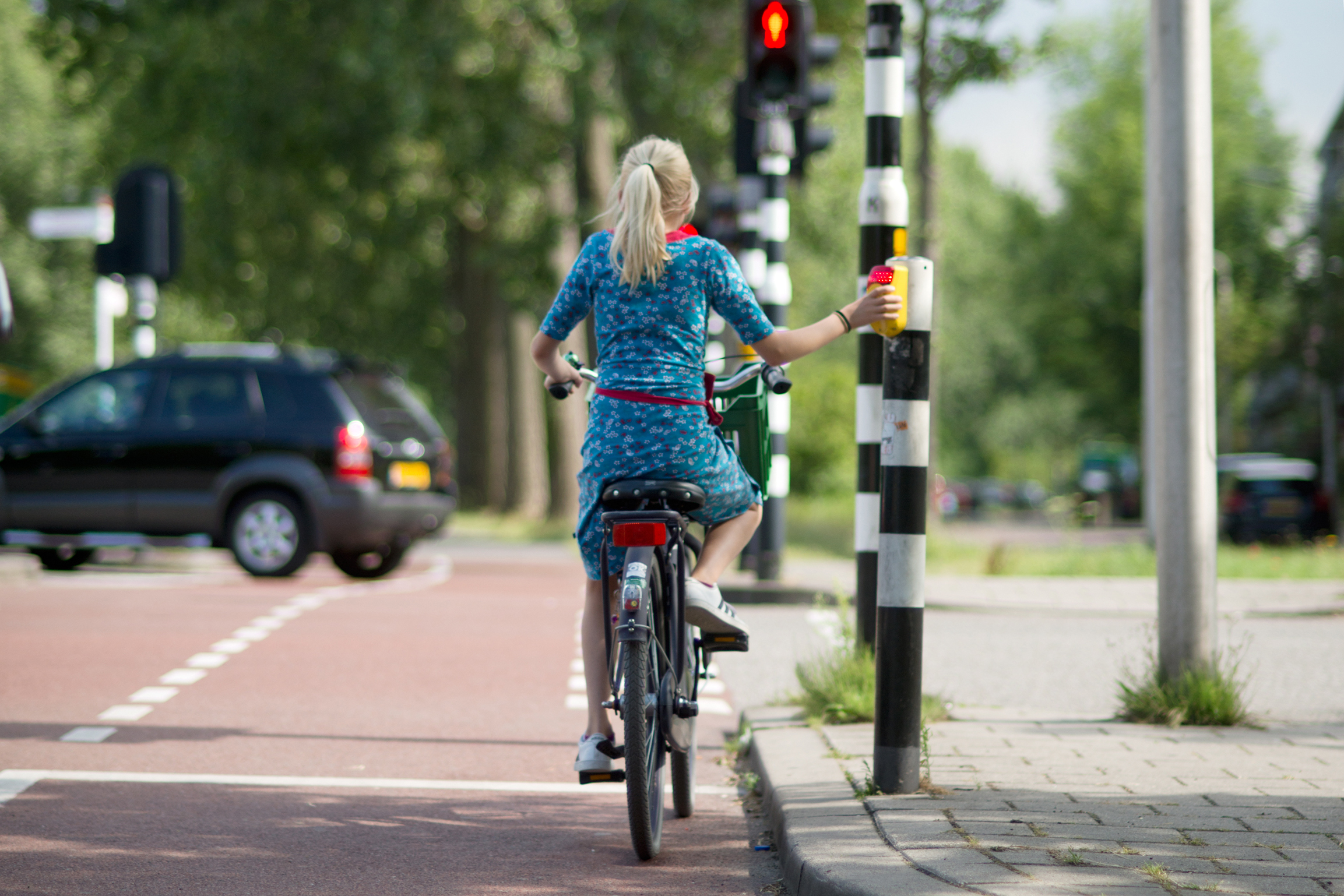
- Know crossing rules. Kids must follow traffic signals and yield laws just like drivers.
- Ask a local bike shop or school program. They know current rules and safe routes.
Regional notes you may find helpful:
- United States. No federal minimum road age. Local rules vary by city and state. Some cities allow children on sidewalks, and many schools support Safe Routes programs.
- United Kingdom. Few hard age limits. Children often ride on quieter streets or shared-use paths. Pavement riding rules depend on local signage and enforcement.
- Australia. Helmet use is mandatory nationwide. Footpath rules vary by state. Many states allow children on footpaths with an accompanying adult.
- European Union. Laws vary. Some countries expect younger children to use the sidewalk until around age 10. Road riding depends on skills and route choice.
- Canada. Provincial and city rules define helmet use and where children may ride. Many communities promote family cycling education.
Quick answers to common questions
- Is there a universal legal age? No. It depends on local law and the child’s skills. Check your city rules.
- Can kids ride in bike lanes? Usually yes, but some places restrict very young riders from busy roads.
- Do kids need lights in the daytime? Some regions require lights at night only, but daytime running lights improve visibility.

What Age Can A Child Ride A Bike On The Road Source: bobbinbikes.com
Skills a child must master before riding on the road
Answering: What Age Can A Child Ride A Bike On The Road? means checking skills, not just candles on a cake. Your child should be able to:
- Start and stop smoothly within a short distance.
- Ride in a straight line while looking over the shoulder.
- Use clear hand signals and hold a line while signaling.
- Scan ahead, behind, and to the sides every few seconds.
- Choose safe gaps to cross minor streets and driveways.
- Position correctly at intersections and in lanes.
- Read road signs and obey traffic signals.
- Communicate with drivers using eye contact and gestures.
- Manage speed on downhills and stop before crosswalk lines.
If any item is shaky, keep practicing off-road or on very quiet streets.
Readiness checklist for parents
Use this simple check to decide What Age Can A Child Ride A Bike On The Road. today, this week, or next season.
- Straight-line test. Ride ten car lengths without swerving while doing two shoulder checks.
- Braking test. Stop within a safe distance at a known point without skidding.
- Signal test. Signal left and right for three seconds while holding a line.
- Hazard quiz. Identify three risks on a sample block: parked car doors, driveways, and potholes.
- Decision test. Pick a safe gap to cross a residential side street.
- Rule recall. Explain right-of-way at a four-way stop and a T-intersection.
- Focus check. Ride ten minutes without distractions or risky moves.
- Night rule. Explain why kids should avoid night road riding without an adult.
If most boxes are not yet solid, keep it off-road and keep training.
Gear, bike setup, and visibility
The right setup raises safety more than any single tip. It also supports the judgment behind What Age Can A Child Ride A Bike On The Road?.
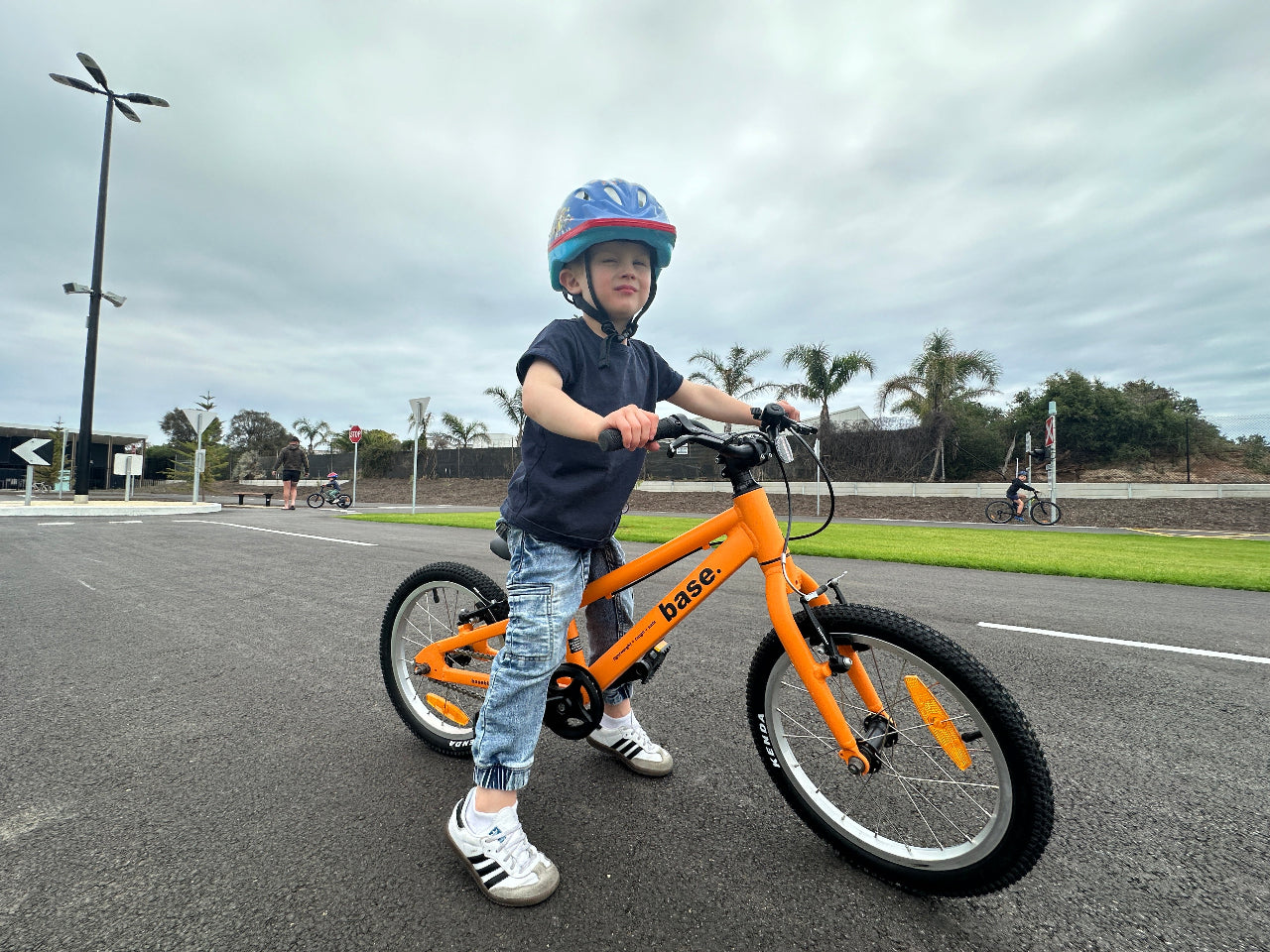
- Helmet fit. Level on the head, straps form a snug V under ears, one finger above eyebrows.
- Brakes. Two working brakes. Kids must reach the levers and stop fast without fear.
- Saddle height. Slight bend in the knee at the bottom of the pedal stroke.
- Tires. Proper pressure for grip and fewer flats.
- Lights and reflectors. White front, red rear, plus reflectors. Daytime lights help a lot.
- Bell or voice. Use to alert pedestrians and other riders.
- Bright clothing. High-contrast tops and an ankle reflector increase motion visibility.
- Optional mirror. Helps with scanning, but still teaches shoulder checks.
A well-tuned bike turns attention from gear worries to the road ahead.

Training plan: from sidewalk to street
A step-by-step plan makes the answer to What Age Can A Child Ride A Bike On The Road? much clearer because you will see progress in days, not months.
- Parking lot basics. Start, stop, signaling, straight lines, emergency stops.
- Neighborhood loop. Quiet streets, parked cars, driveways, and low-speed practice.
- Simple crossings. Four-way stops with you leading and then shadowing.
- Intersections. Right turns first, then left turns using two-stage crossings.
- Bike lanes. Practice entering, exiting, and scanning for the door zone.
- Mixed traffic. Short segments at off-peak times with calm coaching.
- Independent trials. Shadow rides at a distance while your child leads and calls out decisions.
- School commute. Do a dress rehearsal at the exact time of day.
Keep sessions short and end on a win. Confidence builds with small steps.
Common hazards and how to avoid them
You can teach a child to spot and avoid the big risks. Doing so strengthens your call on What Age Can A Child Ride A Bike On The Road?.
- Door zone. Ride at least a door’s width from parked cars. Watch for brake lights and heads in mirrors.
- Right hook. Avoid passing on the right of turning vehicles. Line up behind at intersections.
- Left cross. Make eye contact with oncoming drivers before turning left or crossing.
- Driveways. Scan for front wheels moving. Slow down and cover the brakes.
- Buses and trucks. Give space. Do not sit in blind spots.
- Debris and drains. Pick a smooth line. Signal a gentle move to go around hazards.
- Weather. Wet roads lengthen the stopping distance. Slow down and widen gaps.
Practice hazard ID as a game during family walks. It translates well to the bike.
Supervision, route planning, and community riding
Even after you decide What Age Can A Child Ride A Bike On The Road, plan support around each ride.
- Supervision. Ride behind and a little to the outside of your child. Be the shield and the coach.
- Routes. Favor slow streets, bike boulevards, and separated paths. Avoid high-speed roads.
- Timing. Choose daylight and low-traffic hours. Rushing leads to mistakes.
- Wayfinding. Use printed cue sheets or a simple handlebar mount. Kids should know the route.
- Group rides. Join a bike bus or school ride. Groups raise visibility and reduce stress.
As a coach, I learned this the hard way. My son knew the skills, but our first school run at rush hour was too busy. We switched to an earlier start, added a quieter back street, and his riding improved overnight.
Insurance, liability, and community programs
Think ahead about what-ifs along with the fun. This also shapes a careful answer to What Age Can A Child Ride A Bike On The Road?.
- Insurance. Homeowners or renters policies may cover liability if a child causes damage. Medical payment coverage may help after a crash.
- Driver coverage. If a driver hits a cyclist, auto insurance may apply. Document the scene and seek medical care.
- ID and contact. Carry a guardian phone number and basic medical info.
- Classes. Look for family cycling classes and Safe Routes to School events.
- Advocacy. Join a local bike group to learn safe routes and get alerts on new lanes.
Teach your child to speak up after a near miss and to stop and call if anything feels wrong.
Frequently Asked Questions: What Age Can A Child Ride A Bike On The Road?
What is the most common age for kids to start road riding?
Most children are ready around 10 to 12 for quiet streets. Readiness depends on skills, not only age.
Is it illegal for a young child to ride on the road?
In many places, it is legal if the child follows traffic laws. Always check your local rules first.
Should kids ride on the sidewalk or the road?
Use sidewalks or paths where allowed while training. Move to calm roads once skills and confidence are solid.
How do I know if my child can ride to school?
Do the readiness checklist and a full dress rehearsal. If they ride smoothly and make smart calls, they are close.
What gear is non-negotiable for young road riders?
A well-fitted helmet, working brakes, lights, and bright clothing. Add a bell and reflectors for better visibility.
Conclusion
Age is a start, but skill, judgment, and planning answer the real question. At what age can a child ride a bike on the road? becomes clear when you pair local rules with the readiness checklist, a smart route, and steady practice. Teach scanning, signaling, and calm choices, then build up mile by mile.
Take the next step today. Pick one quiet loop, run the checklist, and ride it together this week. Share your wins and questions in the comments, and subscribe for more family cycling guides and safety tips.